This article reconstructs the most significant AI industry events from the third week of April 2026, covering large model upgrades, AI coding tools, open-source ecosystems, quantum AI, robotics, and regulatory policy. The core problem is fragmented information and distorted takeaways. Keywords: GPT-6, Claude Opus 4.7, AI coding tools.
Technical Specifications Snapshot
| Parameter | Details |
|---|---|
| Topic Areas | Large Language Models, AI Agents, Robotics, Quantum AI, Policy and Regulation |
| Content Language | Chinese |
| Source Format | News weekly report / technical news roundup |
| License | Original article declared under CC 4.0 BY-SA |
| Star Count | Not provided |
| Core Dependencies | GPT-6, Claude Opus 4.7, GitHub Copilot, Gemma 4, GLM-5.1, DeepSeek V4, NVIDIA Ising |
This is a compressed weekly AI intelligence brief for developers
AI news density was extremely high over the past week, but what actually matters to developers is not simply who released another new model. What matters is that model capability, tool integration, infrastructure, and policy boundaries all shifted at the same time.
That means technical decision-making can no longer rely on leaderboard rankings alone. Teams now need to evaluate context length, real-world coding performance, toolchain maturity, and deployment ecosystems together.
Developers can start with a structured data view to capture the key points
weekly_ai_events = {
    "models": ["GPT-6", "Claude Opus 4.7", "Gemma 4", "GLM-5.1"],
    "tools": ["Cursor 3", "Claude Code", "GitHub Copilot", "Zed"],
    "infra": ["Ascend 950PR", "CANN", "NVIDIA Ising"],
    "policy": ["Anthropomorphic Interaction Service Management", "AI + Education"]
}
# Archive the core weekly-report objects in a structured format for later retrieval and analysis
This code abstracts weekly events into a set of indexable technical objects.
The GPT-6 release redefined the engineering boundary of ultra-long context
OpenAI released GPT-6 on April 14. Its core value proposition is not simply a larger parameter count, but a 2 million token context window and roughly 40% overall performance improvement. For developers, the biggest change is that repository-level understanding is starting to become genuinely usable.
Previous workflows often required developers to manually select files, trim context, and split tasks. With ultra-long context, AI starts to behave more like a project reader rather than just a local code completer. That directly changes how teams approach code review, architecture understanding, and cross-module debugging.
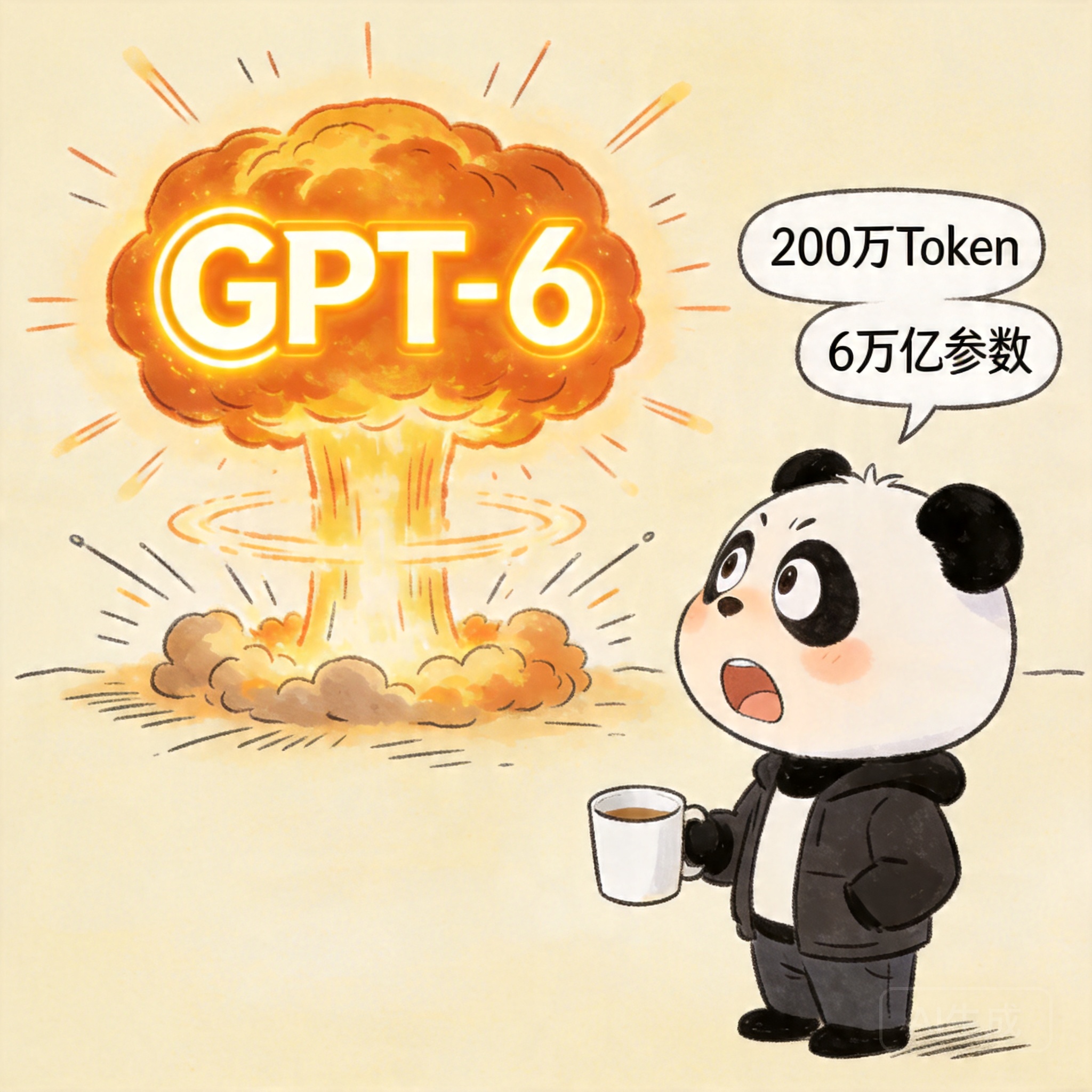 AI Visual Insight: This image is an illustrative asset related to GPT-6 coverage. Its visual emphasis typically reinforces the perception of ultra-long context and model generation upgrades. It works best as a cue for a major capability transition in large models rather than as a literal technical architecture diagram.
Ultra-long context fits certain scenarios better than others
def should_use_long_context(repo_size, task_type):
    # Prefer long-context models when the repository is large and the task requires cross-file reasoning
    return repo_size > 50 and task_type in ["Architecture Analysis", "Cross-Module Debugging", "Global Refactoring"]
This code shows that long-context models are better suited to repository-level tasks than to simple completion.
Claude Opus 4.7 shifted competition from chat quality to real coding execution
Anthropic released Claude Opus 4.7 on April 16. Its SWE-bench score rose from 53.4% to 64.3%, while the company also emphasized visual understanding and long-task consistency. More importantly, Microsoft integrated it into environments such as GitHub Copilot on the same day, which shows that model competition has entered a new phase: whoever gets into the workflow fastest gains the advantage.
The signal here is very clear. Model capability is becoming commoditized, while control over entry points is shifting toward IDEs, agent orchestration layers, and enterprise platforms. In practice, developers will no longer choose a single model. They will choose a stable collaborative workflow.
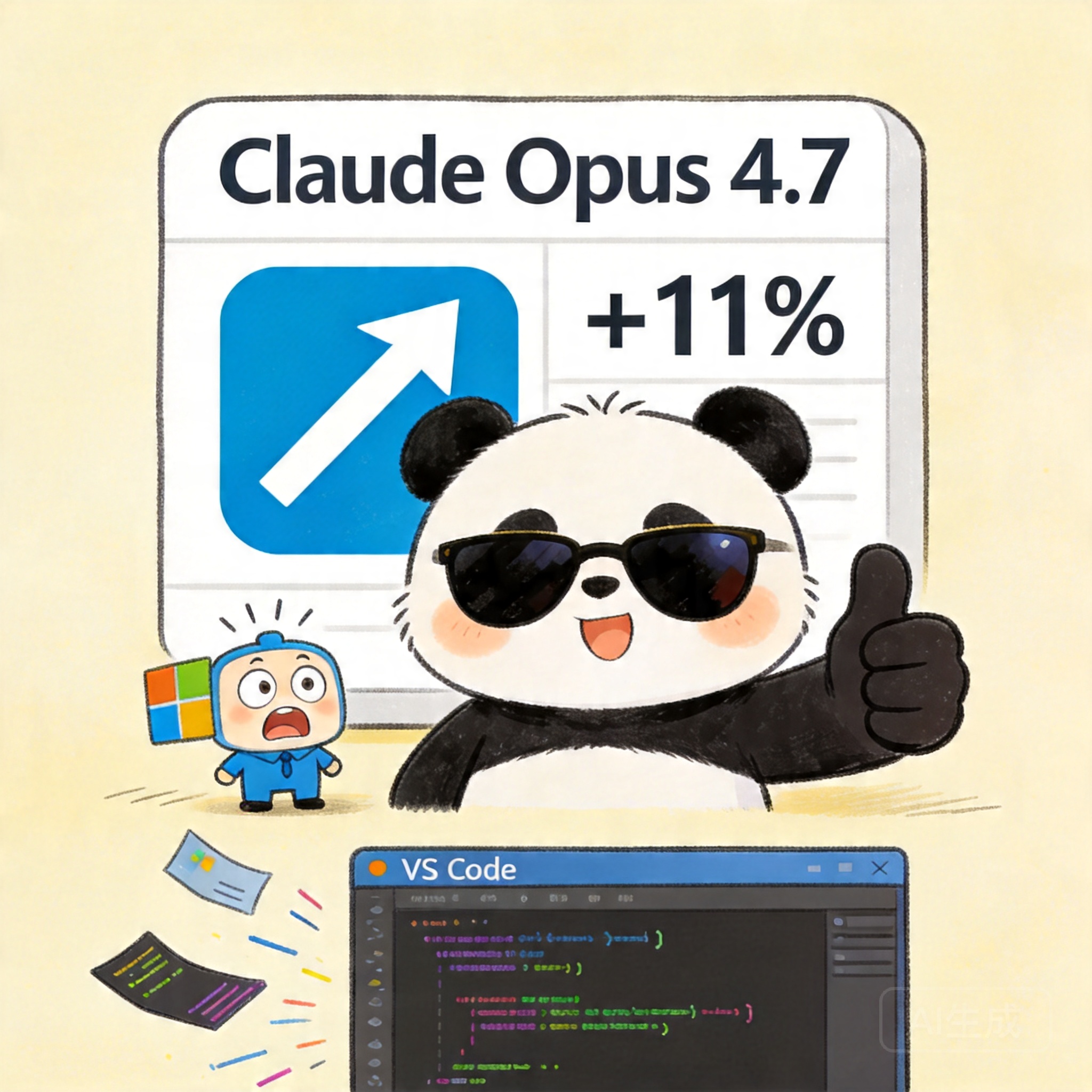 AI Visual Insight: This image corresponds to the Claude Opus 4.7 announcement. It is typically used to communicate model release news, benchmark gains, or platform integrations. Its technical meaning leans more toward capability upgrades plus ecosystem integration, especially around coding agents working inside development environments.
A higher benchmark score does not guarantee production dominance
SWE-bench is useful as a reference, but it is based on public issue sets. Real production environments also depend on private repositories, dependency constraints, style consistency, security checks, and regression testing. That is why many teams still require human review even after trialing strong frontier models.
Competition in AI coding tools has moved from autocomplete to agent workflows
The most actionable development this week is not any individual model, but the layered positioning of five tools: Claude Code, Cursor 3, Trae, GitHub Copilot, and Zed. They map to different priorities: maximum capability, balanced experience, free accessibility, enterprise compliance, and high-performance editing.
In practice, the best setup is usually not a binary choice. Teams often stack tools: one for editing experience, another for complex task execution, and then connect the full path through terminal workflows, testing, and version control.
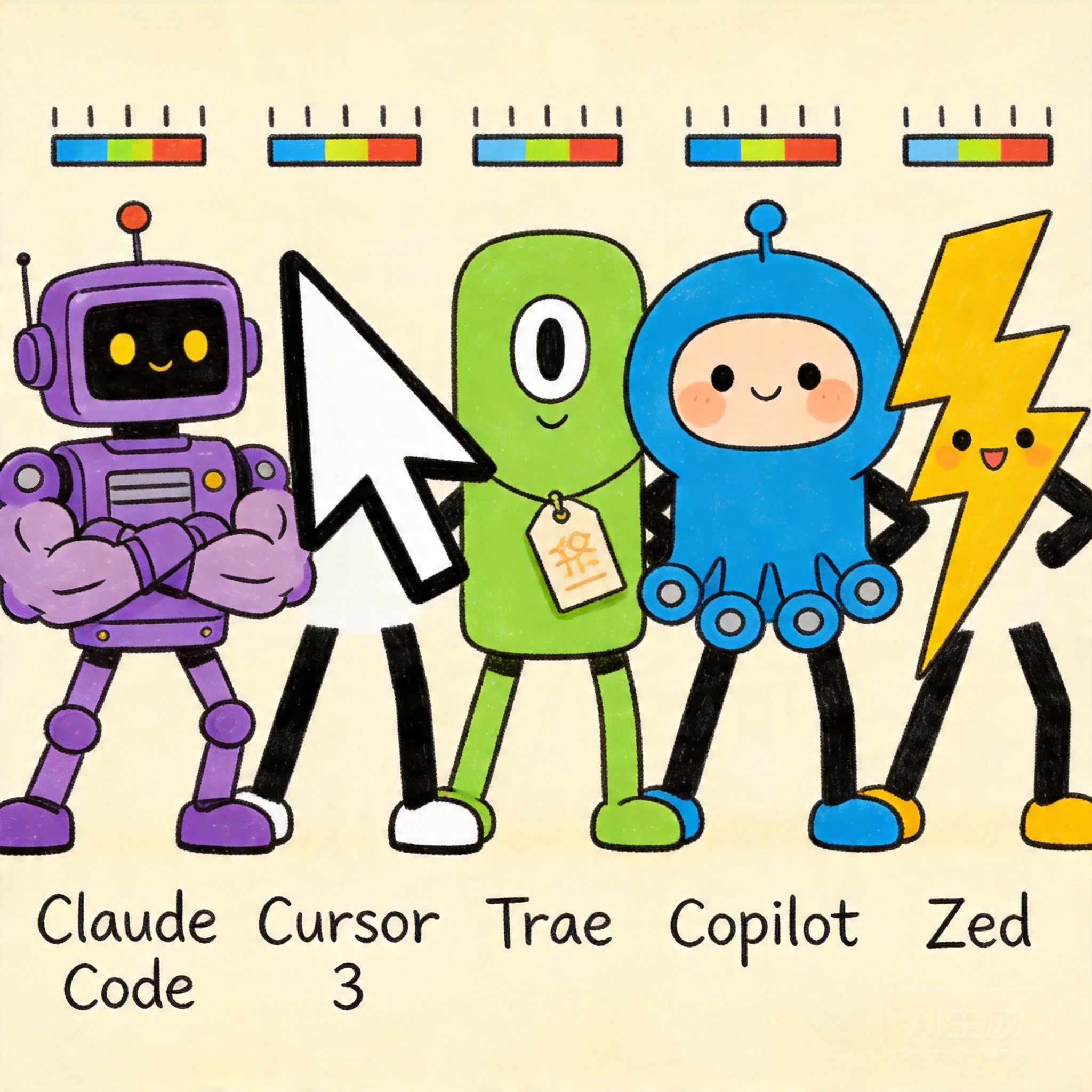 AI Visual Insight: This image compares AI coding tools and typically reflects differences in multi-tool positioning, pricing, and product focus. Technically, it can be understood as a layered product map for the agent IDE era, where workflow becomes the core competitive factor as models grow more interchangeable.
A simplified rule for tool selection
def pick_ai_tool(goal):
    # Choose tools based on your objective instead of blindly following the hottest product
    mapping = {
        "Maximum Coding Power": "Claude Code",
        "Balanced Experience": "Cursor 3",
        "Enterprise Compliance": "GitHub Copilot",
        "Free Chinese Support": "Trae",
        "Maximum Speed": "Zed"
    }
    return mapping.get(goal, "Cursor 3")
This code illustrates that choosing a tool is fundamentally the same as choosing a workflow.
Open-source model competition has shifted from parameter counts to licensing, ecosystems, and chip compatibility
Gemma 4, GLM-5.1, and DeepSeek V4 formed the three main threads of the open-source landscape this week. Gemma 4 is competing for developer ecosystem adoption through Apache 2.0 licensing and strong performance at smaller parameter scales. GLM-5.1 pushes open-source engineering agents toward longer-horizon execution. DeepSeek V4 shifts attention toward domestic compute platforms and the CANN framework.
The most practical conclusion is this: open-source competition is no longer just about who scores higher. It is about who is easier to deploy, commercialize, fine-tune, and migrate. License terms, hardware compatibility, and toolchain maturity determine actual adoption.
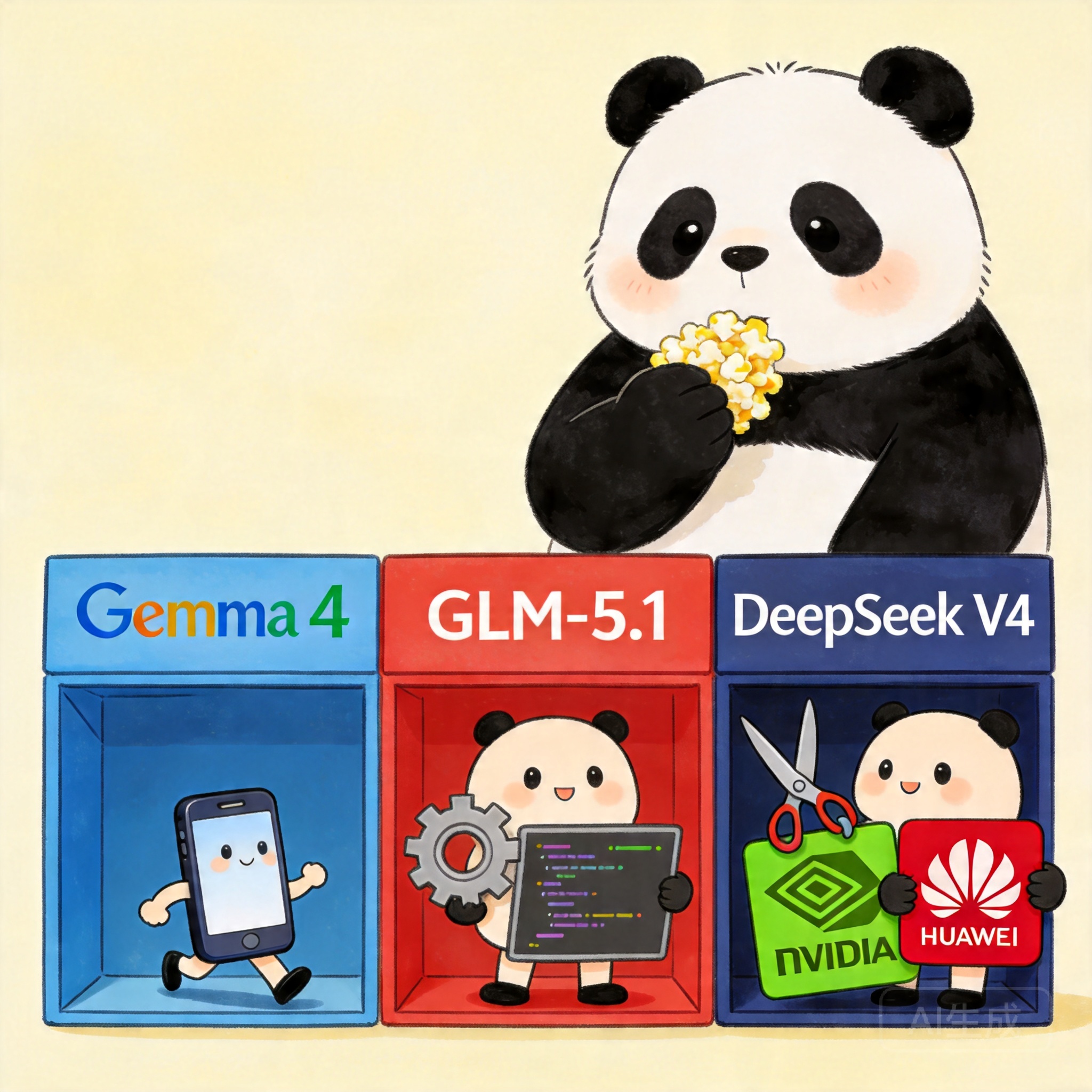 AI Visual Insight: This image corresponds to open-source models and infrastructure. Visually, it works best as a side-by-side representation of competing model families. The underlying technical theme is open-source licensing, MoE architectures, domestic chip migration, and ecosystem replacement paths.
The minimum checklist for deciding whether an open-source model is production-ready
- Does the license allow commercial use?
- Is there stable inference framework support?
- Can it integrate with your existing vector database, gateway, and monitoring systems?
- Can it run reliably on your target chips?
NVIDIA Ising and the humanoid robot half marathon show AI spilling into the physical world
NVIDIA Ising applies AI to quantum computing calibration and error correction, turning the problem of hard-to-maintain quantum hardware into an automation workflow that models can learn. This type of technology may not become mainstream immediately, but it represents a broader shift from software generation toward scientific computing infrastructure.
The humanoid robot half marathon highlights another direction. Embodied AI is moving from laboratory demos into public, complex environments. Even though race conditions were controlled and dropout rates remained high, dynamic balance, autonomous navigation, and continuous execution all showed visible progress.
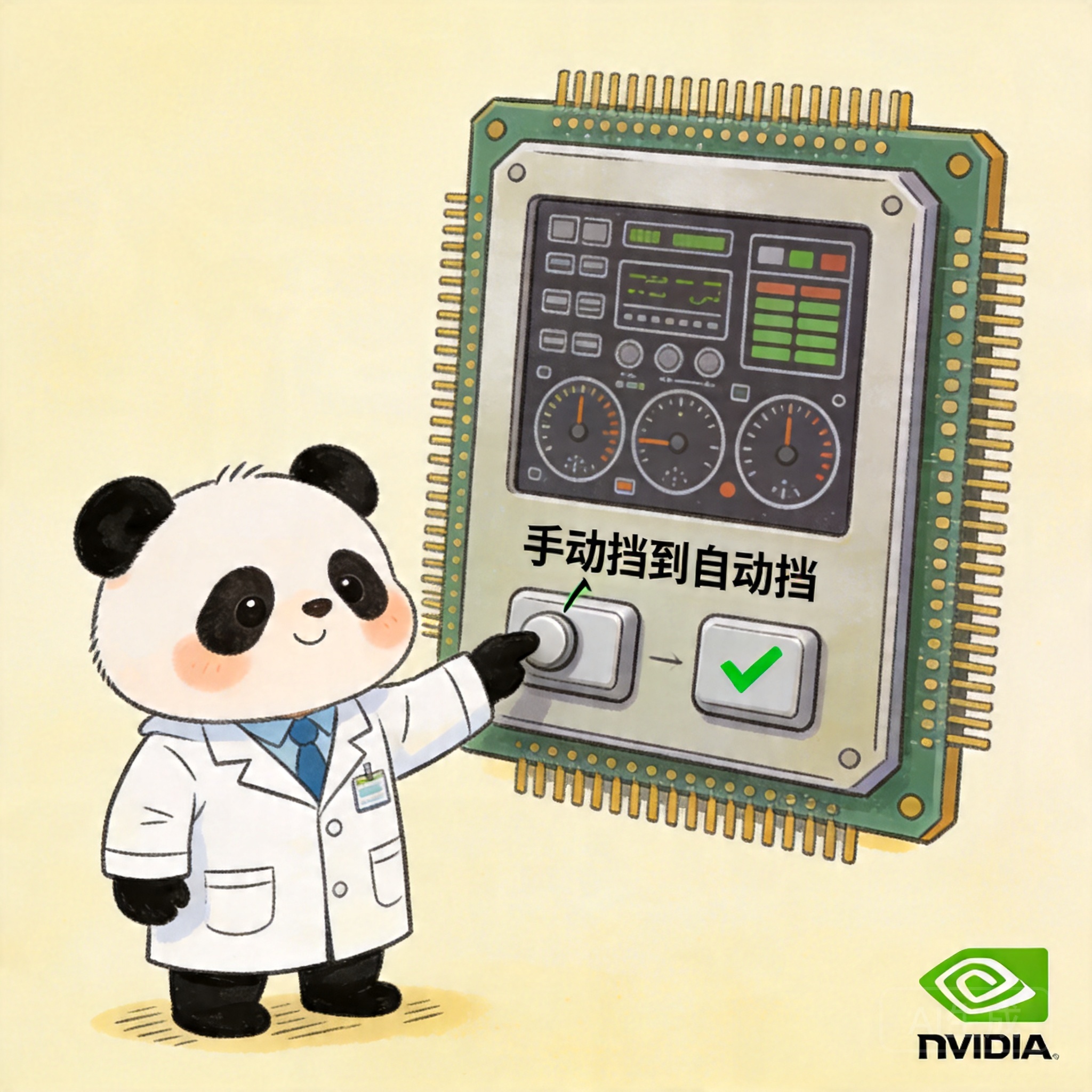 AI Visual Insight: This image corresponds to NVIDIA Ising. Technically, it can be read as an explanatory visual for the intersection of quantum AI, highlighting quantum processor calibration, error decoding, and the integration of open research platforms.
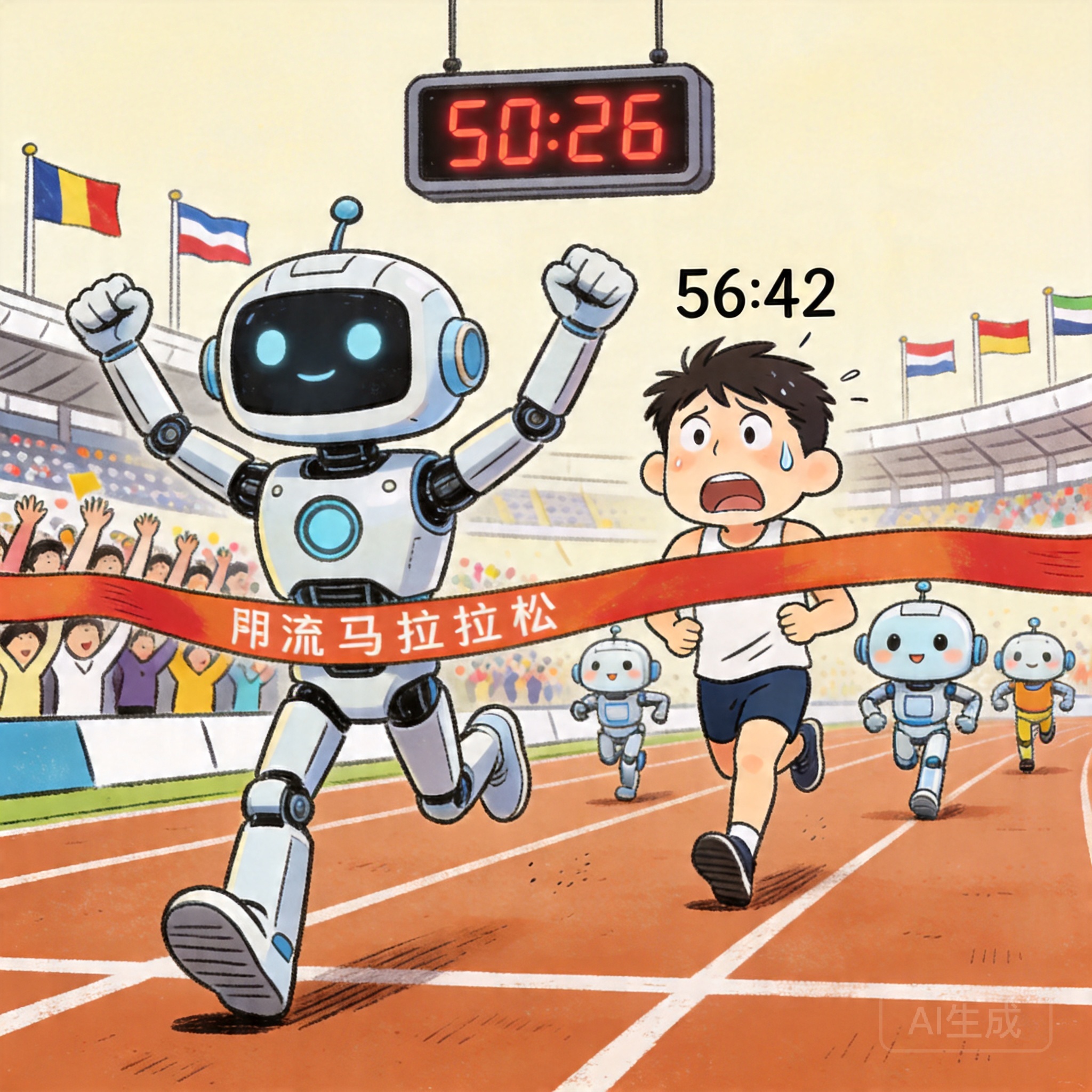 AI Visual Insight: This image is associated with the humanoid robot half marathon. It highlights motion control, autonomous navigation, and dynamic balance on a complex course, serving as visual evidence that embodied intelligence is moving from controlled demos toward high-intensity scenario validation.
A more realistic framework for turning signals into action
def tech_signal_to_action(signal):
    # Convert hot topics into engineering decisions instead of reacting only to media attention
    if signal in ["Quantum AI", "Robotics Competitions"]:
        return "Keep watching; do not invest at scale yet"
    if signal in ["AI Coding Tools", "Open-Source Models"]:
        return "Prioritize pilot projects and include them in team evaluation"
    return "Track the trend"
This code turns high-visibility news into executable technical decision paths.
Policy and education signals are turning AI from an optional capability into a foundational skill
Another high-value signal this week came from regulation. New rules for anthropomorphic interaction services, science and technology ethics review systems, and the AI + Education action plan all indicate that AI industry expansion is entering an institutionalized phase.
One detail deserves special attention: AI has reportedly been incorporated into teacher qualification exams. This is not an isolated policy point. It signals that society is beginning to treat AI usage as a baseline competency. For developers, compliance, explainability, child safety, and content boundaries will enter product design much earlier.
This week’s conclusion can be compressed into three statements
First, generational model upgrades are making repository-level development and long-horizon task agents practical. Second, the center of tool competition has already shifted from model quality to workflow integration. Third, chips, quantum systems, robotics, and regulation together show that AI is moving from the digital world into real infrastructure.
If you are a developer, the most important thing to do this week is not to read every piece of news. It is to validate two things immediately: whether your team needs a new agent workflow, and whether your current stack can support longer context windows and multi-model usage.
FAQ
Q1: What is the most direct value of GPT-6’s 2 million token context window for developers?
A: Its biggest value is stronger repository-level understanding. You can pass much more source code, documentation, API definitions, and logs into the model in one shot, which reduces the cost of manually splitting context.
Q2: Claude Opus 4.7 scored higher. Does that automatically mean it is better for team adoption than Copilot?
A: Not necessarily. Model capability defines the ceiling, but teams ultimately care about access control, auditing, IDE integration, cost, and regression testing workflows. Tools and platform capabilities matter just as much.
Q3: When evaluating Gemma 4, GLM-5.1, and DeepSeek V4, what should enterprises look at first?
A: Start with the license, deployment cost, chip compatibility, and operations maturity. Benchmark scores are useful, but ecosystem fit and total cost of ownership decide real adoption.
[AI Readability Summary]
This week’s AI landscape was shaped by three major shifts: GPT-6 made ultra-long-context development more practical, Claude Opus 4.7 and GitHub Copilot showed that workflow integration now matters more than standalone model quality, and open-source competition moved toward licensing, deployment, and chip compatibility. At the same time, NVIDIA Ising, humanoid robotics, and new regulation showed that AI is extending beyond software into physical infrastructure and institutional systems.