Claude Opus 4.7 is now Anthropic’s new flagship model, with major gains in coding, visual understanding, and long-task stability. This article distills its key upgrades, cost implications, and access path in China, and explains how DeepSider enables a plugin-based workflow. Keywords: Claude Opus 4.7, DeepSider, AI coding.
The technical specification snapshot highlights the essentials
| Parameter | Details |
|---|---|
| Model / Tool | Claude Opus 4.7 / DeepSider |
| Language | Multilingual interaction, with especially strong English performance |
| Access Method | Browser plugin, sidebar AI chat |
| Protocol / Platform | Web plugin distribution, built on the browser extension ecosystem |
| Star Count | Not provided in the source material |
| Core Dependencies | Edge browser, DeepSider plugin, multi-model backend |
| Key Capabilities | Coding, visual understanding, document reasoning, automated execution |
| Cost Profile | List price remains the same as 4.6, but token usage may be higher |
Claude Opus 4.7 shifts its core value from “better chat” to “stronger execution”
Anthropic released Claude Opus 4.7 on April 16, 2026, and it replaced Opus 4.6 as the default flagship in the Claude 4 series. This is not a simple parameter refresh. It is a system-level upgrade focused on complex tasks, self-checking, and multimodal understanding.
For developers, the most direct implications are clear: it is better suited for long-chain tasks, and it fits production workflows more naturally. In code generation, document analysis, interface understanding, and agentic execution, 4.7 behaves more like an orchestratable execution unit than 4.6.
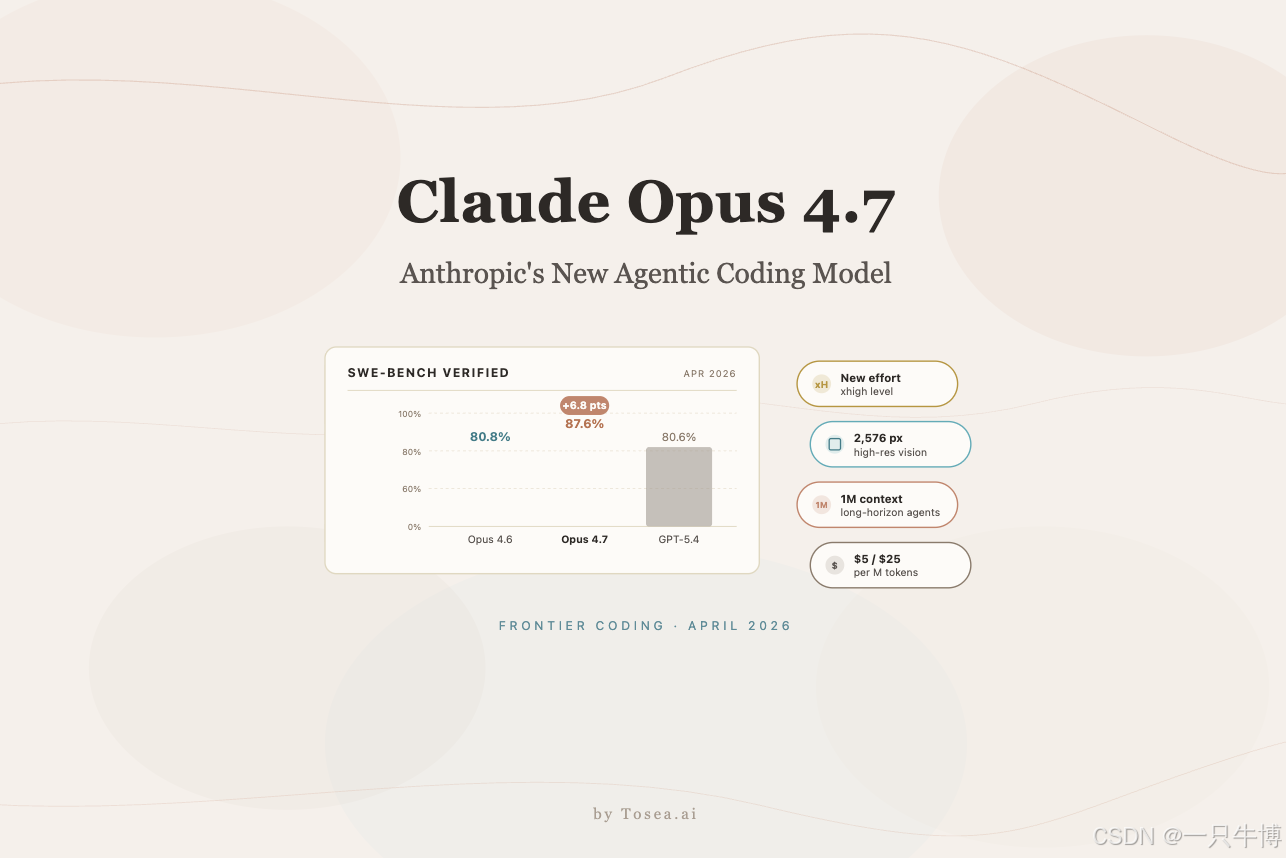
AI Visual Insight: This image shows the high-level feature overview released alongside Claude Opus 4.7. It concentrates on version updates, capability improvements, and official positioning, making it useful as a release-level summary for quickly understanding the model’s status and upgrade direction.
# Search for DeepSider in the Edge Add-ons store
# Core idea: use a browser plugin to directly access multiple models
# Best for users who do not want to configure APIs separately
Open Edge -> Extensions -> Search DeepSider -> Click Get -> Pin it to the sidebar
This step provides the lowest-cost path to access, bringing Claude Opus 4.7 into a daily browser workflow through a plugin.
The key to using it in China is not the model itself, but whether the access layer is stable enough
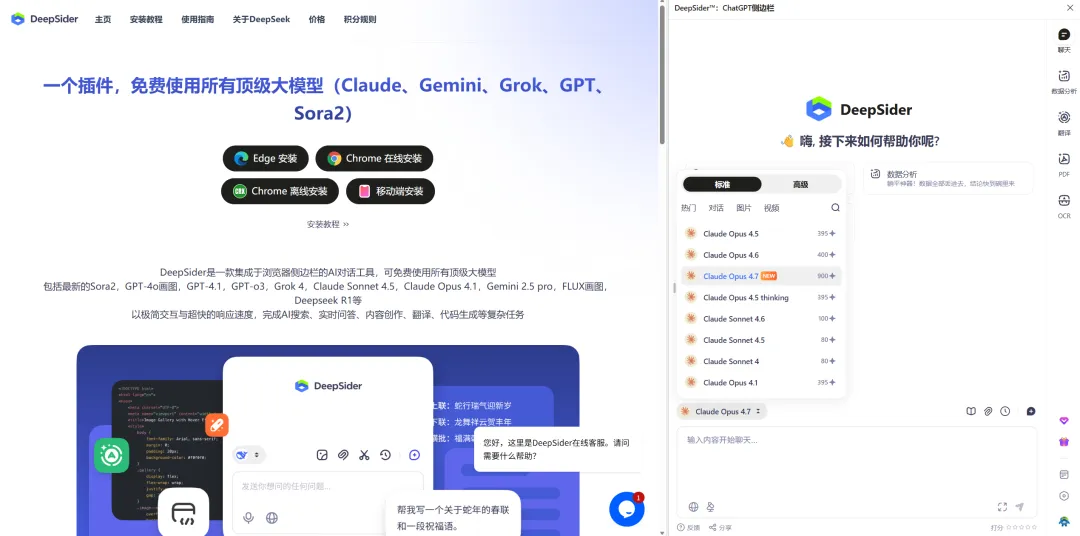
The source material indicates that Opus 4.7 is already available in DeepSider. Users can access it without registering a separate official Claude account. This does not solve a “model availability” problem as much as it reduces friction around registration, payments, regional restrictions, and device constraints.
DeepSider’s value lies in packaging multiple models into a unified browser sidebar. In addition to Claude Opus 4.7, it also includes mainstream models such as Gemini 3.1 Pro, Claude Opus 4.6, and GPT-5.4, making it suitable for side-by-side comparison and task routing.
AI Visual Insight: This image shows the DeepSider listing page in the browser extension marketplace. It emphasizes the installation method, platform distribution model, and user download path, indicating that the entry barrier is close to that of a standard browser extension.
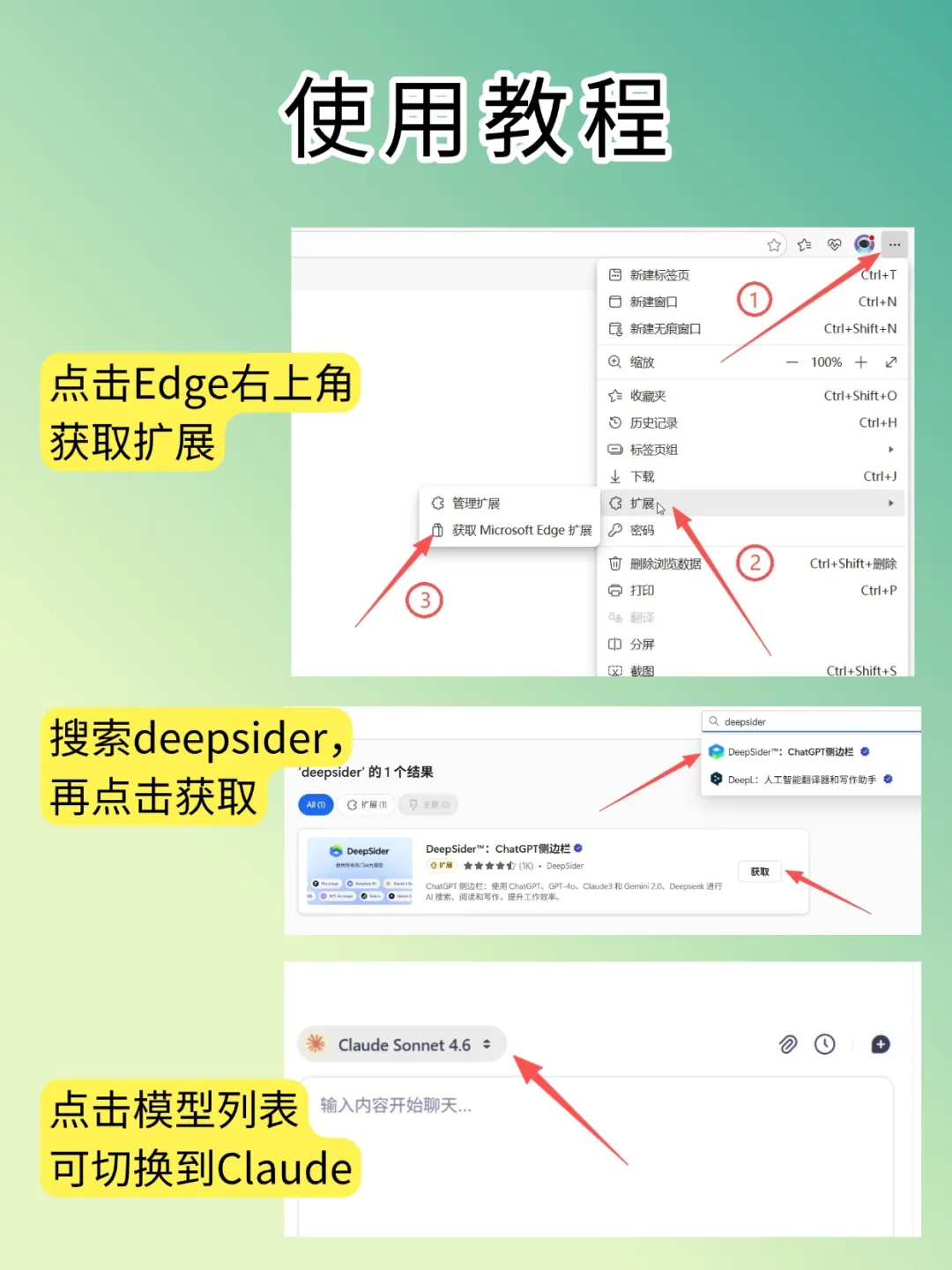
AI Visual Insight: This image presents the confirmation screen after installing the browser extension. It highlights the enablement flow after clicking “Get,” showing that the tool does not depend on a local development environment and serves as a lightweight access solution.
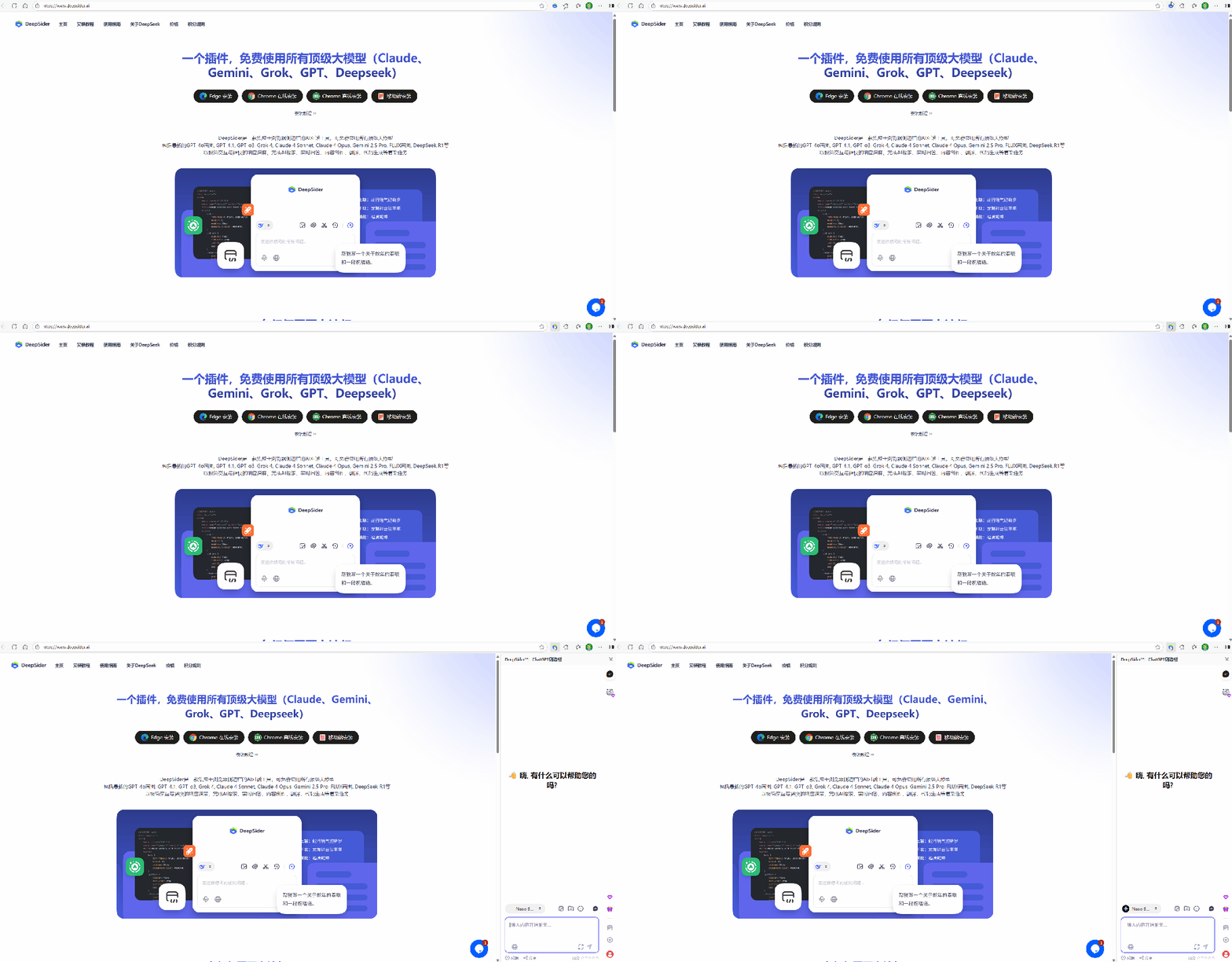
AI Visual Insight: This animated image demonstrates the real interaction flow of AI chat in the sidebar. The key technical details include staying within the browsing context, initiating conversations without switching tabs, and how a plugin-based AI assistant integrates smoothly into web workflows.
Claude Opus 4.7 concentrates its upgrades across six high-value dimensions
First, it handles long-running complex tasks more effectively. Anthropic emphasizes that the model can self-check before returning a response. In practice, this means it can reduce intermediate errors in multi-step programming tasks, making it better suited for refactoring, debugging, and chained generation.
Second, its coding capability continues to improve. The source material states that in coding- and agent-related benchmarks, Opus 4.7 improves by roughly 10% to 12% over its predecessor, which suggests a meaningful upgrade rather than a marginal tweak.

AI Visual Insight: This image describes the model’s performance in complex coding or long-task scenarios. It emphasizes autonomous execution, self-checking, and result return mechanisms, pointing to stronger agent-style task handling.
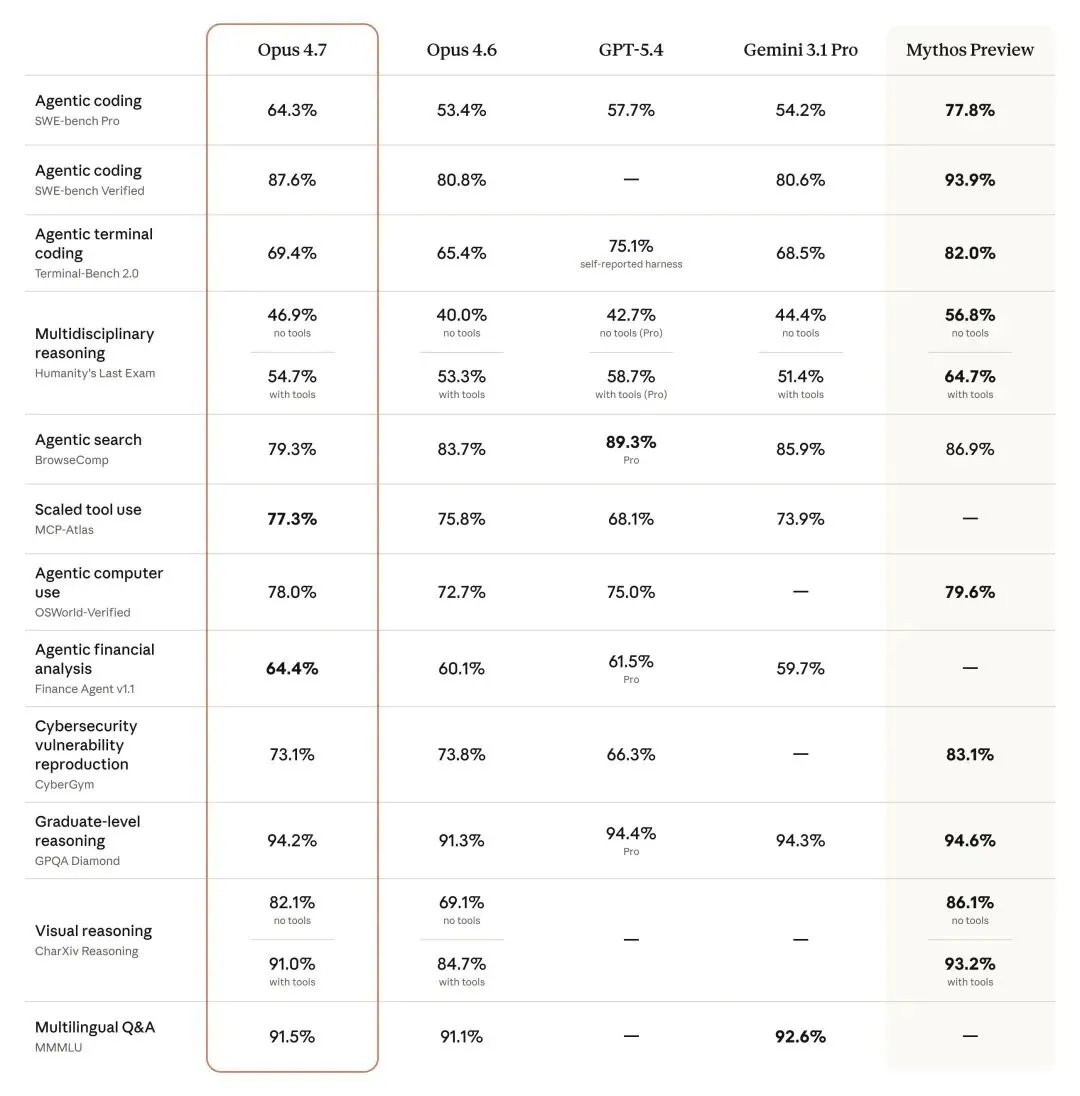
AI Visual Insight: This chart provides a benchmark comparison between Claude Opus 4.7, GPT-5.4, and Gemini 3.1 Pro. The key detail is the quantified scoring of coding and agent capabilities, making it useful for model selection decisions.
models = {
    "Opus_4_6": {"coding_score": 100},
    "Opus_4_7": {"coding_score": 112},  # Approximate expression based on the 10%–12% improvement described in the article
}

improvement = models["Opus_4_7"]["coding_score"] - models["Opus_4_6"]["coding_score"]
print(f"Approximate coding improvement: {improvement}%")  # Output the relative improvement
This minimal example illustrates the evaluation logic behind the performance gain from 4.6 to 4.7.
The leap in visual capability makes it better suited for real business interfaces and document-heavy scenarios
Third, its visual understanding improves significantly. Opus 4.7 supports image inputs up to 3.75 megapixels, and its visual capability is reported to be more than 3x stronger than the previous generation. This is not just about “better image recognition.” It means stronger structured understanding of design mockups, screenshots, scanned files, and complex charts.
Fourth, instruction following becomes more literal. For engineering teams, this is both an advantage and a risk. The advantage is more controllable output. The risk is that legacy prompts may stop working as expected, especially if they depend on vague guidance or implicit assumptions.
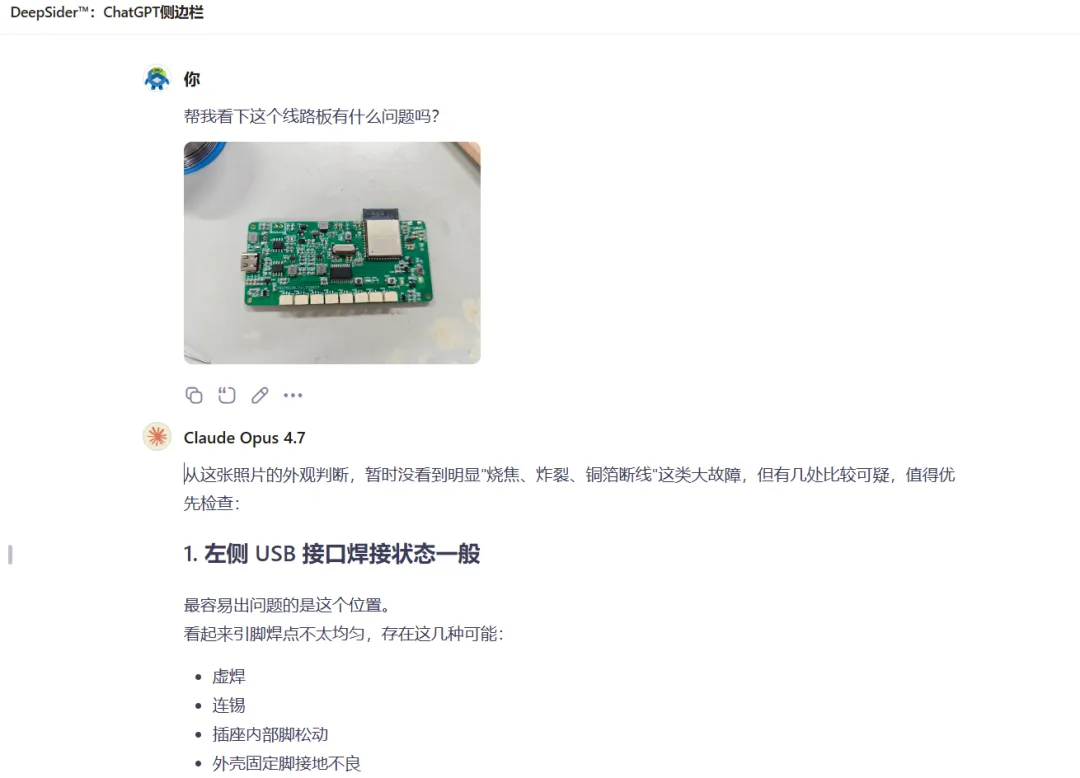
AI Visual Insight: This image explains the high-resolution image input capability. It focuses on the higher pixel ceiling and the model’s ability to parse complex visual materials, which makes it more suitable for screenshots, tables, scanned documents, and design interfaces.

AI Visual Insight: This image further demonstrates visual task performance or benchmark results. It highlights the model’s joint understanding of page layouts, graphical elements, and text blocks, which is a critical foundation for automated UI analysis.
Fifth, cross-session memory is stronger. Context persistence based on a file-system-backed workflow appears more stable, which suits R&D iteration, legal review, and knowledge workflows that require multi-round refinement.
Sixth, it reaches industry-leading performance in knowledge work. It leads in evaluations such as Finance Agent and GDPval-AA, which shows that its strengths extend beyond coding into high-value reasoning tasks.
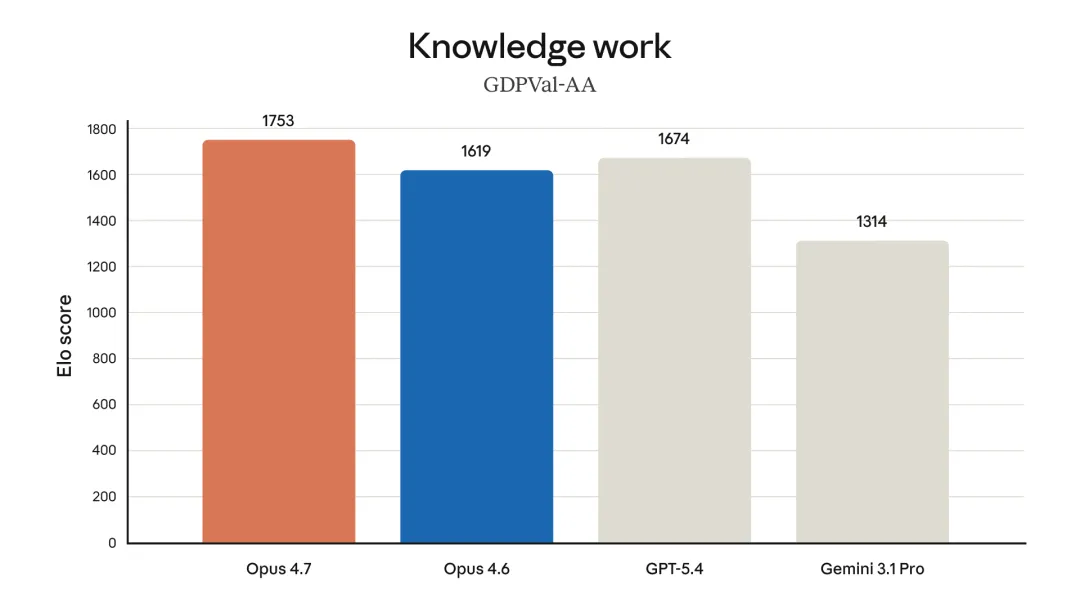
AI Visual Insight: This is a benchmark chart for knowledge work performance. It focuses on model results in high-value tasks such as finance and law, using visualized scores to show Opus 4.7’s leading position in professional reasoning scenarios.
Teams that should upgrade to Opus 4.7 usually share clear workflow traits
The first group is document-intensive teams. If your system processes contracts, announcements, papers, research reports, or table-heavy materials, the improvement in document reasoning has direct value, especially for clause extraction, evidence localization, and cross-section summarization.
The second group is engineering teams already using Opus 4.6 in production. If you already have prompts, evaluation sets, and workflow orchestration in place, reserve about one week for A/B validation and focus on three signals: accuracy, latency, and token cost.
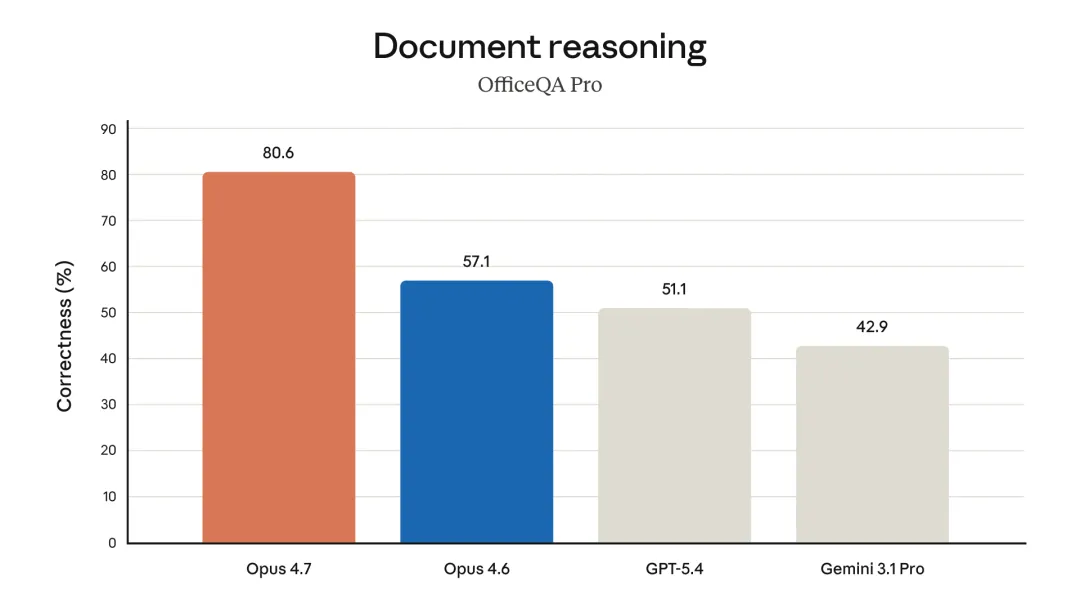
AI Visual Insight: This chart shows the OfficeQA Pro document reasoning score. It reflects the model’s combined ability in long-document Q&A, structural understanding, and evidence localization, making it an important quantitative reference for document-centric business scenarios.
The third group is teams building automation products. Combined with higher-resolution visual input and tool use, the model can execute browser actions, fill forms, read pages, and verify results, giving it the foundation to move from “advisor” to “executor.”
workflow = ["Read the page", "Plan steps", "Call tools", "Execute actions", "Validate results"]

for step in workflow:
    print(step)  # Print each key stage in the automation workflow in sequence
This snippet abstracts the typical execution chain of Opus 4.7 in an agentic workflow.
DeepSider packages Claude Opus 4.7 into a workflow that is more practical for everyday developers
In the source material, DeepSider is described as a browser plugin solution that is accessible in China, supports domestic email registration, and imposes fewer device login restrictions. Its core advantage is not self-developed modeling. It is unified access, multi-model switching, and lower operational overhead.
For users who do not want to configure APIs, proxies, and standalone clients, this model is practical enough. For teams that only use premium models occasionally, plugin-based access is often more economical than building and maintaining a custom invocation stack.
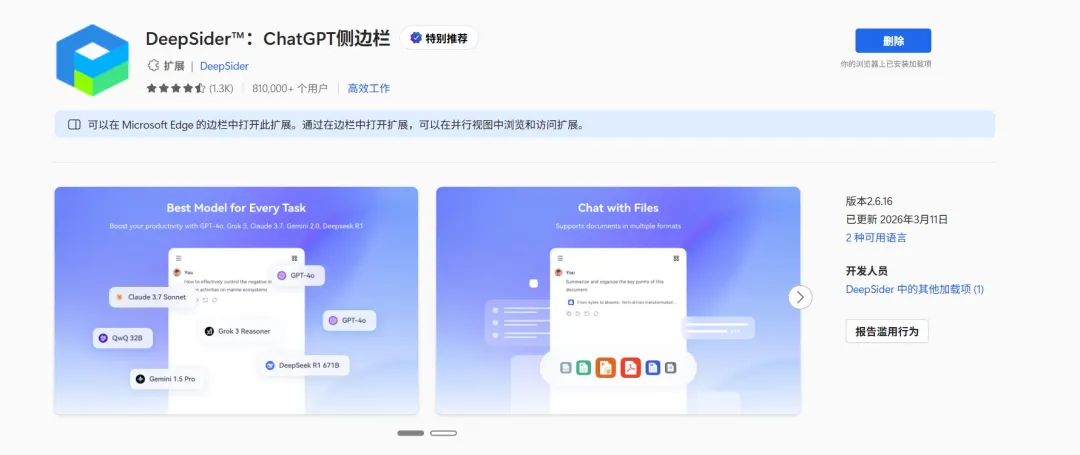
AI Visual Insight: This image shows DeepSider’s model selection or product interface. It emphasizes a unified entry point for multiple models and low-friction interaction, making it suitable for switching between large models within the same workspace.
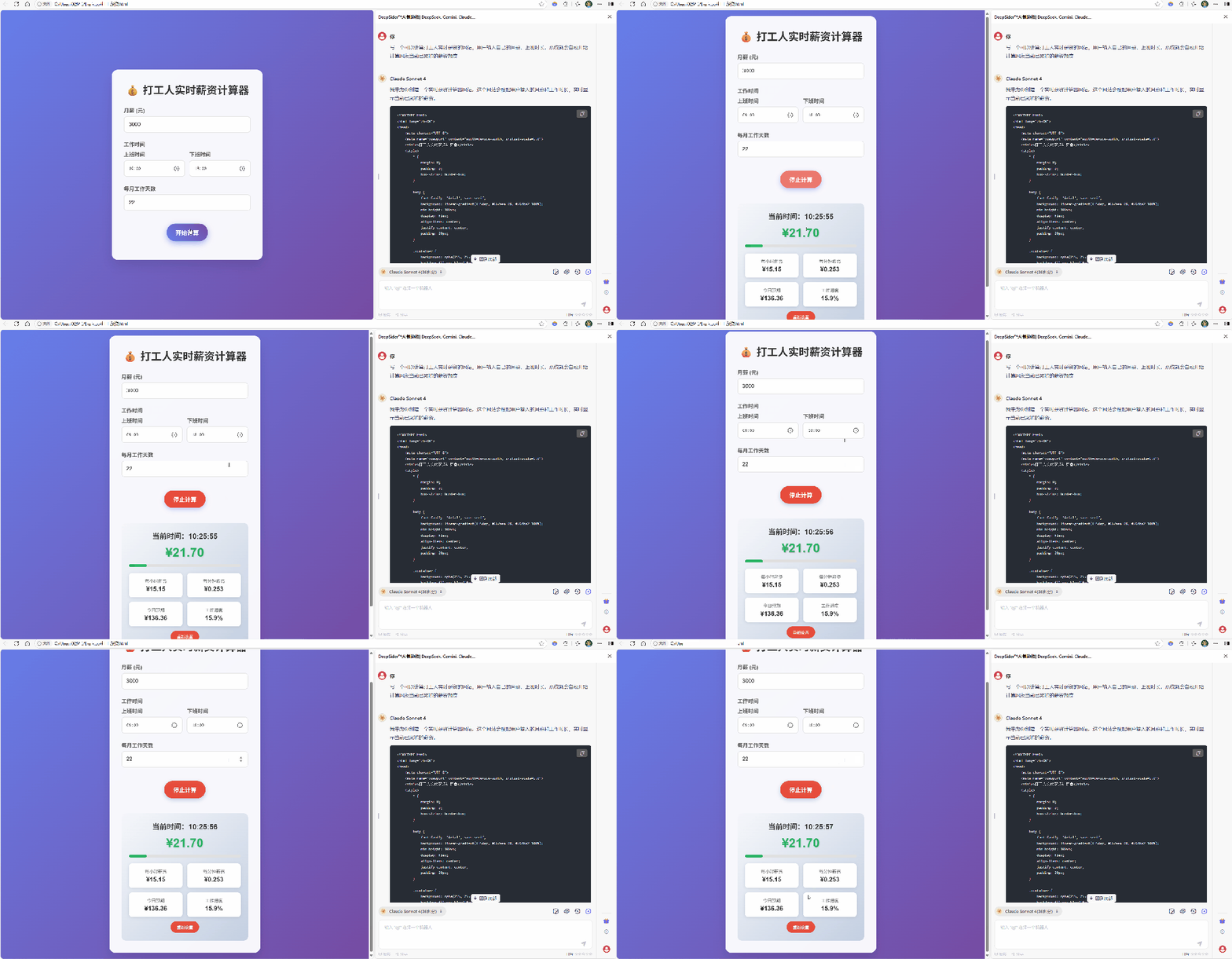
AI Visual Insight: This animated image demonstrates the process of generating an interactive web page from a single sentence. Technically, it reflects the chain from natural language to front-end page generation, including layout creation, component rendering, and instant preview.
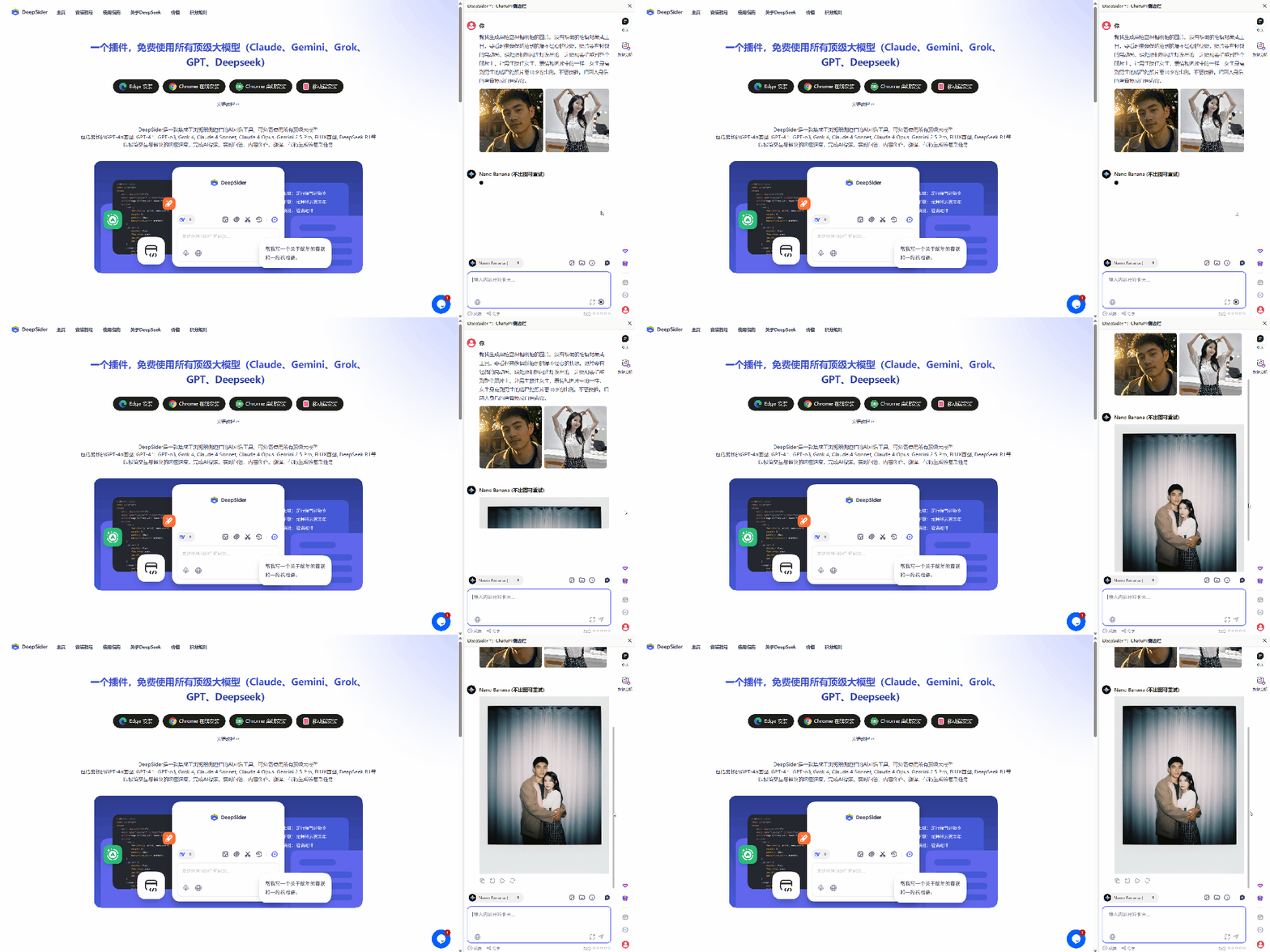
AI Visual Insight: This animated image shows the generation speed and output quality of the built-in image model. It indicates that the platform covers not only conversational models but also image generation, making it suitable for collaboration on content and product prototypes.
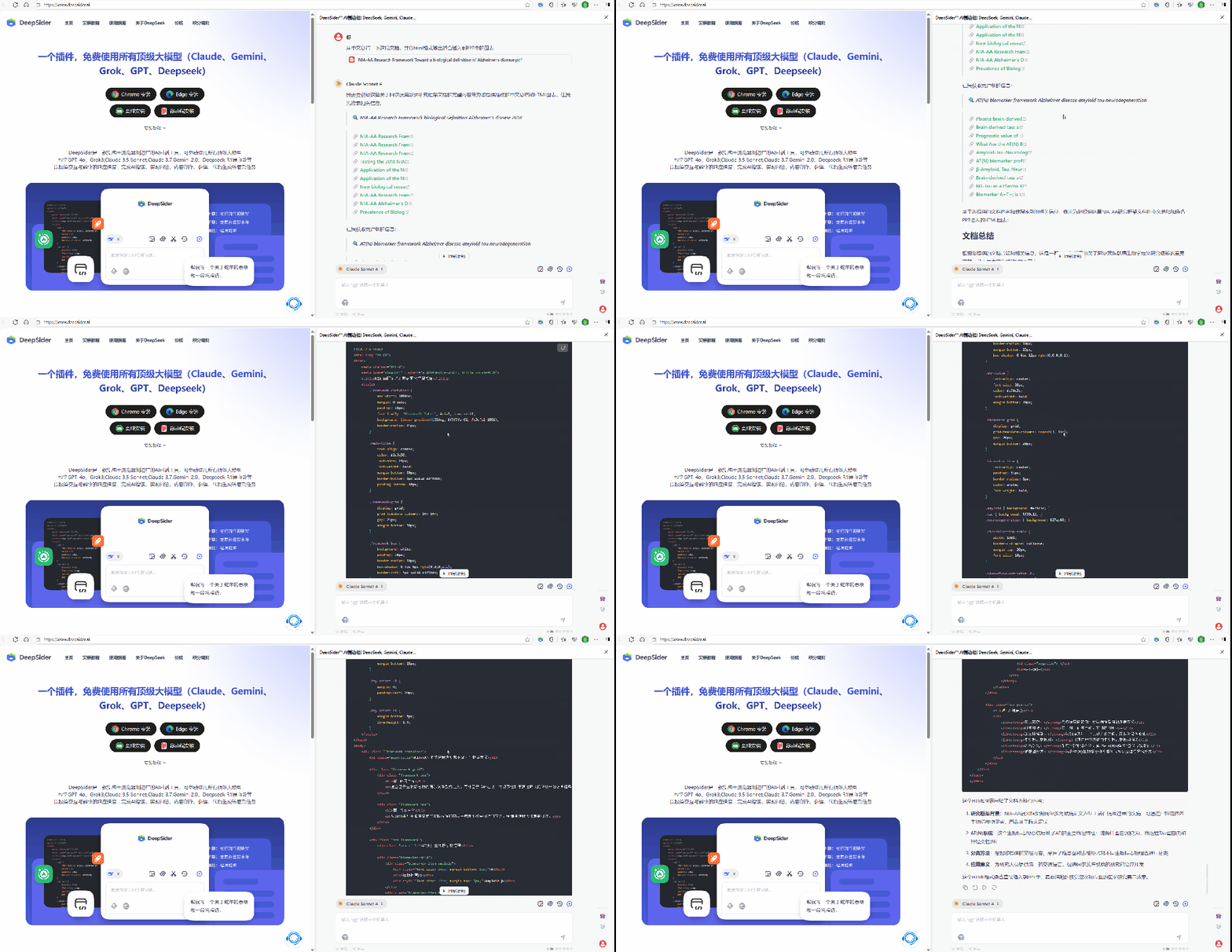
AI Visual Insight: This animated image presents the workflow for multi-document upload and intelligent parsing. Key details include parallel reading of PDF, Word, and TXT files, as well as extracting key information across multiple materials.
Cost evaluation remains a required step before any upgrade
Although Opus 4.7 keeps the same list price as 4.6, the newer tokenizer and higher reasoning intensity may increase input token usage by 0% to 35%, and output cost may rise as well. In other words, unchanged per-request pricing does not mean unchanged per-task pricing.
The most reasonable strategy is not full replacement, but task-based layering: use 4.7 for high-value coding, complex document reasoning, and visual parsing tasks, while keeping lower-cost models for routine Q&A or template generation.
FAQ structured Q&A
1. What is the most important upgrade in Claude Opus 4.7 compared with 4.6?
The most important upgrades are self-checking for long tasks, continued gains in coding benchmarks, 3.75-megapixel visual input, and stronger document reasoning. These capabilities directly affect production use cases, not just chat quality.
2. Why do developers in China prioritize DeepSider?
Because it reduces the complexity of account registration, payment, regional restrictions, and multi-model switching. For most users, a plugin-as-a-service approach is faster and more practical than building a custom API access chain.
3. What should teams validate before upgrading to Opus 4.7?
Focus on three things: first, whether task accuracy improves meaningfully; second, whether prompts need to be rewritten; and third, whether token usage growth stays within budget. Do not switch at full scale without an evaluation set.
AI Readability Summary: This article reconstructs the core upgrades in Claude Opus 4.7, including cost changes, improvements in visual and coding capabilities, and the practical low-friction access path in China through DeepSider. It is most relevant for developers evaluating multi-model collaboration, document reasoning, and automated workflows.