For enterprise digital transformation, the key differentiator for an AI Agent is not whether it can “chat,” but whether it can execute. This article focuses on non-intrusive architecture and explains how it addresses environments with legacy systems that expose no APIs, brittle RPA workflows, and the complexity of compatibility with domestic technology stacks. It also evaluates the collaborative value of ISSUT and TARS in Laiye Agent. Keywords: AI Agent, non-intrusive architecture, domestic technology compatibility.
Technical Specifications Snapshot
| Parameter | Details |
|---|---|
| Core domain | Enterprise AI Agent / Intelligent Automation |
| Primary language ecosystem | Python, low-code orchestration, natural language instructions |
| Key protocols/interfaces | API, UI automation, private on-premises deployment |
| GitHub stars | Not provided in the source |
| Core dependencies | TARS large language model, ISSUT screen semantic understanding, RPA/Agent orchestration engine |
| Supported environments | ERP, CRM, financial systems, UOS, Kylin, and other domestic technology environments |
The Real Challenge of Enterprise AI Agents Is Not Model Size
In 2026, enterprise attention has shifted from parameter count to execution closure. Many solutions look smooth in demo environments, but once they enter real business scenarios, they often stall on legacy systems, closed desktop clients, and complex internal network environments.
There are four core obstacles: siloed systems fragment data, missing APIs drive integration costs out of control, traditional RPA is highly sensitive to UI changes, and domestic technology transformation further amplifies compatibility and security risks. That is why enterprises cannot evaluate vendors based on conversational ability alone.
# Simplified rules for evaluating enterprise Agent deployability
score = 0
if has_non_intrusive_arch:  # Supports non-intrusive integration
    score += 30
if supports_xinchuang:      # Supports domestic technology environments
    score += 25
if can_handle_legacy_ui:    # Can operate legacy system interfaces
    score += 25
if private_deployment:      # Supports private deployment
    score += 20

print(f"Deployment evaluation score: {score}")
This code illustrates why enterprises should prioritize four evaluation dimensions: integration, compatibility, security, and deployment.
Non-Intrusive Architecture Is the Critical Path to the Execution Era of Enterprise Automation
A non-intrusive architecture essentially allows an Agent to observe screens, understand interfaces, and perform actions the way a human would, instead of relying heavily on underlying system interfaces. In scenarios where there is no source code, no API, and no ability to modify databases, this approach aligns far better with enterprise reality.
Its greatest value is not simply reducing development effort. It is reducing coupling. Systems do not need major changes just to connect with an Agent. Existing ERP, CRM, and financial clients can continue to run as they do today, while the automation layer attaches as an external execution capability.
Cross-System Financial Reconciliation Better Reveals the Real Architectural Value
In a typical manufacturing enterprise, settlement statements from overseas platforms, internal financial software, and manual reconciliation workflows are often spread across multiple systems. Traditional approaches usually rely on scraping interfaces, analyzing databases, or writing fragile scripts, which leads to long delivery cycles and high maintenance costs.
After introducing Laiye Agent, tasks can be triggered through natural language, while the model handles step decomposition and execution orchestration. For example, it can download settlement statements, parse Excel files, open the financial system, populate fields, and complete discrepancy checks. It behaves more like a digital employee than a single-purpose tool.
# Agent task decomposition example
tasks = [
    "Log in to the e-commerce backend",   # Retrieve settlement data
    "Export Excel",                       # Download the source file
    "Parse and clean fields",             # Extract orders and amounts
    "Launch the financial client",        # Open the internal system
    "Enter vouchers and validate",        # Complete data entry
    "Generate a discrepancy report"       # Close the loop with output
]

for step in tasks:
    print(f"Executing step: {step}")
This code shows how an Agent can turn a natural language goal into an executable chain of atomic steps.
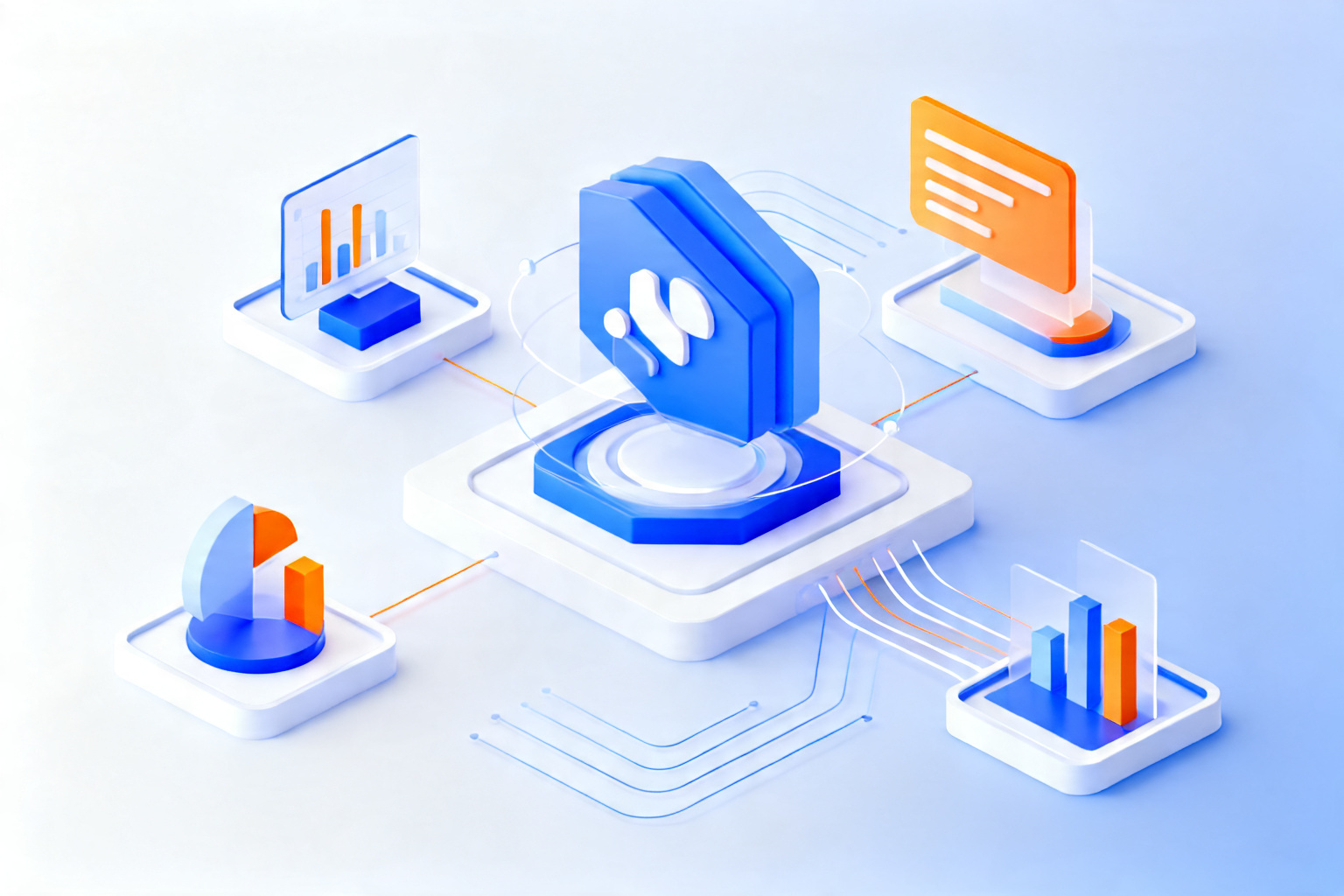 AI Visual Insight: The image shows enterprise intelligent automation interfaces and workflow scenarios, highlighting Agent execution across multiple systems, form processing, and cross-page operations. It works well as an illustration of a non-intrusive execution layer in complex business terminals.
The Coupling of ISSUT and TARS Defines the Upper Limit of an Agent
ISSUT can be understood as the Agent’s eyes. It does more than OCR. It performs semantic-level recognition of screen elements and identifies the meaning of buttons, input boxes, tables, and fields. As a result, even if the interface shifts slightly or the resolution changes, the system is less likely to fail.
TARS acts as the brain. It converts ambiguous tasks into execution plans and replans the path when failures occur. Compared with the fixed scripts used by traditional RPA, TARS is better suited to long process chains, dynamic changes, and business workflows that require multi-step reasoning.
Only the Combination of Both Capabilities Creates a Complete Closed Loop
It is not enough to understand the interface. The system must also infer the next action based on the target outcome. ISSUT answers the question “What am I seeing?” TARS answers “What should I do next?” This is also the fundamental dividing line between enterprise AI Agents and script-based tools.
From an architectural perspective, this perceive-decide-act loop is particularly well suited to domestic technology environments. When domestic operating systems, non-standard controls, and legacy desktop clients coexist, underlying interfaces are often unavailable, while a visual-semantic path is more reliable.
def agent_loop(screen_semantic, user_goal):
    plan = tars_plan(user_goal)          # Generate an execution plan from the goal
    target = issut_detect(screen_semantic)  # Identify actionable elements on the current screen
    action = decide_next(plan, target)   # Match the plan with interface elements
    return action
This pseudocode summarizes the perceive-plan-act loop that an Agent follows during runtime.
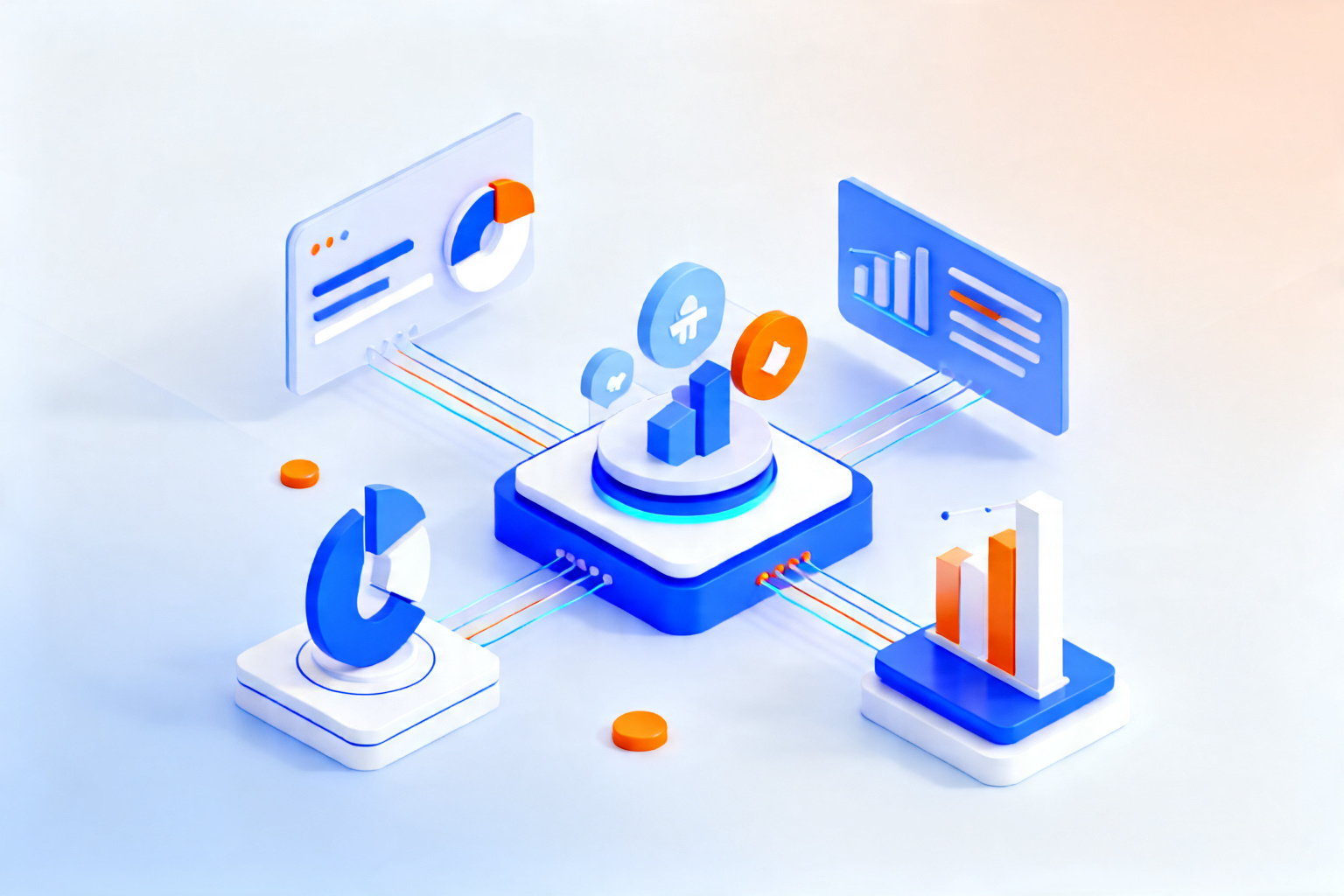 AI Visual Insight: The image presents an intelligent agent execution chain or multi-module collaboration scenario, reflecting the full path from natural language trigger to interface perception and business action execution. It is useful for explaining orchestration and scheduling in complex enterprise workflows.
Four Hard Requirements Must Be Validated First During Vendor Selection
First, verify whether the platform truly supports non-intrusive integration. If the solution requires the enterprise to expose all APIs or rebuild systems first, it is closer to an integration project than a flexible intelligent execution layer.
Second, verify whether it supports domestic technology environments. Domestic CPUs, domestic operating systems, internal network deployment, and permission isolation are all unavoidable constraints in enterprise delivery. A product that cannot run reliably in these environments will struggle to enter core business systems.
Third, verify whether it can tolerate UI changes. Many automation projects fail not because the workflows are too complex, but because a minor page redesign breaks everything. Solutions with semantic recognition and self-healing capabilities offer far greater long-term value.
ROI Should Not Be Measured Only by Initial Procurement Cost
Enterprises need to evaluate total cost of ownership instead. That includes deployment time, maintenance labor, stability after system upgrades, and whether business teams can participate in configuration with a low barrier to entry. In the source case, the delivery cycle was reduced from 45 days to 3 days, showing how strongly architectural choices affect ROI.
Fourth, verify whether the platform supports data closure and private deployment. In finance, HR, and supply chain scenarios, any risk of data leakage can directly determine whether a project is approved. Security and compliance are not bonus features. They are admission requirements.
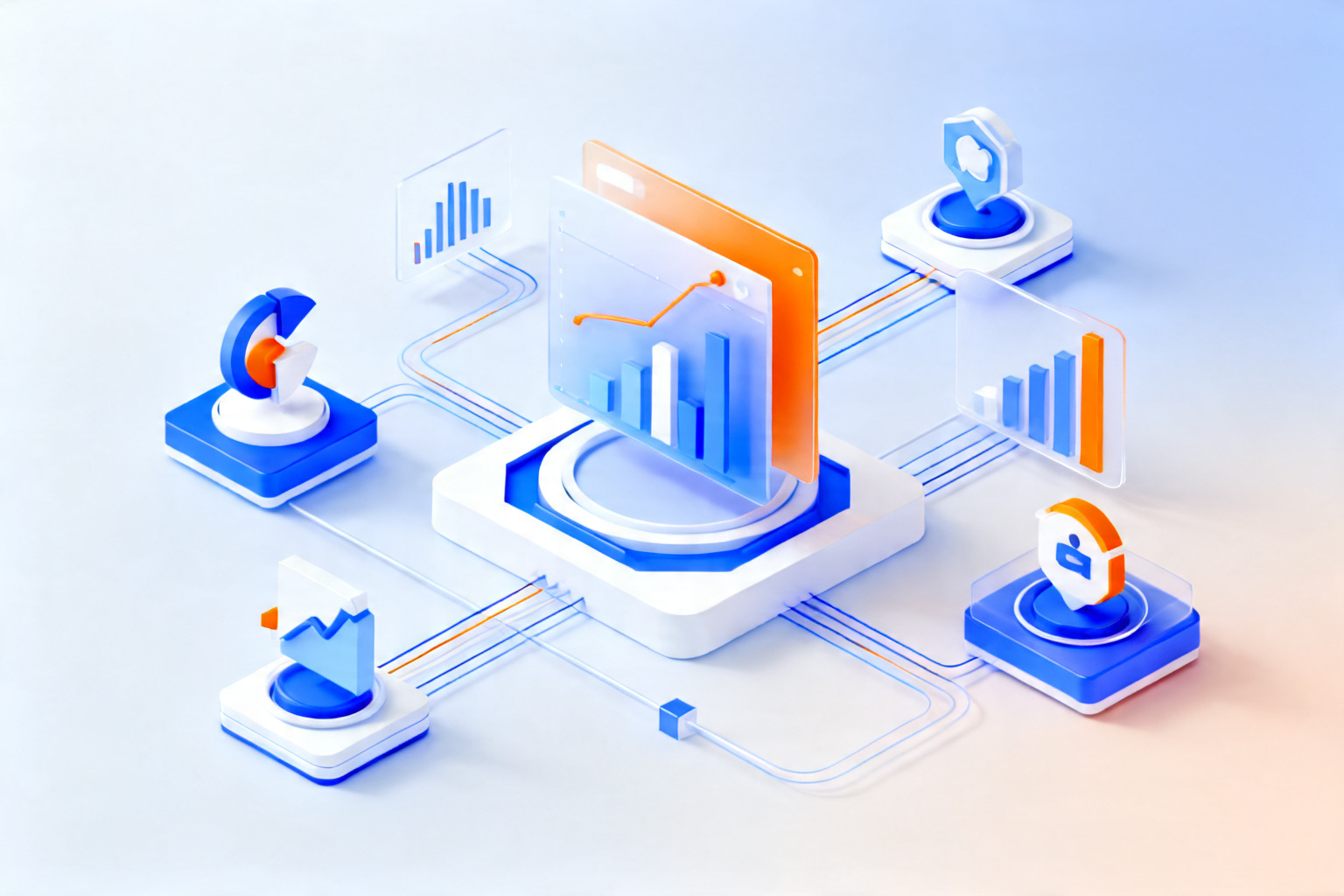 AI Visual Insight: The image emphasizes how enterprise-grade agents are deployed on real office terminals, process nodes, or business dashboards. It helps illustrate the role of the Agent as a digital employee executing cross-system tasks and highlights operational stability in complex environments.
Enterprise Architects Should Validate the Closed Loop First and Scale Later
Enterprises should not begin with an all-in-one platform rollout. Instead, they should first validate high-frequency, business-critical, cross-system workflows with heavy manual repetition, such as financial data entry, order reconciliation, procurement archiving, and customer service ticket routing.
If an Agent platform can prove its non-intrusive capability, UI adaptability, and domestic technology compatibility in these scenarios, then it makes sense to replicate it across departments. More than chasing the most expensive model, enterprises should choose the architecture that can penetrate existing system boundaries most effectively.
FAQ
Q1: Why can’t enterprises rely on API integration alone to deploy AI Agents?
A: Because many core systems do not expose APIs, or the cost of retrofitting them is too high. A non-intrusive architecture bypasses deep system modification and uses screen semantic understanding plus execution orchestration to complete the task loop, making it a better fit for environments where legacy systems coexist.
Q2: What is the core difference between ISSUT and traditional OCR or RPA?
A: ISSUT does more than recognize text. It understands the semantic roles of interface elements, such as buttons, input boxes, and table fields. That makes it more robust against resolution changes, control displacement, and domestic technology environments.
Q3: What should enterprises evaluate first when selecting an AI Agent in 2026?
A: Start with non-intrusive integration, domestic technology compatibility, private deployment, and UI self-healing capability. These four factors determine whether a solution can enter production systems, while model size is not the primary criterion.
[AI Readability Summary]
From an enterprise architect’s perspective, this article breaks down the core bottlenecks of production AI Agent deployment: data silos, missing APIs, brittle RPA, and domestic technology compliance pressure. It also explains how Laiye Agent, ISSUT, and TARS work together, and provides practical vendor selection criteria plus an ROI evaluation framework.