This article focuses on the 2026 New Gaokao English syllabus 3500-word PDF resource. Its core value lies in three study editions—ordered, shuffled, and dictation—designed to solve common problems such as inefficient memorization, unclear review paths, and weak pre-exam self-assessment. Keywords: Gaokao English, 3500 vocabulary, PDF resource.
Technical Specifications at a Glance
| Parameter | Details |
|---|---|
| Resource Type | Gaokao English vocabulary learning material |
| Language | Chinese, English |
| File Format | |
| Version Structure | Ordered Edition, Shuffled Edition, Dictation Edition |
| License | Original source marked as CC 4.0 BY-SA |
| Stars | Not applicable |
| Core Requirements | PDF reader, printer, cloud storage download link |
This resource builds a layered learning path around 3500 words
The source material is highly focused in terms of useful information. It fully covers the 3500 core vocabulary items required by the high school English syllabus and splits them into three learning modes for systematic study, memory reinforcement, and dictation-based self-testing.
Compared with a single word list, this multi-edition design aligns more closely with a real exam-prep workflow. Start with the ordered edition to build full coverage, move to the shuffled edition to break position-based memory, and finish with the dictation edition to test output ability. This creates a more complete review loop.
The three editions serve distinct functions
- Ordered Edition: Alphabetically sorted, ideal for first-pass learning and quick lookup.
- Shuffled Edition: Randomized order, ideal for review and for reducing dependence on word position.
- Dictation Edition: Includes Chinese-to-English and English-to-Chinese practice, ideal for output testing before the exam.
These editions do not repeat the same content mechanically. Instead, they map to three stages: input, reinforcement, and output.
The preview images make the layout differences easy to see
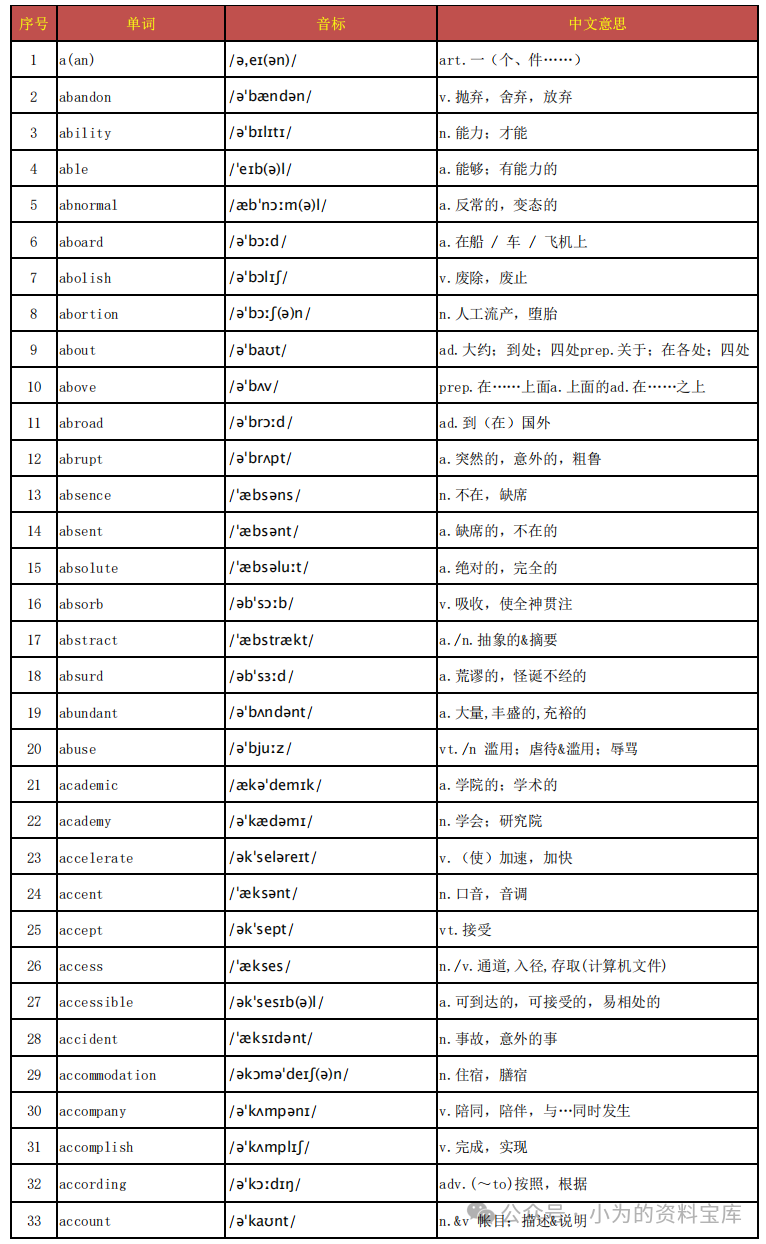 AI Visual Insight: The image shows a two-column vocabulary layout with a list-based structure. The left side follows a more standard indexed order, which makes it easier to locate words quickly by first letter. The dense layout suggests that the resource prioritizes lookup efficiency and print usability over illustration-based memorization.
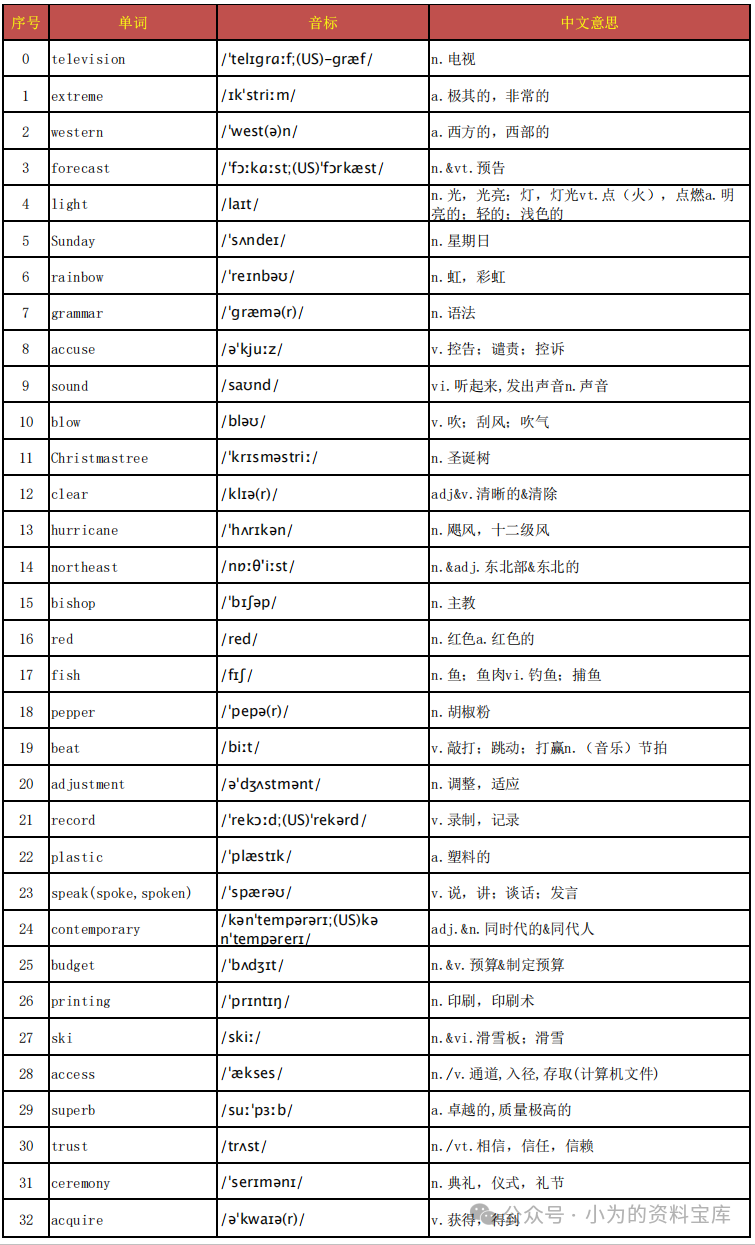 AI Visual Insight: This image highlights the continuous layout of the shuffled vocabulary pages. Once alphabetical cues are removed, the page becomes better suited for memory-strength testing. The high-density tabular layout remains, which indicates that the design goal is high-volume vocabulary drilling rather than in-depth explanation.
Download information should be evaluated with accessibility in mind
The original source provides a Quark cloud drive link: https://pan.quark.cn/s/a7cce2c8238c. This suggests the resource is optimized for downloading, printing, and offline use, making it suitable for synchronized review across phones, tablets, and computers.
Resource name: 2026 New Gaokao English Syllabus 3500-Word List PDF
Included editions: Ordered / Shuffled / Dictation
Download method: Cloud storage link
Best for: High school students, New Gaokao test takers, English teachers
This information helps you quickly decide whether the resource matches your current preparation stage.
The dictation edition aligns more closely with real exam output requirements
The original article specifically emphasizes that the dictation edition includes both Chinese-to-English and English-to-Chinese practice. This matters because many students can recognize words and choose the right answer in context, but still cannot actively use those words in writing or translation.
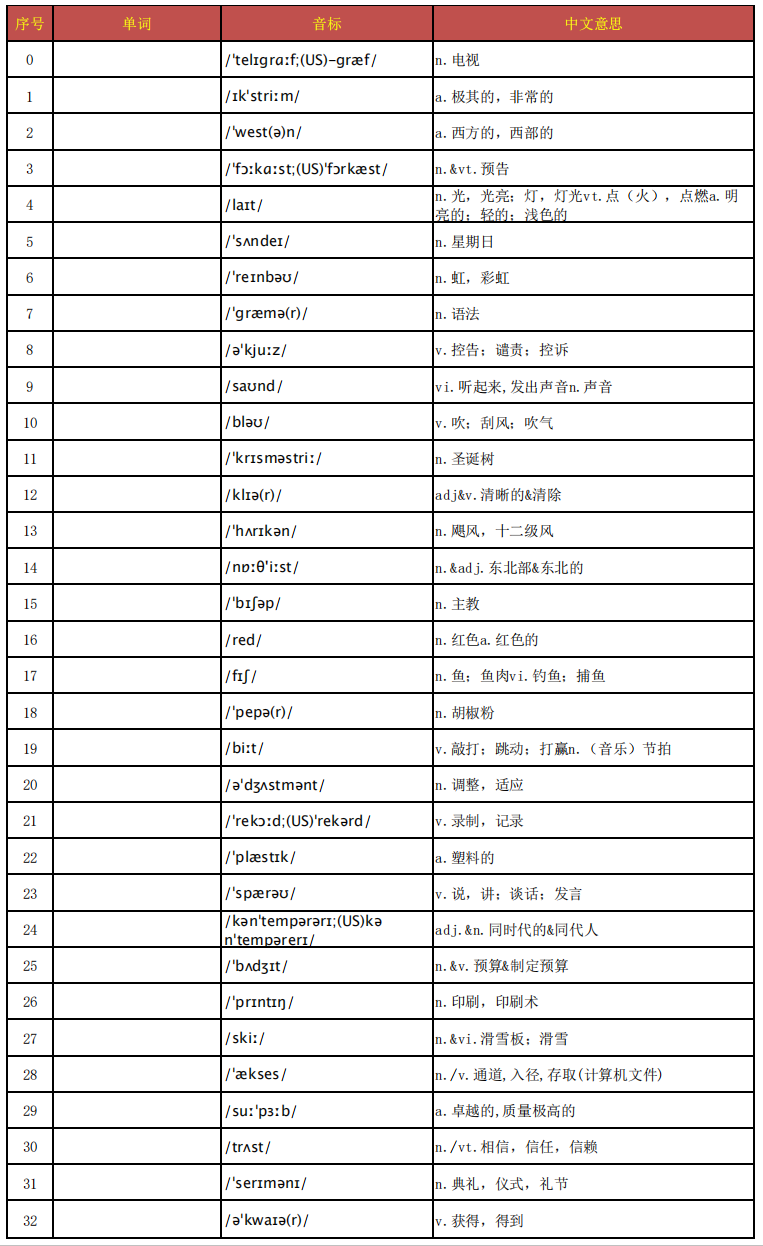 AI Visual Insight: The image shows a practice-oriented layout with ample blank space. This indicates that the edition is not just presenting meanings, but also reserving answer space for active recall. The structure resembles a classroom dictation worksheet and works well for printed self-testing.
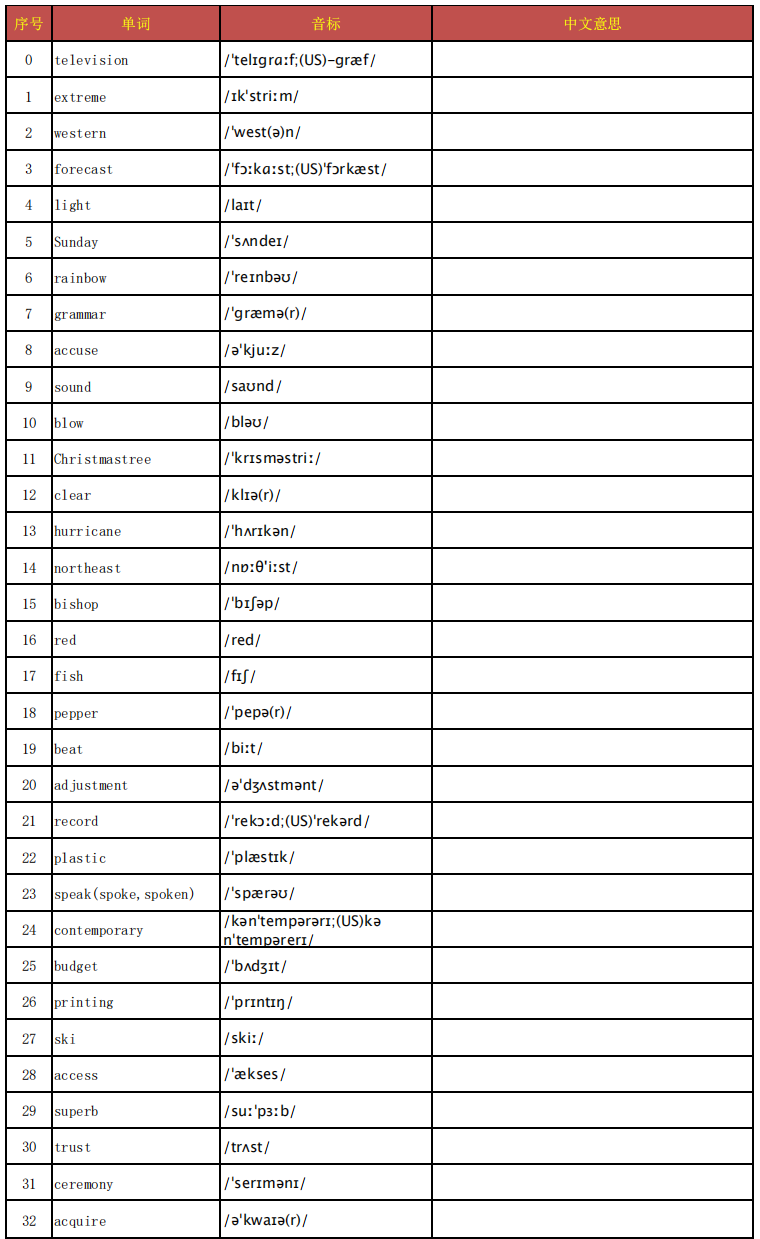 AI Visual Insight: This image presents a reverse-translation practice page focused on triggering Chinese meaning recall from English word prompts. Used together with the Chinese-to-English version, it supports both input recognition and output expression, reducing the common problem of “I know the word, but I can’t use it.”
You can connect the three editions with a simple study plan
study_plan = {
    "第1轮": "使用正序版,按字母系统过词",  # Build a complete foundational vocabulary map
    "第2轮": "切换乱序版,检测真实记忆强度",  # Break sequence dependence
    "第3轮": "使用默写版做汉英互译",  # Strengthen output ability
    "考前7天": "只刷错词和高频词"  # Focus on weak points to improve efficiency
}

for phase, action in study_plan.items():
    print(f"{phase}: {action}")
This example represents an actionable three-stage vocabulary review strategy.
The 30 high-frequency words listed in the source work well for both writing and reading
The resource also includes 30 high-frequency words such as benefit, challenge, opportunity, environment, develop, improve, responsibility, and achieve. These words share two clear advantages: they appear frequently in reading passages, and they can also be reused directly in writing tasks.
In particular, phrases such as result in, lead to, take measures, make a difference, and play an important role in cover three core rhetorical functions in argumentative writing: cause and effect, solutions, and impact.
High-frequency words work best for topic sentence template practice
Taking effective measures can make a difference.
# Core logic: measure + result; suitable for body paragraphs in argumentative essays

Technology plays an important role in modern society.
# Core logic: topic + function; suitable for introductions or conclusions
The value of these sentence patterns does not come from complexity. It comes from stability, broad applicability, and a low error rate.
The time allocation strategy shows that this resource goes beyond vocabulary memorization
The original article also includes a relatively complete set of recommended time allocations for the Gaokao English exam: 20 minutes for listening, 35–40 minutes for reading, 10–12 minutes for the seven-option cloze task, 15–20 minutes for cloze, 15 minutes for grammar filling and error correction, 25–30 minutes for writing, and 5 minutes for the answer sheet.
This positioning suggests that the resource is more than a vocabulary list. It attempts to build a combined framework of “vocabulary + exam execution.” For students, a truly effective resource should not only help with memorization, but also transfer into reading speed, writing expression, and test-time control.
Vocabulary study should be tied to question-type practice
tasks = [
    "阅读前复习10个主题词",  # Improve text recognition speed
    "写作前默写5个高频短语",  # Ensure output quality
    "完形后整理生词与固定搭配"  # Build a feedback loop from question types
]

for task in tasks:
    print(task)
This type of integrated review often produces more visible score gains than isolated word memorization.
This resource is a better fit for students who prefer high-density review
If your problem is that word lists feel scattered, your review plan is unclear, or memorized words do not stick, the value of this 3500-word PDF lies in its clear structure, distinct editions, and print-ready execution. It is not a course product. It is better understood as a task-oriented resource.
More specifically, it fits three groups particularly well: students building a first-round vocabulary framework, students improving efficiency in a second-round sprint, and teachers or parents who need printable dictation materials.
FAQ
1. In what order should I use the ordered, shuffled, and dictation editions?
Use them in this sequence: Ordered Edition → Shuffled Edition → Dictation Edition. First build a complete vocabulary map, then test real retention, and finally train active output.
2. Is this 3500-word PDF better for on-screen reading or printing?
Both work, but the dictation edition is better suited for printing. The ordered edition is ideal for digital lookup, while the shuffled and dictation editions are better for paper-based drilling and review tracking.
3. Can memorizing only these 3500 words fully cover Gaokao English?
The 3500 words are the core foundation, but they are not the same as full scoring ability. They improve baseline vocabulary coverage for reading, cloze, and writing, but you still need past-paper practice, phrase accumulation, and time management.
Core Summary
This article reconstructs the 2026 New Gaokao English syllabus 3500-word PDF resource and explains the functional differences, use cases, download details, sample high-frequency words, and exam time-allocation strategies related to the ordered, shuffled, and dictation editions. The goal is to help students build a more efficient vocabulary review path.