[AI Readability Summary] This control architecture targets Arduino/ESP32-based four-wheel omnidirectional robots. It combines MRAC adaptive control, BLDC drive control, inverse kinematics, and multi-sensor fusion to address load variation, wheel slip, and unstable trajectory tracking. Keywords: MRAC, BLDC, omnidirectional robot.
The technical specification snapshot outlines the platform clearly
| Parameter | Details |
|---|---|
| Primary language | C++, with a small amount of Python/MATLAB pseudocode |
| Target platforms | Arduino Uno, Mega, ESP32-S3 |
| Motor types | BLDC, DC gear motors |
| Control methods | MRAC, PID, FOC, Kalman filtering |
| Sensors | Encoders, IMU, optional vision camera |
| Communication / architecture | Local closed-loop control, expandable to ROS2 DDS |
| Star count | Not provided in the source material |
| Core dependencies | PID control library, kinematics library, MRAC control module, sensor fusion module |
This is a layered control architecture built for challenging ground conditions
The value of this design is not simply that the robot can move. Its value is that the robot remains stable under changing loads. Four-wheel independently driven chassis platforms are common in warehousing, service robotics, and educational systems, but fixed-gain PID control often cannot fully handle changing surface friction, load shift, or motor parameter drift.
By introducing MRAC, the controller no longer depends on a single static tuning point. Instead, it continuously updates control gains through a reference model and an online adaptation law. That enables more stable response during acceleration, deceleration, turning, and lateral translation.
The system can be decomposed into four core layers
- Kinematics layer: convert desired
vx,vy, andωinto target wheel speeds for all four wheels. - Execution control layer: use PID or FOC to make each motor track its target speed.
- Adaptive layer: use MRAC to compensate for load changes, friction, and model uncertainty.
- State estimation layer: fuse encoder and IMU data to correct velocity and attitude errors.

AI Visual Insight: The animation illustrates the motion modes of a four-wheel omnidirectional chassis. It highlights lateral motion, diagonal motion, and in-place rotation, showing that this is not a conventional differential-drive vehicle. Instead, it relies on independent wheel-speed allocation to achieve coupled three-degree-of-freedom control.
The main challenge of an omnidirectional chassis comes from coupled kinematics and dynamics
The core difficulty of controlling a four-wheel omnidirectional or Mecanum chassis is that body velocity and wheel velocity do not map to each other in a simple one-to-one way. Any motion command in a given direction translates into coordinated changes across multiple wheels, and wheel diameter error or installation misalignment can amplify trajectory error significantly.
For that reason, a practical system must first perform parameter calibration, then solve inverse kinematics, and only then enter the motor closed loop. If you map joystick input directly to PWM, the robot will usually only be able to “move,” but not “move accurately.”
void updateAdaptiveGain(float error) {
  adaptive_gain += 0.1f * error;          // Adjust the adaptive gain online based on the error
  motorPID->SetTunings(Kp * adaptive_gain, Ki, Kd); // Dynamically update PID parameters
}

void controlLoop() {
  float error = reference_model - current_speed;    // Deviation between the reference model and actual speed
  updateAdaptiveGain(error);
  motorPID->Compute();                              // Compute the closed-loop control output
  analogWrite(PWM_PIN, target_speed);               // Output PWM to drive the motor
}
This snippet shows the smallest closed loop that combines MRAC and PID: the error drives gain self-adjustment, while the PID controller provides stable actuation.
Dynamic load adaptive control is where MRAC delivers direct value
When the robot carries cargo, climbs a slope, or encounters abrupt changes in surface friction, a fixed-parameter controller can show overshoot, lag, or even oscillation. MRAC defines an ideal reference model and drives the real system to track the target dynamic response continuously.
In engineering practice, the common implementation is to let MRAC update PID gains or torque compensation terms online rather than replace the low-level controller completely. This preserves the interpretability of classical control while adding adaptive capability at reasonable implementation cost.
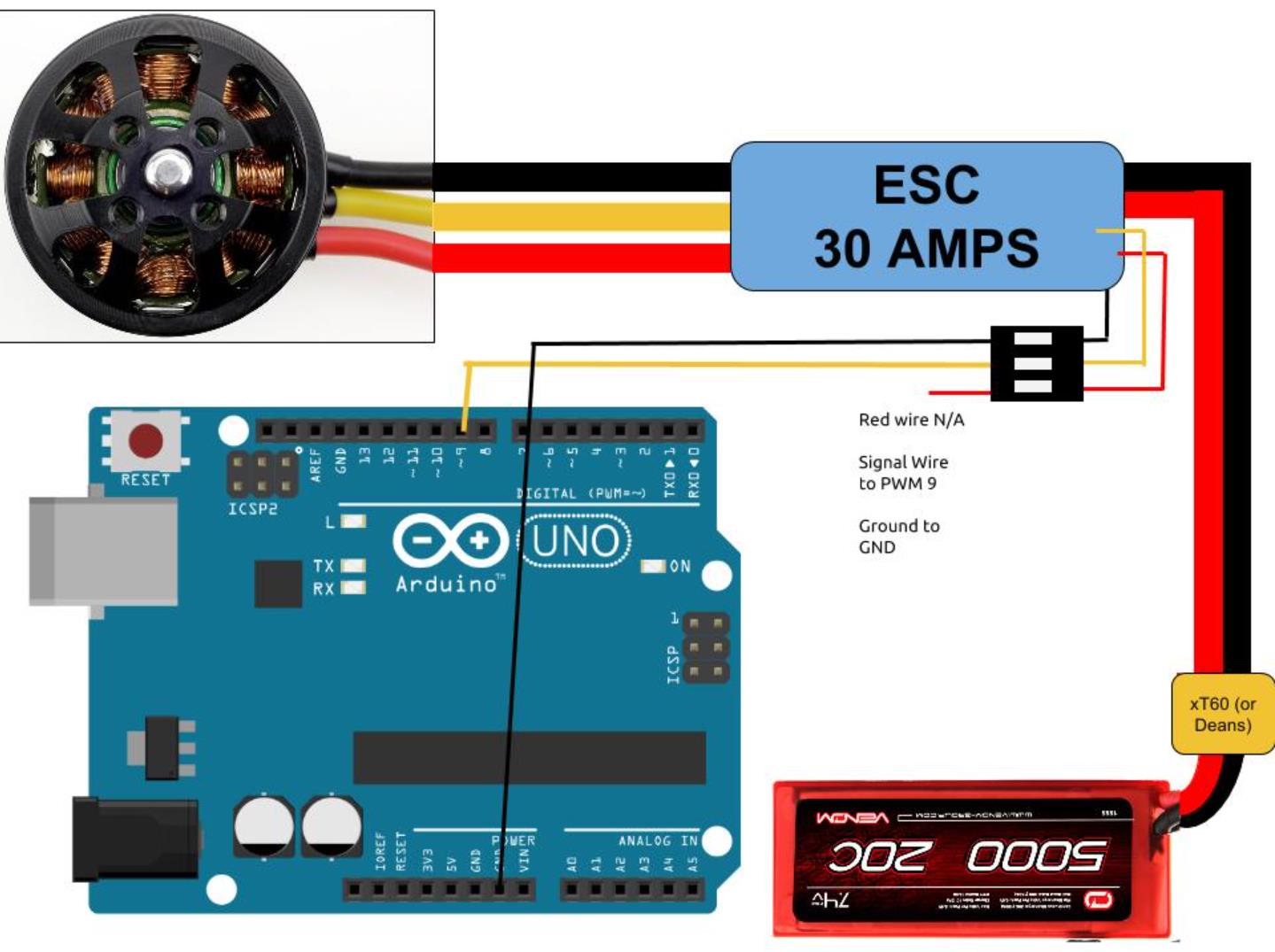
AI Visual Insight: This image corresponds to a dynamic load adaptive control scenario. It typically includes the main controller, motors, encoders, IMU, and the omnidirectional wheel chassis. The focus is the closed-loop chain of sensing, estimation, control, and actuation, as well as the use of MRAC to maintain consistent speed tracking under changing loads.
Four-wheel differential steering still requires a stable inner-loop and outer-loop design
Even on an omnidirectional robot, steering control still depends on an angle outer loop and a speed-difference inner loop. The outer loop handles heading error, while the inner loop distributes the speed difference across the left-right or diagonal wheel pairs. This structure helps suppress steering jitter and wheel slip.
float computePID(float error) {
  float p_term = Kp * error;
  integral += error * dt;                 // Accumulate the integral term to remove steady-state error
  float d_term = (error - last_error) / dt; // Use the derivative term to suppress rapid fluctuations
  float output = p_term + Ki * integral + Kd * d_term;
  last_error = error;
  return constrain(output, -100, 100);    // Limit the output to avoid overdriving
}

void turnControl(float target_angle) {
  float angle_error = target_angle - current_angle; // Compute the heading deviation
  float output = computePID(angle_error);
  setMotorSpeeds(base_speed + output, base_speed - output); // Differential steering
}
This code reflects a classic dual-loop design and works well as the foundational actuator control unit beneath the MRAC layer.
Sensor fusion and anti-slip logic determine the upper bound of control quality
Encoders are well suited for measuring relative displacement, while the IMU excels at detecting attitude change. Used in isolation, however, neither is fully reliable. During wheel slip, encoders overestimate displacement, while an IMU tends to accumulate drift. The most robust approach is to fuse them through a Kalman filter or a complementary filter.
At the same time, anti-slip control should do more than reduce speed when it detects an anomaly. The more important step is to redistribute torque so that the left-right or diagonal wheels recover a balanced traction state.
bool detectSlip() {
  float slip_ratio = (encoder_speed - imu_speed) / imu_speed; // Compute the slip ratio
  return abs(slip_ratio) > SLIP_THRESHOLD;                    // Flag slip when the threshold is exceeded
}

void handleSlip() {
  if (detectSlip()) {
    target_speed *= 0.9f;              // Reduce speed first to lower instability risk
    adjustTorqueDistribution();        // Then adjust torque distribution to restore traction balance
  }
}
The key role of this code is to connect slip detection with torque compensation so that they form a practical closed-loop safety mechanism.
This architecture can continue to scale toward vision navigation and digital twins
The original scheme also points to more advanced evolution paths: vision SLAM-assisted localization, ROS2-based cross-platform communication, and MATLAB/Simscape digital prototype validation. These are not mandatory for Arduino beginners, but they are important for research and complex applications.
If your target is a warehouse AMR or an educational and research platform, a layered architecture is recommended: real-time low-level MCU closed-loop control plus upper-level industrial PC perception and planning. This approach adds path planning, loop closure, and simulation validation without sacrificing real-time behavior.
AI Visual Insight: This figure is closer to a control framework or prototype structure diagram. It usually emphasizes the relationship among the MRAC foundation, kinematic decoupling, and multi-module coordination, helping developers understand the data flow from target velocity and reference model to the four-wheel drive commands.
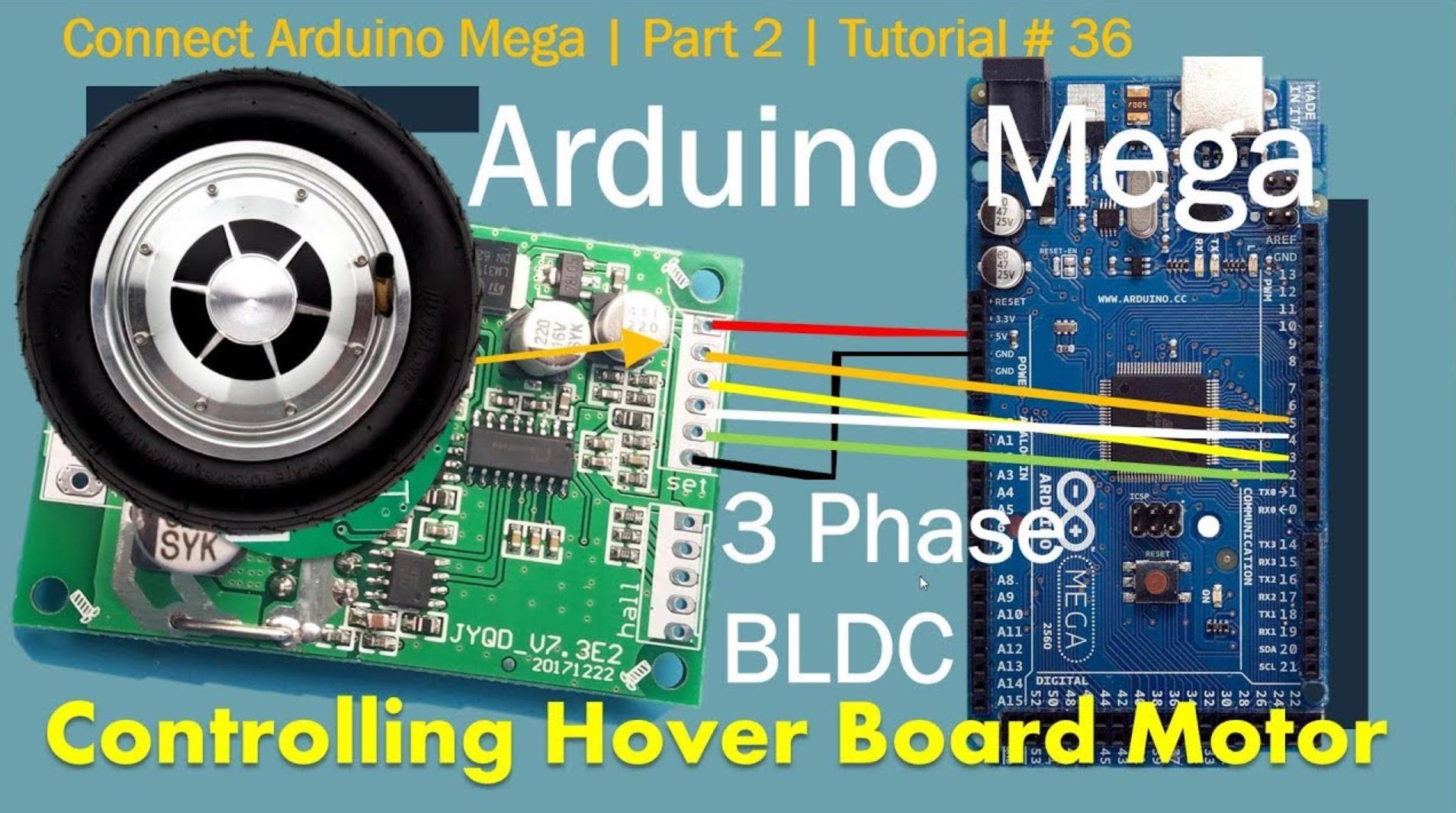
AI Visual Insight: This figure can be interpreted as a deployed system form or an extended architecture diagram. It emphasizes the complete engineering shape of the robot platform after integrating the control electronics with sensors and algorithms, illustrating the full path from control theory to physical deployment.
Four metrics should take priority during engineering implementation
- Verify that the control period remains stable within 10 ms.
- Calibrate wheel diameter, wheelbase, and IMU bias.
- Apply limits to the adaptive gain to prevent divergence.
- Ensure emergency stop, output limiting, and thermal protection operate independently.
The target application scenarios for this solution are already quite clear
This approach is especially suitable for highly maneuverable chassis platforms, dynamic-load transport, educational lab systems, and algorithm validation environments. If you are only building a simple obstacle-avoidance cart, MRAC may be excessive. But if your goal is high-precision trajectory tracking, operation on complex ground surfaces, or multi-sensor coordination, MRAC-based fusion control is highly valuable.
The final conclusion is straightforward: an Arduino-class platform can support prototype validation, but once the system moves into multi-tasking, high-frequency closed-loop control, and complex perception fusion, ESP32-S3, Teensy, or STM32 becomes the more reliable option.
FAQ
1. What is the fundamental difference between MRAC and standard PID?
MRAC dynamically updates control parameters through a reference model and an online adaptation law, which makes it suitable for scenarios with load variation and model uncertainty. PID parameters are typically fixed and depend more heavily on offline tuning.
2. Can Arduino Uno run a complete four-wheel omnidirectional MRAC system directly?
It can support a simplified validation setup, but due to limited compute performance and timing precision, it is better suited to basic PID or lightweight MRAC. If you also need FOC, Kalman filtering, and multi-sensor fusion, ESP32-S3 or a higher-performance MCU is recommended.
3. What engineering step most often causes failure in a four-wheel omnidirectional robot?
It is usually not the code itself, but calibration and synchronization. Wheel diameter error, installation misalignment, incorrect encoder direction, IMU bias, and control-period jitter can all directly break inverse kinematics and degrade closed-loop control performance.
Core summary: This article reconstructs an MRAC-based fusion control architecture for Arduino/ESP32-driven BLDC four-wheel omnidirectional robots. It focuses on inverse kinematics, adaptive parameter tuning, sensor fusion, anti-slip control, and scalable navigation architecture to help developers build a practical layered control strategy quickly.