[AI Readability Summary]
This article walks through the four core components in the FastAPI request lifecycle: Request, Response, middleware, and the dependency system. It addresses common problems such as fragmented parameter handling, inconsistent responses, duplicated cross-cutting logic, and poor reuse of shared parameters. Keywords: FastAPI, Dependency Injection, Middleware.
Technical Snapshot
| Parameter | Description |
|---|---|
| Language | Python |
| Web Framework | FastAPI |
| Underlying Protocol | HTTP / ASGI |
| Data Validation | Pydantic |
| Core Dependencies | fastapi, starlette, pydantic |
| Article Focus | Request, Response, Middleware, Dependency Injection |
| GitHub Stars | Not provided in the original article |
Request provides a unified entry point for reading raw request details in FastAPI.
Outside standard business handlers, developers often need direct access to the low-level request object—for example, to read headers, cookies, query strings, or raw JSON payloads. Request offers a unified interface and works especially well for dynamic fields, debugging, and shared gateway logic.
You can use Request to read headers, path parameters, query parameters, and the request body.
Use request.headers to read header values, request.path_params for path parameters, request.query_params for query parameters, and await request.json() to parse a JSON request body. Together, these cover most common input scenarios.
from fastapi import APIRouter, Request

router = APIRouter()

@router.api_route("/inspect/{name}", methods=["GET", "POST"])
async def inspect_request(request: Request):
    user_agent = request.headers.get("user-agent")  # Read request headers
    name = request.path_params.get("name")  # Read path parameters
    keyword = request.query_params.get("keyword")  # Read query parameters

    body = {}
    if request.method == "POST":
        body = await request.json()  # Read the JSON request body

    return {
        "user_agent": user_agent,
        "name": name,
        "keyword": keyword,
        "body": body,
    }
This example shows how to extract request data from multiple sources in a single endpoint.
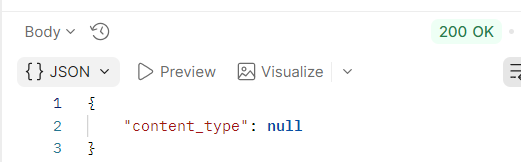 AI Visual Insight: This image shows the request result returned by an API debugging tool. The key detail is that
 content_type is null, which means the sample request did not explicitly include a Content-Type header. It validates how request.headers.get() behaves and reminds developers to proactively validate headers when handling JSON or form data.
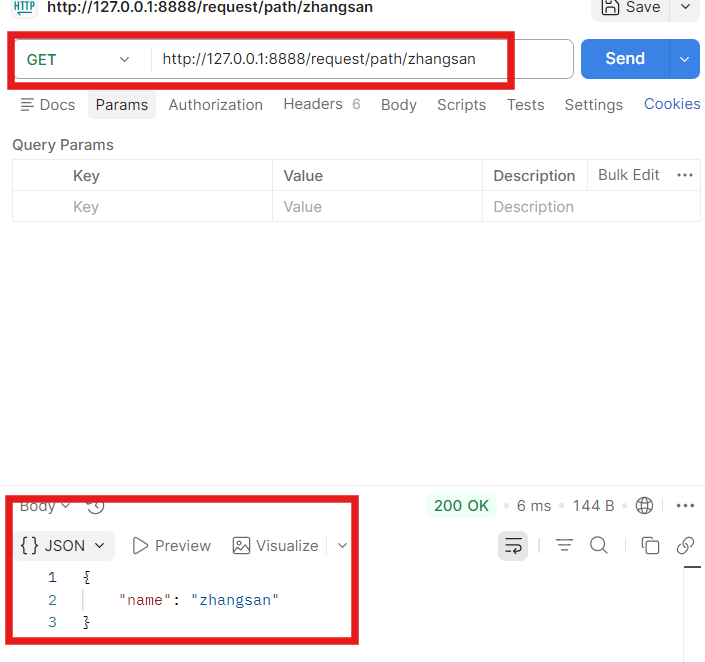 AI Visual Insight: This image shows that the path parameter
 name was successfully parsed and echoed back, confirming that FastAPI binds dynamic URL segments to request.path_params. This pattern is common in RESTful routes for resource lookup, user IDs, and order numbers.
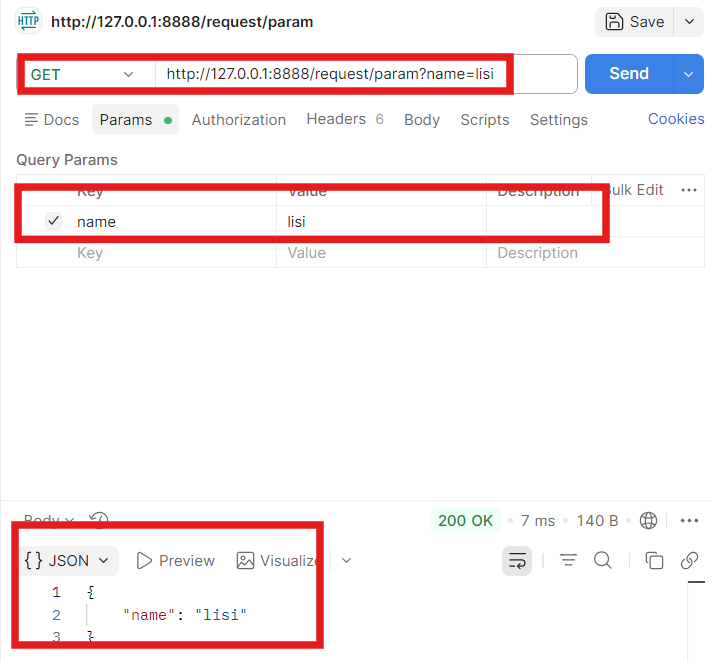 AI Visual Insight: This image shows that key-value pairs from the query string were successfully read by the endpoint, demonstrating that
 request.query_params directly supports the ?key=value structure. These parameters are commonly used for pagination, filtering, and sorting.
Cookies are lightweight state carriers that browsers send back automatically.
HTTP is stateless by design. Cookies matter because the server can store an identifier in the browser and have it automatically returned in later requests. Common use cases include login state tracking, session association, and user preference storage.
from fastapi import APIRouter, Request, Response

router = APIRouter()

@router.get("/cookie/set")
async def set_cookie(response: Response):
    response.set_cookie(
        key="session-id",
        value="1234567890",
        max_age=60,  # Set a 60-second expiration
        httponly=True,  # Prevent frontend scripts from reading it
    )
    return {"message": "Cookie set successfully"}

@router.get("/cookie/get")
async def get_cookie(request: Request):
    session_id = request.cookies.get("session-id")  # Read the cookie from the request
    return {"session_id": session_id}
This code demonstrates the full read/write cookie flow.
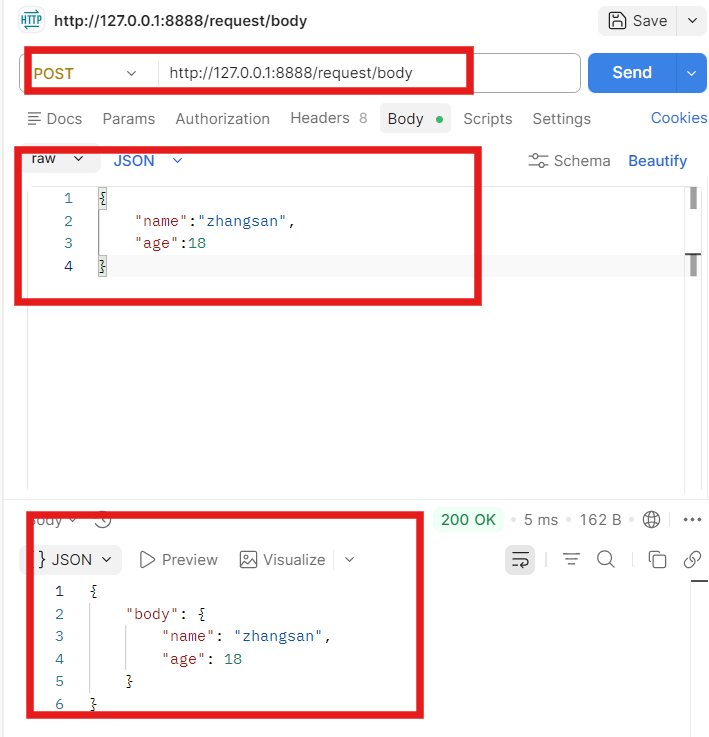 AI Visual Insight: This image shows that the JSON body from a POST request was fully echoed back, indicating that
 await request.json() successfully parsed the raw payload into a Python dictionary. This is especially important when handling dynamic input structures, webhooks, and requests that do not fit a fixed model.
 AI Visual Insight: This image appears to show the browser developer tools network panel, which typically includes request headers, response headers, and cookie tabs. It highlights that when debugging API issues, you should compare the actual headers sent by the browser with the
 Set-Cookie values returned by the server.
Response determines how an API expresses results to the client.
FastAPI can return more than JSON. It also supports HTML, redirects, file downloads, and other response types. Making response behavior explicit creates a clearer API contract and helps both frontend clients and documentation systems understand what the endpoint returns.
response_model can constrain, filter, and validate the output structure.
The core value of response_model is not simply to “declare a return value,” but to standardize the final output. It can filter sensitive fields, enforce a consistent response shape, and fail fast when the returned data does not match the declared schema.
from fastapi import APIRouter
from pydantic import BaseModel, Field

router = APIRouter()

class UserOut(BaseModel):
    id: int
    name: str = Field(min_length=2, max_length=20)
    email: str = Field(pattern=r"^[a-zA-Z0-9._%+-]+@[a-zA-Z0-9.-]+\.[a-zA-Z]{2,}$")

@router.get("/user", response_model=UserOut)
async def get_user():
    return {
        "id": 1,
        "name": "zhangsan",
        "email": "[email protected]",  # The return value is validated against the model
        "password": "secret",  # Extra fields are filtered out
    }
This example shows that response_model acts as both a filter and a validator.
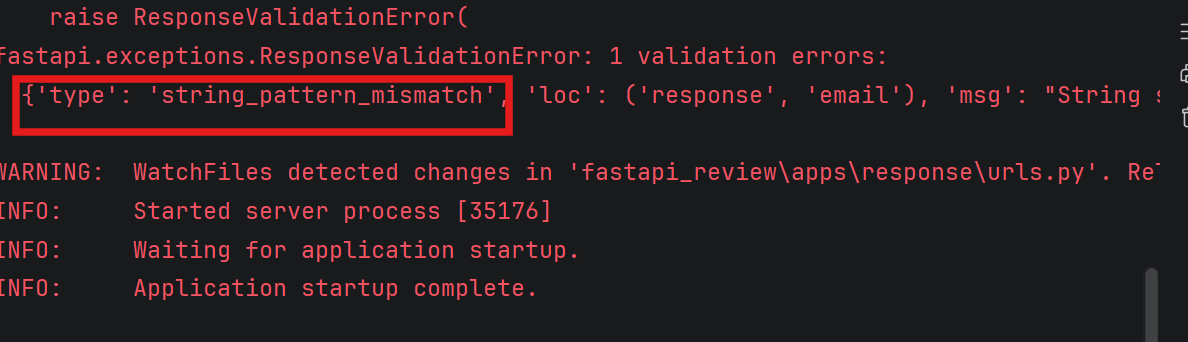 AI Visual Insight: This image shows an error when the returned data does not match the declared model, with the key issue being that the email format failed validation. It directly demonstrates the strong response-time validation capability of
 response_model, which prevents dirty data, sensitive fields, or type errors from reaching production traffic.
FastAPI natively supports multiple specialized response objects.
Common response classes include HTMLResponse, RedirectResponse, and FileResponse. They are well suited for rendering HTML fragments, redirecting to external URLs, and serving file downloads. These are high-frequency capabilities when REST APIs interact with browsers.
from fastapi.responses import HTMLResponse, RedirectResponse, FileResponse

# Return HTML content
html_resp = HTMLResponse("
<h1>Hello FastAPI</h1>")

# Perform a redirect
redirect_resp = RedirectResponse(url="https://baidu.com")

# Return a file download
file_resp = FileResponse("./logo.png")
This snippet summarizes the purpose of three representative response types.
Middleware is the global interception layer for cross-cutting concerns.
Authentication, authorization, logging, rate limiting, and request timing should not be scattered across every route. Middleware centralizes these horizontal concerns at a single entry point and keeps business logic clean.
FastAPI middleware forms a wrapped execution chain based on declaration order.
In FastAPI, the middleware declared later receives the request first and passes it inward. The response then travels back in the reverse direction. In practice, this behaves more like a stack than a simple sequential list.
from fastapi import FastAPI, Request

app = FastAPI()

@app.middleware("http")
async def m1(request: Request, call_next):
    print("Entering m1")  # Pre-processing
    response = await call_next(request)  # Pass the request through
    print("Leaving m1")  # Post-processing
    return response

@app.middleware("http")
async def m2(request: Request, call_next):
    print("Entering m2")  # Pre-processing
    response = await call_next(request)  # Pass the request through
    print("Leaving m2")  # Post-processing
    return response
This code helps visualize the wrapped “downward then upward” middleware flow.
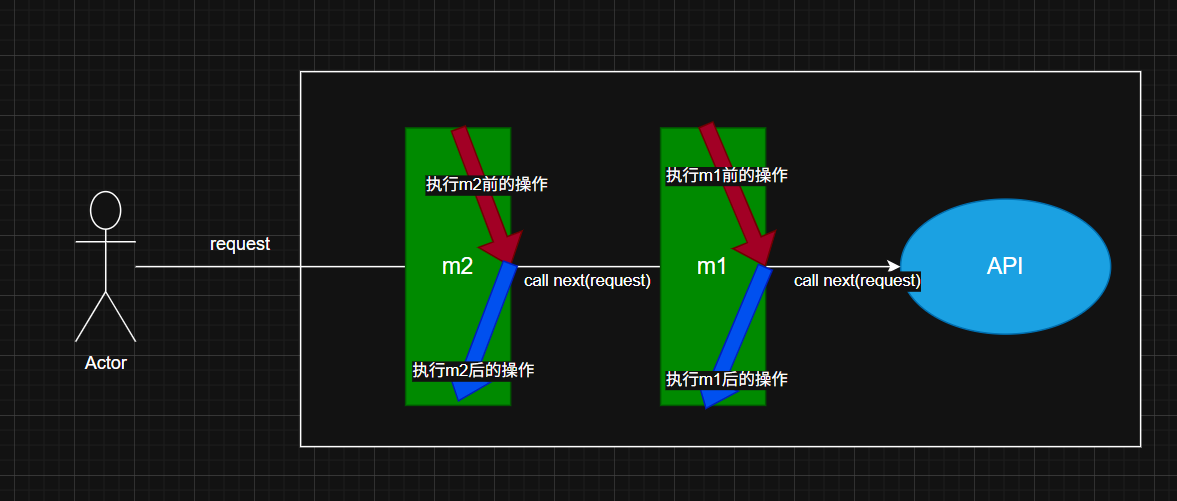 AI Visual Insight: This image shows the nested execution order of two HTTP middleware layers, emphasizing that the middleware registered later receives the request first, then hands control to the middleware registered earlier and finally to the route handler. This execution model is critical for unified logging, authorization, and exception wrapping.
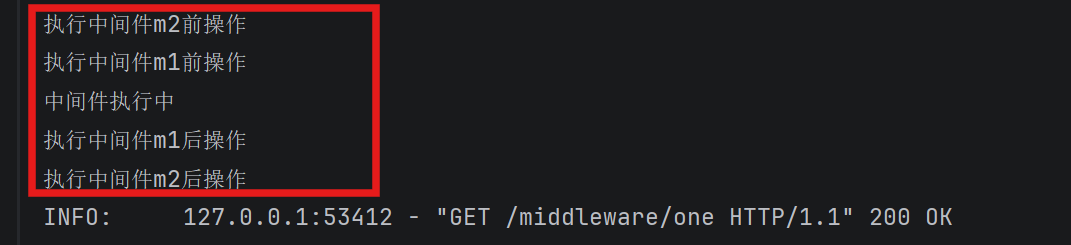 AI Visual Insight: This image likely shows the console log order, proving that the actual output follows: “Entering m2 → Entering m1 → Execute endpoint → Leaving m1 → Leaving m2.” This confirms that middleware is useful not only for request interception, but also for post-response metrics collection and audit logging.
Dependency injection fully decouples shared logic from route handlers.
When multiple endpoints share pagination, authentication, database sessions, or permission checks, copying parameter definitions quickly becomes a maintenance burden. FastAPI’s Depends mechanism is designed to solve exactly this kind of duplication.
Dependency functions declare input sources, and Depends injects the result.
A dependency is fundamentally just a regular function, but its parameters can declare their sources through helpers such as Query and Header. FastAPI automatically parses the request, calls the dependency function, and injects its result into the target route.
from fastapi import APIRouter, Depends, Query

router = APIRouter()

def get_page_params(
    offset: int = Query(0, description="Pagination offset"),
    limit: int = Query(10, description="Page size"),
):
    return {"offset": offset, "limit": limit}  # Standardize pagination parameters in one place

@router.get("/users")
async def list_users(page=Depends(get_page_params)):
    return {
        "offset": page["offset"],  # Injected pagination values
        "limit": page["limit"],
    }
This example shows how pagination parameters can be defined once and reused everywhere.
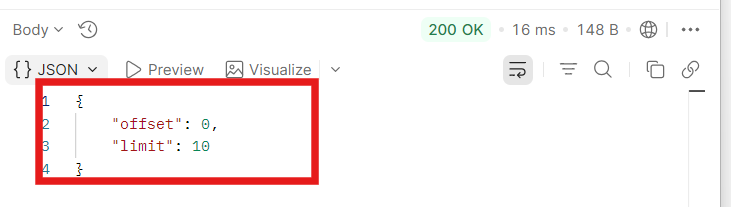 AI Visual Insight: This image shows that when no explicit parameters are passed, the endpoint returns the default
 offset and limit, confirming that the Query defaults declared in the dependency function were automatically applied. This reflects the engineering value of the dependency system in parameter standardization.
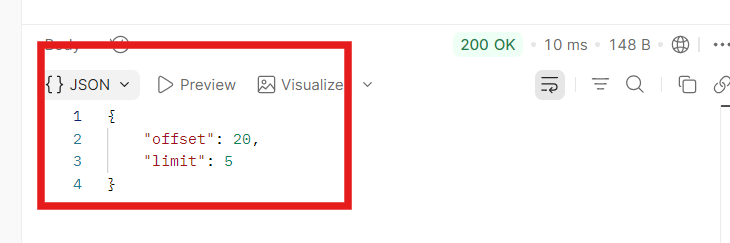 AI Visual Insight: This image shows that after the URL includes
 offset=20&limit=5, the dependency function automatically parses and injects the new values. It proves that the dependency system not only enables logic reuse, but also provides request parsing, type conversion, and default-value override behavior.
The dependency system is ideal for pagination, authentication, authorization, and database session management.
If a piece of logic is reused across multiple endpoints and needs access to request context or early validation, dependency injection should be your first choice. This keeps routes focused on business intent while centralizing shared rules.
FAQ
1. How should you choose between Request and declaring fields directly in function parameters?
Prefer declaring path parameters, query parameters, and request body models directly in function parameters, because that aligns better with FastAPI’s automatic validation system. Use Request directly only when you need dynamic access to the raw request, need to inspect headers for debugging, or need to implement shared gateway logic.
2. Both middleware and dependency injection can handle authentication. What is the difference?
Middleware is better for global, uniform, business-agnostic interception logic such as logging, CORS, and rate limiting. Dependency injection is better for route-level reusable business rules such as current-user resolution, role checks, and database session injection.
3. Why is response_model recommended over directly returning a dict?
Because it automatically filters extra fields, validates types, and generates more reliable OpenAPI documentation. In team environments and production APIs, response_model is a key mechanism for preserving response stability and security.
Core summary: This article systematically explains the four core FastAPI mechanisms—Request, Response, middleware, and dependency injection. It covers headers, path parameters, query parameters, request bodies, cookies, response_model, redirects, file responses, and reusable pagination dependencies to help developers quickly build maintainable API architectures.