This report distills 13 trending GitHub projects from 2026-05-01 and focuses on three major themes: AI agent engineering, Rust/Zig terminal infrastructure, and vertical multi-agent frameworks. It helps developers quickly identify technology signals and reusable tools. Keywords: GitHub Trending, AI Agent, Rust.
Technical Specifications Snapshot
| Parameter | Details |
|---|---|
| Ranking Date | 2026-05-01 |
| Ranking Type | GitHub Daily Trending |
| Number of Trending Projects | 13 |
| Primary Languages | Rust, Python, TypeScript, Zig |
| Distribution Model | Public GitHub repositories, with data sources including GitHub Trending and public APIs |
| Representative Project Stars | public-apis 429502, superpowers 174554, TradingAgents 57691 |
| Core Dependency Patterns | LLMs, multi-agent frameworks, terminal emulators, documentation tools, OSINT tools |
This Trending List Shows Developer Tools Converging on the Agent Execution Layer
The GitHub trending list on 2026-05-01 is no longer just a collection of “model invocation” projects. It has clearly shifted toward executable agent workflows. Terminals, skills frameworks, browser automation, financial analysis, and documentation pipelines are beginning to converge around the same goal: turning AI from an advisor into an executor.
This shift sends two signals. First, foundational tools such as Warp and Ghostty continue to rise, which suggests developers are still willing to invest in high-throughput interaction interfaces. Second, skill-oriented repositories such as superpowers, jcode, and browserbase/skills are growing rapidly, which shows the community is actively filling in the action layer for agents.
projects = [
    {"name": "warp", "tag": ["Rust", "AI"]},
    {"name": "TradingAgents", "tag": ["Python", "LLM"]},
    {"name": "superpowers", "tag": ["AI", "Skills"]},
]

# Aggregate projects by tag to quickly identify technical themes
summary = {}
for item in projects:
    for tag in item["tag"]:  # Core logic: iterate through each project's tags
        summary[tag] = summary.get(tag, 0) + 1  # Count tag frequency

print(summary)
This code clusters trending projects at a glance and helps identify the strongest technical themes of the day.
Three Trends Have Become the Dominant Narrative in This Ranking
AI Agents Are Moving from Assistive Generation to Endpoint Execution
Warp defines the terminal as an agentic development environment, jcode emphasizes a Coding Agent Harness, and browserbase/skills gives agents the ability to operate on the web. This indicates that code generation is only the entry point. The real competitive edge lies in closed-loop task execution, tool use, and environment interaction.
High-Performance Terminal Infrastructure Is Regaining Strategic Importance
Warp is built with Rust, while Ghostty is built with Zig and emphasizes GPU acceleration and native UI. Together, they show that as AI enters the software development workflow, the terminal is no longer just an input-output window. It is becoming the core interface for context integration, command suggestions, automated execution, and feedback observation.
Multi-Agent Systems Are Becoming Deployable Frameworks in Vertical Industries
TradingAgents combines multi-agent systems with financial trading, which shows that AI engineering has entered the stage of scenario-level closed loops. Projects like this no longer aim for generic demos. Instead, they emphasize domain roles, task decomposition, data processing, and strategic decision-making.
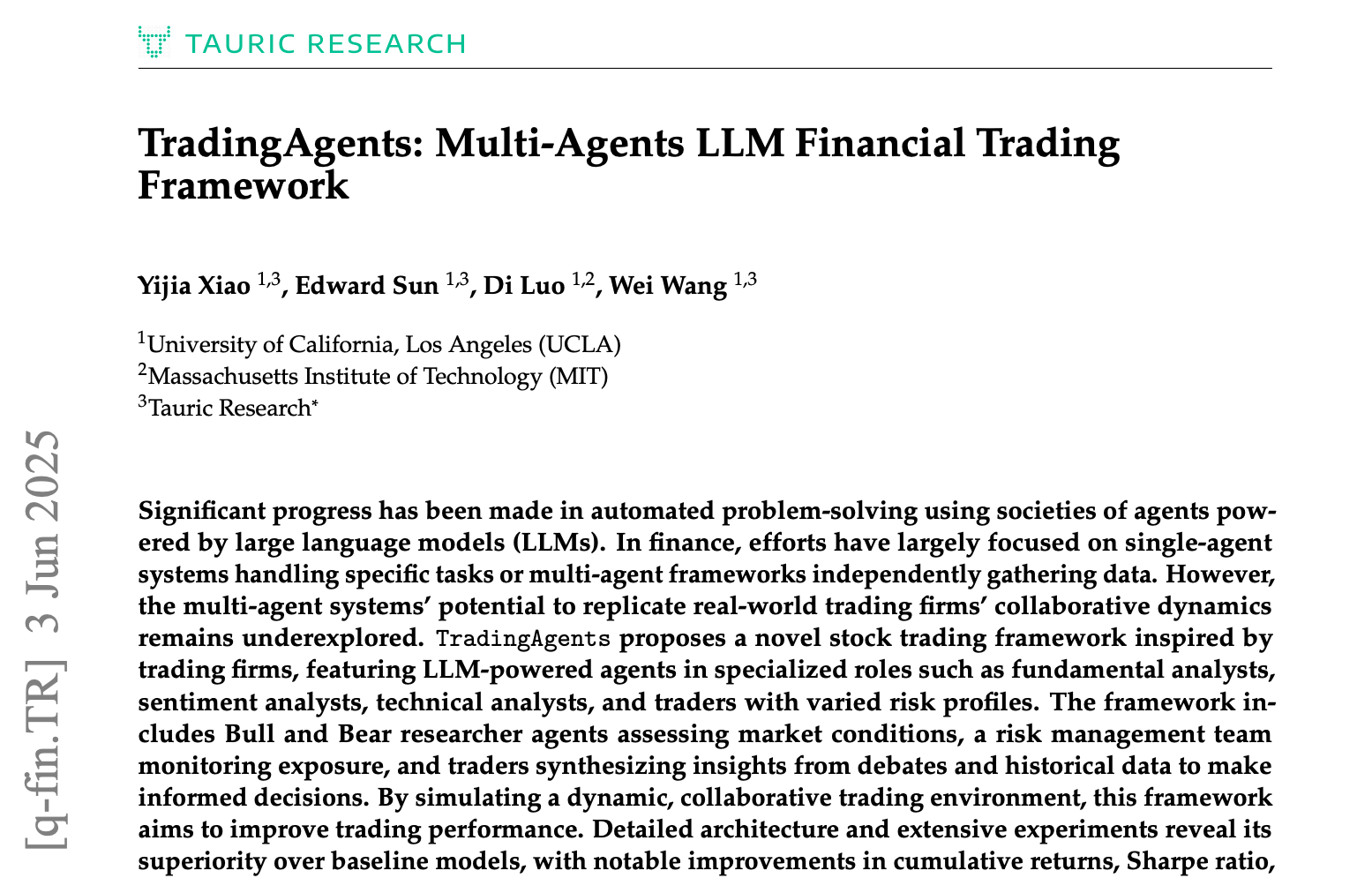 AI Visual Insight: This image shows the TradingAgents project cover and visual identity. It primarily communicates the project’s positioning as a multi-agent financial trading framework. Covers like this typically highlight agent collaboration, data analysis, and financial decision-making scenarios, making them useful for identifying the project’s vertical industry focus.
Leading Projects Can Be Grouped into Four Capability Stacks
The first category is terminals and development environments: warp and ghostty. They address high-frequency interaction, low-latency feedback, and AI-native integration. They are especially suitable for heavy CLI users and efficiency-oriented teams.
 AI Visual Insight: This image presents the Ghostty terminal interface or project showcase page. It typically highlights a dark theme, clear typography, multiple tabs, or high-performance rendering, reflecting its product positioning as a native UI terminal with GPU acceleration.
The second category is agent skills frameworks: superpowers, mattpocock/skills, browserbase/skills, and jcode. These are not single-purpose applications. Instead, they provide a reusable set of capability modules that help teams quickly build automated coding, browsing, and task execution workflows.
 AI Visual Insight: This image corresponds to the superpowers project showcase page. It typically emphasizes the idea of a “skills framework” and its methodology, reflecting that the repository focuses more on workflow orchestration, capability templates, and engineering practices than on single-point utility functions.
# Clone and quickly inspect trending repositories
repos=(
  "https://github.com/warpdotdev/warp"
  "https://github.com/TauricResearch/TradingAgents"
  "https://github.com/obra/superpowers"
)

for repo in "${repos[@]}"; do
  git clone "$repo"  # Core logic: batch clone repositories for local evaluation
done
This script batch-clones high-value repositories for local code review and feasibility validation.
The third category is vertical scenario tools: TradingAgents, maigret, and GhostTrack. The first targets financial trading, while the latter two focus more on OSINT and security investigations. Together, they show that AI and automation are moving deeply into professional domains.
 AI Visual Insight: This image shows the GhostTrack project cover. Its visual elements typically emphasize tracking, geolocation, or intelligence analysis semantics, reflecting its use in security research involving phone number or location-based information retrieval.
The fourth category is knowledge and content infrastructure: public-apis, quarkdown, and open-source-cs. These projects do not act directly as agents, but they provide data entry points, document production capabilities, and structured learning materials for both agents and developers.
 AI Visual Insight: This image is the public-apis project showcase. It typically communicates an API directory, categorization system, or resource aggregation structure, emphasizing its strong connective value and high reusability as a free API index.
For Developers, Project Prioritization Matters More Than Popularity Alone
If you care about personal productivity, prioritize Warp, Ghostty, and superpowers. These projects can most directly change your day-to-day development workflow, and their adoption cost is relatively low.
If you are building enterprise-grade AI applications, prioritize TradingAgents, browserbase/skills, and jcode. These repositories already address core engineering problems such as task decomposition, tool invocation, browser execution, and workflow orchestration.
If your focus is learning and resource building, public-apis, open-source-cs, and quarkdown deserve long-term attention. They may not always be the hottest projects, but they have the longest reuse cycle and work well as foundational knowledge assets.
A Simple Evaluation Framework for Trending Projects Is Already Practical Enough
For usability, check whether the documentation is complete. For portability, check whether the project has clear module boundaries. For production potential, check whether it supports a real task closed loop. For community momentum, check whether the star base and recent growth move together.
def score_project(stars, trending, reusable):
    base = min(stars / 10000, 10)
    growth = min(trending / 100, 10)
    # Core logic: combine community size, growth rate, and reuse value
    return round(base * 0.4 + growth * 0.3 + reusable * 0.3, 2)

print(score_project(49153, 399, 9))
This code creates a lightweight scoring model for trending repositories and helps you decide which project to review first.
This Edition Supports One Clear Conclusion
GitHub Trending is showing that the next phase of open-source competition will not belong to model capability alone. It will belong to a composite stack of model + tools + environment + skills. The projects that continue to get cited and reused are usually not the ones that demo best, but the ones that complete the task loop most effectively.
For technical teams, the most important takeaway from this ranking is not any single star repository. It is an emerging engineering paradigm: high-performance terminals carry interaction, skills frameworks organize capabilities, agent systems perform execution, and vertical scenarios accumulate commercial value.
FAQ
1. Why do AI agent projects account for such a large share of this GitHub trending list?
Because community attention has shifted from general-purpose Q&A to executable workflows. Developers increasingly need systems that can call tools, operate terminals, browse the web, and complete closed-loop tasks, rather than model wrappers that only generate text.
2. Which projects are the best for ordinary developers to try right away?
Warp, Ghostty, public-apis, and superpowers have relatively low adoption barriers. They map to terminal efficiency, performance experience, data resources, and skills templates respectively, and can deliver practical value quickly.
3. What types of trending projects should enterprise teams prioritize?
They should prioritize projects with task orchestration, tool invocation, and scenario-level closed-loop capabilities, such as TradingAgents, browserbase/skills, and jcode. These repositories are much closer to production systems than to single-purpose demo tools.
Core Summary: Based on the GitHub Daily Trending list for 2026-05-01, this report extracts 13 high-profile open-source projects and three major technology trends: AI agent engineering, terminal performance infrastructure upgrades, and vertical deployment of multi-agent systems. It is designed to help developers quickly identify high-value repositories and meaningful technical directions.