The core value of a WeChat Mini Program is that it provides a low-barrier way to build a presence, marketing channel, and transaction entry point. It solves the high cost, slow release cycle, and long user acquisition path associated with traditional app development. This article walks through account registration, development options, publishing review, and common use cases. Keywords: WeChat Mini Program, SaaS website builder, publishing review.
Technical Specifications Snapshot
| Parameter | Description |
|---|---|
| Target Platform | WeChat Mini Program |
| Primary Languages | JavaScript / WXML / WXSS (native development); visual configuration (SaaS) |
| Release Process | Review and publishing through the WeChat Official Accounts Platform |
| Article Popularity | Approximately 2k views |
| Engagement Data | 5 likes / 18 saves |
| Core Dependencies | WeChat Official Accounts Platform account, WeChat Developer Tools, or a third-party SaaS platform |
| Payment Prerequisite | WeChat Pay can be enabled for business entities or sole proprietorships |
The WeChat Mini Program workflow can be divided into three stages
The source material presents a very clear core idea: first register an account, then build the Mini Program, and finally submit it for review and publishing. For most businesses and merchants, a Mini Program is no longer just a display page. It has become a foundational entry point that connects branding, transactions, and private traffic operations.
From an implementation perspective, building a Mini Program is not mysterious. What actually determines project success is whether you get the entity type, development path, feature boundaries, and review preparation right the first time.
The first step is to prepare a usable Mini Program account
Before development begins, you need to register on the WeChat Official Accounts Platform. If you already have an Official Account, you can also use the Mini Program management capability in the admin console for faster registration and verification. This reduces the time spent entering duplicate information.
You should confirm the account entity type as early as possible. If the project involves order placement, payments, stored-value membership, or other transaction capabilities, you should choose a business entity or sole proprietorship. Personal accounts usually cannot enable WeChat Pay, and this is one of the most common limitations beginners overlook.
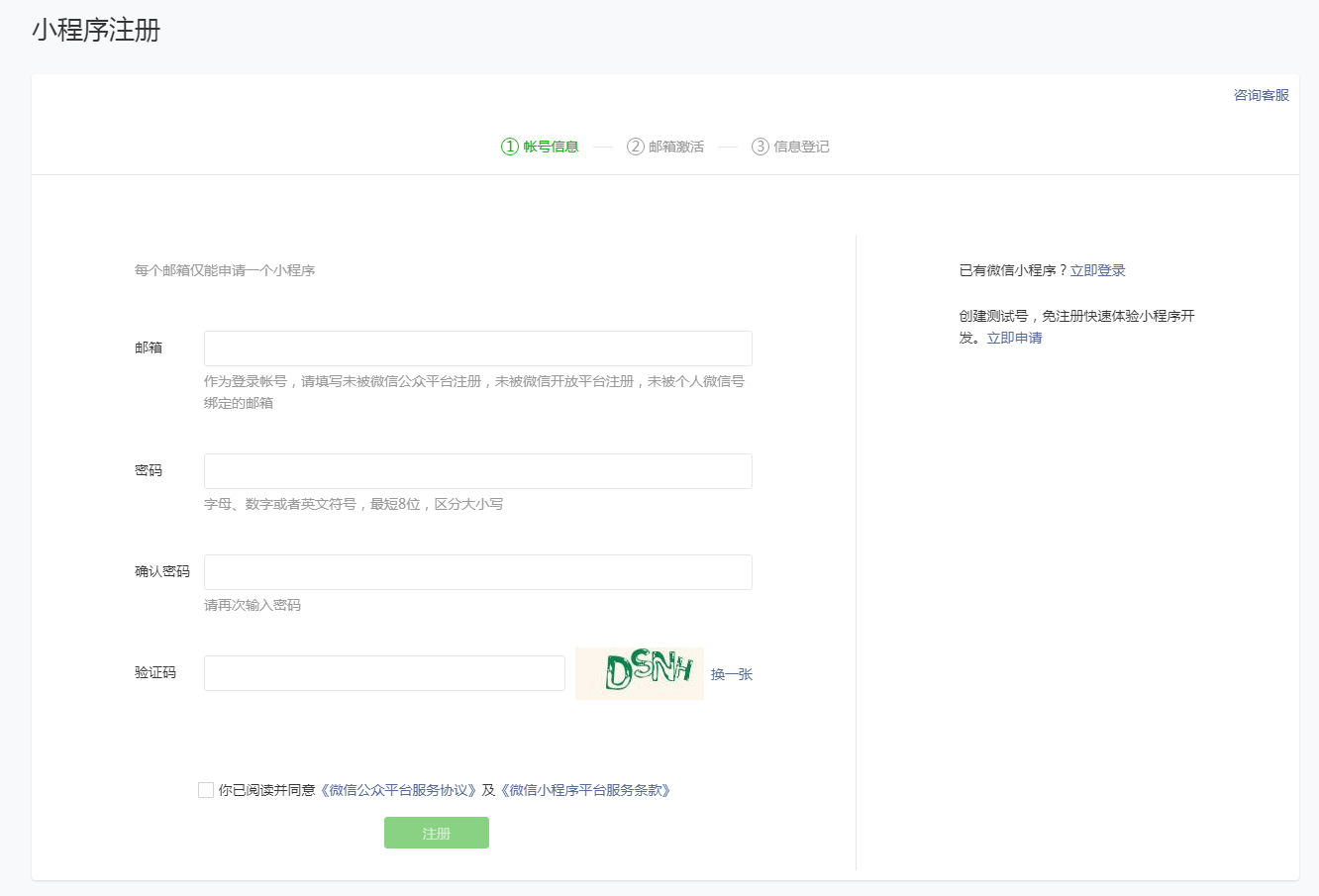 AI Visual Insight: The image shows the Mini Program registration or management interface in the WeChat Official Accounts Platform, with emphasis on the account entry point, entity verification, and basic information setup. This indicates that Mini Program development does not start with writing code. It starts with establishing platform-level identity and permissions.
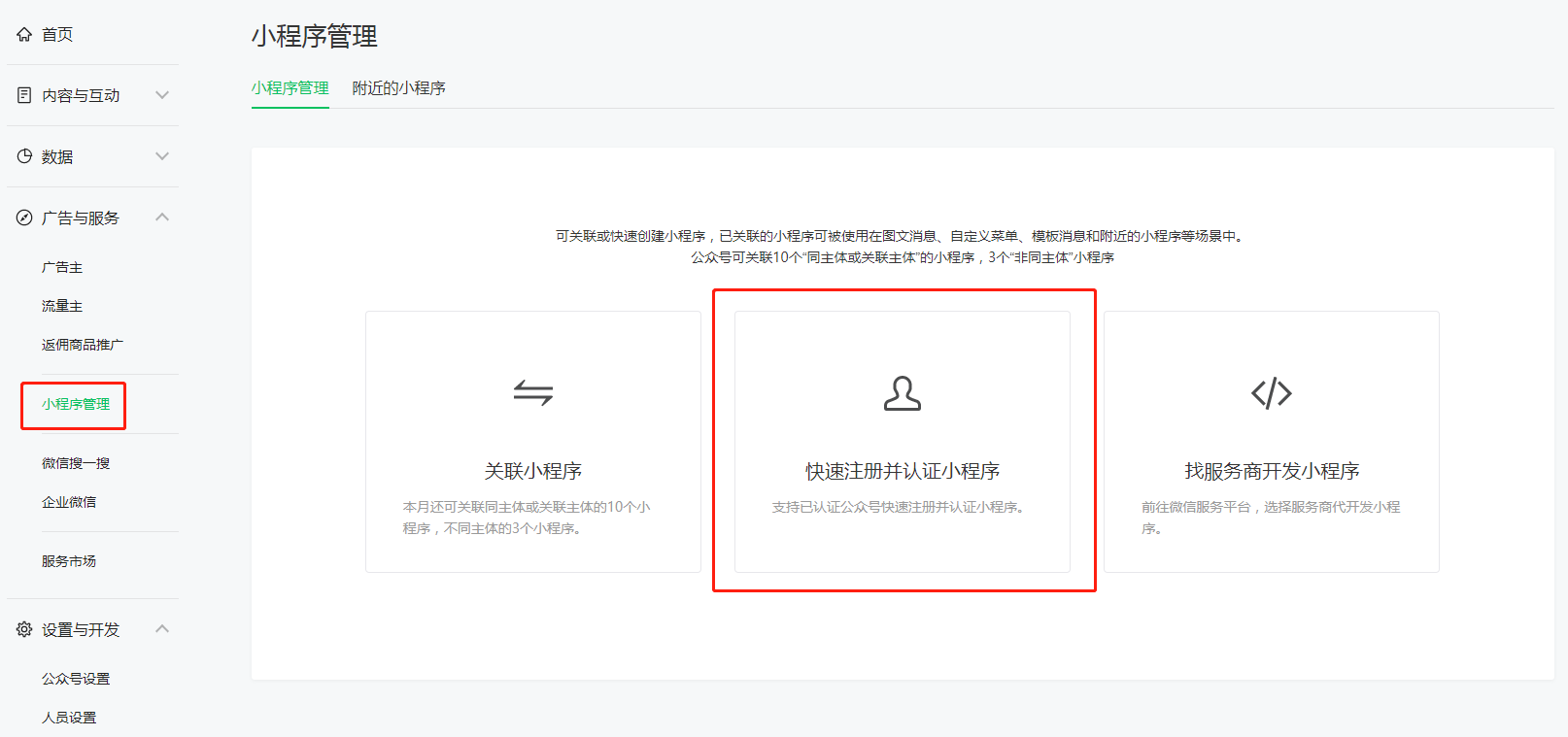 AI Visual Insight: This screenshot highlights field entry and verification steps in the Mini Program account application flow. It shows that details such as the name, entity, administrator, and service category directly affect later review efficiency and feature permissions.
// Account capability checklist before starting a Mini Program project
const appSetup = {
  subjectType: '企业', // Determines whether commercial capabilities such as payments are available
  needPayment: true,   // Whether WeChat Pay is required
  hasOfficialAccount: true // Whether an Official Account already exists for fast registration
}

function canUseWechatPay(setup) {
  // Only continue the payment integration process when the entity is a business or sole proprietorship and payment is required
  return ['企业', '个体工商户'].includes(setup.subjectType) && setup.needPayment
}

console.log(canUseWechatPay(appSetup))
This code helps teams quickly determine at the beginning of a project whether the entity type satisfies the prerequisites for WeChat Pay integration.
The development approach should be selected based on budget and timeline
The original article outlines three paths: build it yourself, use a SaaS builder, or outsource development. None of these options is absolutely better than the others. The key is whether the business complexity matches your team’s capabilities.
If you have front-end and API development skills, you can use WeChat Developer Tools for native development. This path offers the highest level of flexibility and is suitable for custom business logic, complex interactions, and long-term iteration. However, it also means higher costs for testing, deployment, and maintenance.
SaaS template-based delivery is now the more mainstream option
For standardized scenarios such as corporate showcases, store reservations, basic e-commerce, and event registration, SaaS Mini Program tools are usually more efficient. Their advantages include ready-made templates, visual page editing, and no need to code from scratch. This makes them a good fit for merchants who want to launch quickly.
The general workflow distilled from the source content is also very stable: choose a template first, modify it as needed, then bind the Mini Program account and publish. In essence, this is a process of reuse first, light customization second, and platform review last.
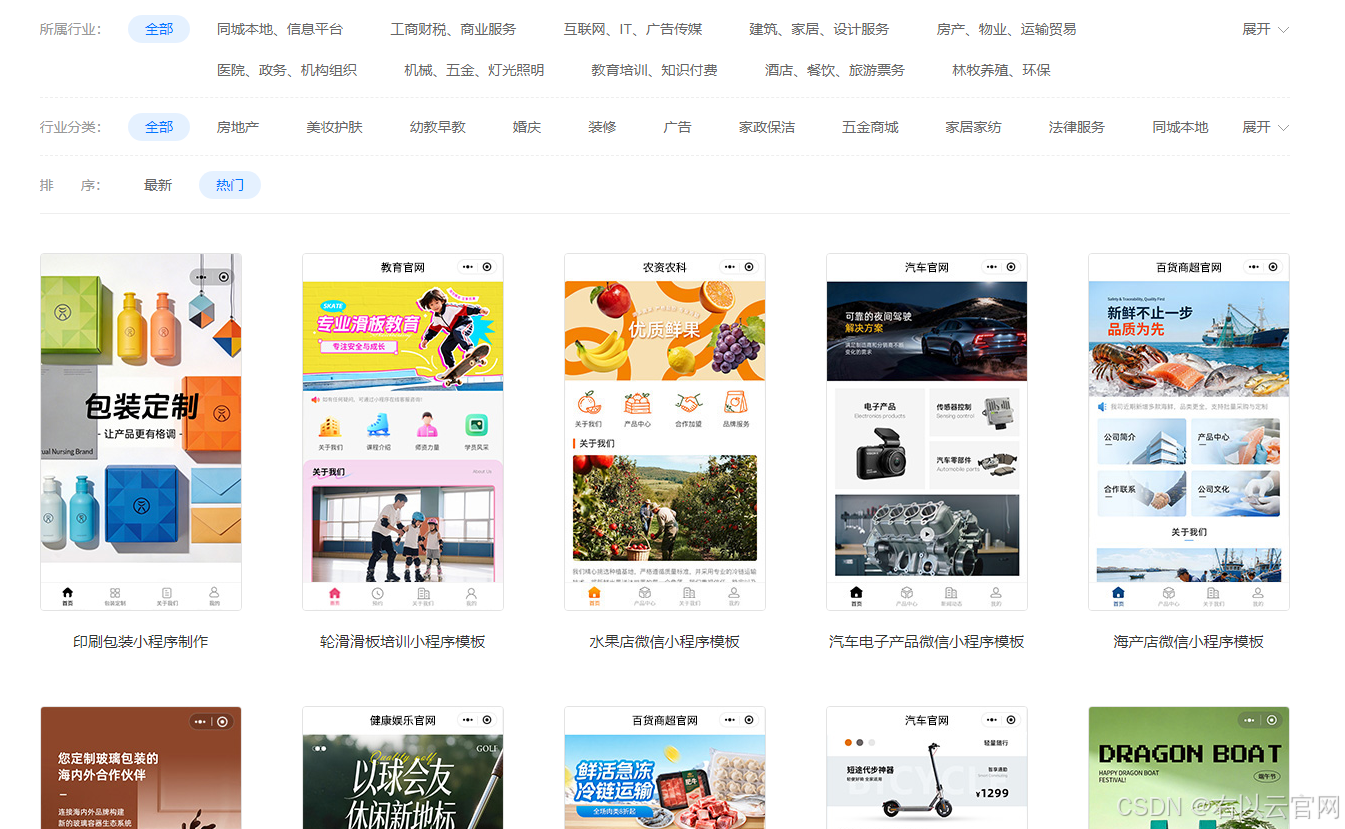 AI Visual Insight: This image shows a Mini Program template marketplace or template selection interface, indicating that platforms usually provide preset page structures by industry and function. From a technical perspective, this means front-end components, page routing, and common business modules have already been pre-packaged.
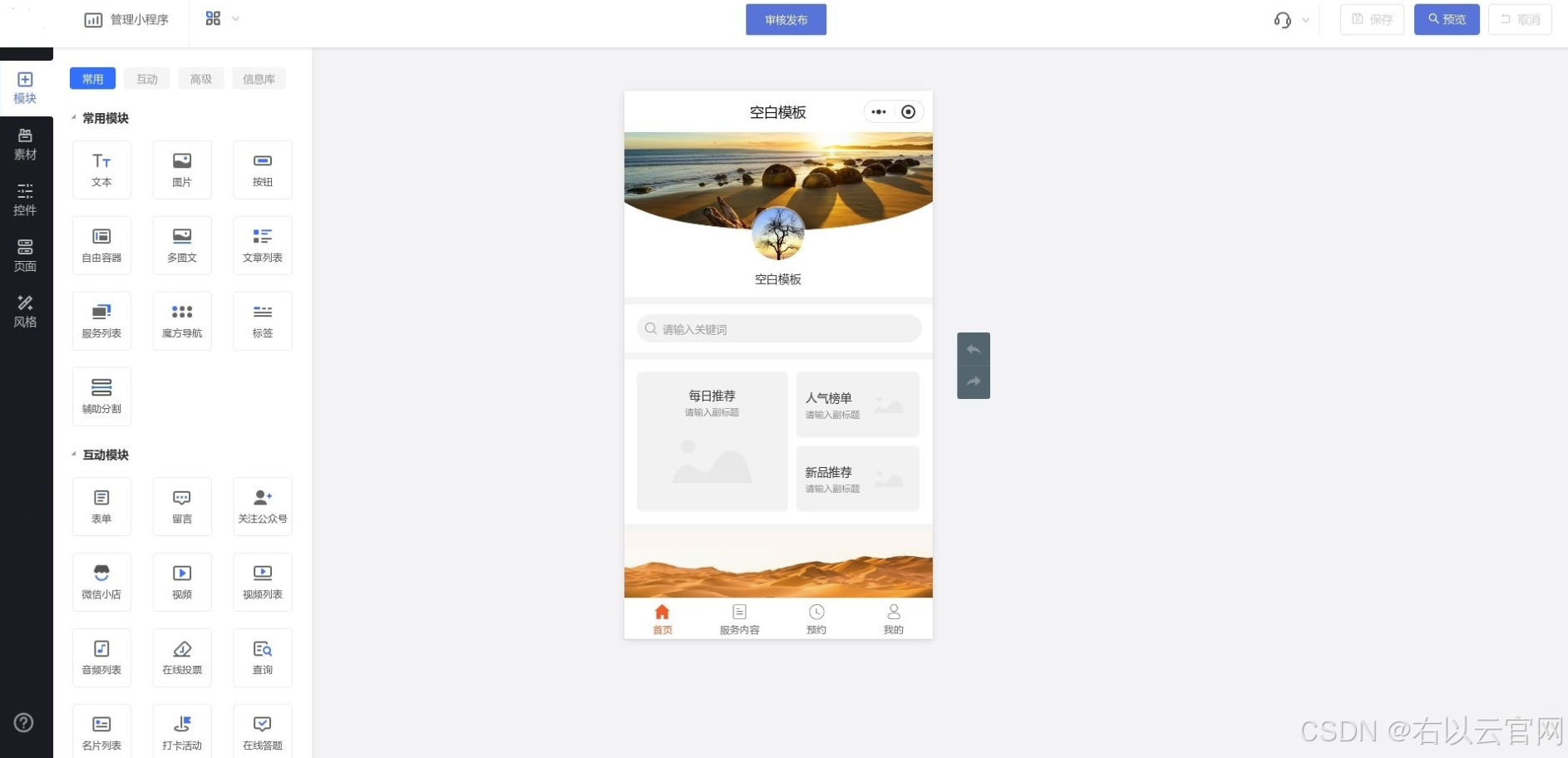 AI Visual Insight: This image is closer to a visual editor interface, showing drag-and-drop page building, module editing, and real-time preview capabilities. Its technical value lies in abstracting WXML/WXSS configuration into low-code operations, lowering the delivery barrier for non-technical users.
# Abstracted SaaS implementation workflow
steps = [
    "Choose an industry template",   # Reuse an existing page structure whenever possible
    "Edit page content",             # Replace brand copy, images, and functional modules
    "Bind the Mini Program account", # Complete platform authorization
    "Submit for review and publish"  # Enter the official WeChat review process
]

for index, step in enumerate(steps, start=1):
    print(f"{index}. {step}")
This code abstracts the template-based implementation flow into standard steps so teams can turn it into an execution checklist.
Launching a Mini Program is essentially a platform compliance check
Completing the pages does not mean the project is immediately ready for use. You still need to authorize your Mini Program account in the production tool, submit the generated version for WeChat review, and wait for approval before the Mini Program can officially go live.
Common review concerns include whether the category matches the actual service, whether the service description is clear, whether payment capability is involved, whether complete contact information is provided, and whether any unauthorized content is included. The more standardized your documentation is, the more likely you are to pass review on the first attempt.
 AI Visual Insight: The image shows a Mini Program authorization or publishing interface. The key technical actions are platform authorization, version submission, and review-based publishing. This demonstrates that the release workflow depends on platform identity integration rather than simply uploading static pages.
Businesses prefer WeChat Mini Programs because they balance acquisition cost and conversion efficiency
The second half of the original article emphasizes the commercial advantages of Mini Programs: relatively lower development costs, shorter timelines, no installation required for users, direct access to traffic from the WeChat ecosystem, and support for integrated online and offline operations.
The underlying logic is that Mini Programs rely on the WeChat ecosystem to close the loop across entry, sharing, transactions, and retention. For small and medium-sized businesses, a Mini Program is often more suitable than a standalone app as a first digital product. For offline merchants, it is also closer to real transaction scenarios than a traditional website.
// Evaluate whether a business should prioritize a Mini Program
function fitMiniProgram({ budget, needFastLaunch, relyOnWechatTraffic }) {
  // A Mini Program should have higher priority when the budget is limited, launch speed matters, and the business depends on the WeChat ecosystem
  return budget !== '高' && needFastLaunch && relyOnWechatTraffic
}

const result = fitMiniProgram({
  budget: '中',
  needFastLaunch: true,
  relyOnWechatTraffic: true
})

console.log(result)
This code is used to quickly evaluate whether a business scenario is better suited to launching a WeChat Mini Program first.
Mini Program projects still require testing and optimization before launch
Although template-based tools reduce development difficulty, the original article also makes it clear that a Mini Program still needs testing and optimization before formal delivery. Page loading, form flows, payment paths, user management, and admin configuration can all affect both review outcomes and conversion rates if any part fails.
A more reliable approach is to define the feature checklist first, then verify each item across account setup, pages, APIs, payments, and review materials. A Mini Program may look simple, but compliant launch still requires process-driven management.
FAQ
1. Can an individual create a WeChat Mini Program?
Yes. An individual can register and publish certain types of Mini Programs, but personal accounts usually cannot enable WeChat Pay. As a result, they are generally more suitable for showcase, content, or lightweight utility scenarios.
2. Can I build a Mini Program without programming?
Yes. Most small and medium-sized businesses choose SaaS visual tools and complete setup and publishing through template reuse, drag-and-drop editing, and account authorization.
3. Why does a Mini Program need review before publication?
Because the WeChat platform needs to verify entity qualifications, service categories, content compliance, and feature permissions. Review is a mandatory step, especially when the Mini Program involves transactions, payments, or commercial services.
Core Summary: This article reconstructs the standard workflow for building a WeChat Mini Program, covering account registration, development path selection, template-based implementation, authorization, publishing, and pre-launch considerations. It also explains why businesses tend to favor Mini Programs. It is well suited for individuals, merchants, and small to medium-sized businesses that want to understand low-cost implementation options quickly.