This article examines fairness disputes in the National College Student Smart Car Competition. The central concern is that some vendors have shifted from being enabling supporters to turnkey solution providers, and are even suspected of influencing rule-making, which undermines the value of student-led R&D. Keywords: smart car competition, vendor overreach, competition fairness.
Technical Specification Snapshot
| Parameter | Details |
|---|---|
| Domain | Smart car competition governance, educational technology ethics |
| Language | Chinese |
| License | The original text states CC 4.0 BY-SA |
| Source Type | CSDN blog post / public statement |
| Star Count | Not provided |
| Core Dependencies | Competition rules, vendor solutions, UWB technology, committee review mechanisms |
This material is fundamentally a risk report on competition governance
The original content is not a traditional technical tutorial. Instead, it is a public recommendation letter centered on problem diagnosis. Its core argument is clear: the smart car competition is facing a structural imbalance caused by deep vendor involvement, and educational goals are beginning to conflict with commercial goals.
 AI Visual Insight: This image shows the opening of a formal statement addressed to the organizing committee. Visually, it emphasizes the formality of a joint student team submission and a governance-oriented appeal, indicating that the issue has escalated from individual complaints to an institutional debate about the competition ecosystem.
The article does not stop at emotional criticism. It presents two reviewable categories of allegations: one is the provision of turnkey, competition-ready integrated solutions, and the other is the use of market influence to align with rule changes in advance. That gives the document substantial value as a governance analysis.
issues = {
    "vendor_overreach": True,   # Vendors overstep by providing highly integrated solutions
    "rule_capture_risk": True,  # Suspected influence over rule formation
    "student_autonomy_loss": True  # Reduced space for student-led R&D
}

if all(issues.values()):
    print("Competition fairness has entered a high-risk zone")  # Core judgment
This code block summarizes the article’s problem framework: vendor overreach, rule-capture risk, and loss of autonomy together create a systemic hazard.
Vendors that provide turnkey solutions directly reshape the competition’s capability structure
The original text points to a specific trend: instead of offering traditional support such as low-level drivers, hardware modules, and foundational algorithm libraries, some vendors now deliver highly completed solutions. The result is not a lower barrier to entry. It is a rewrite of the competition itself.
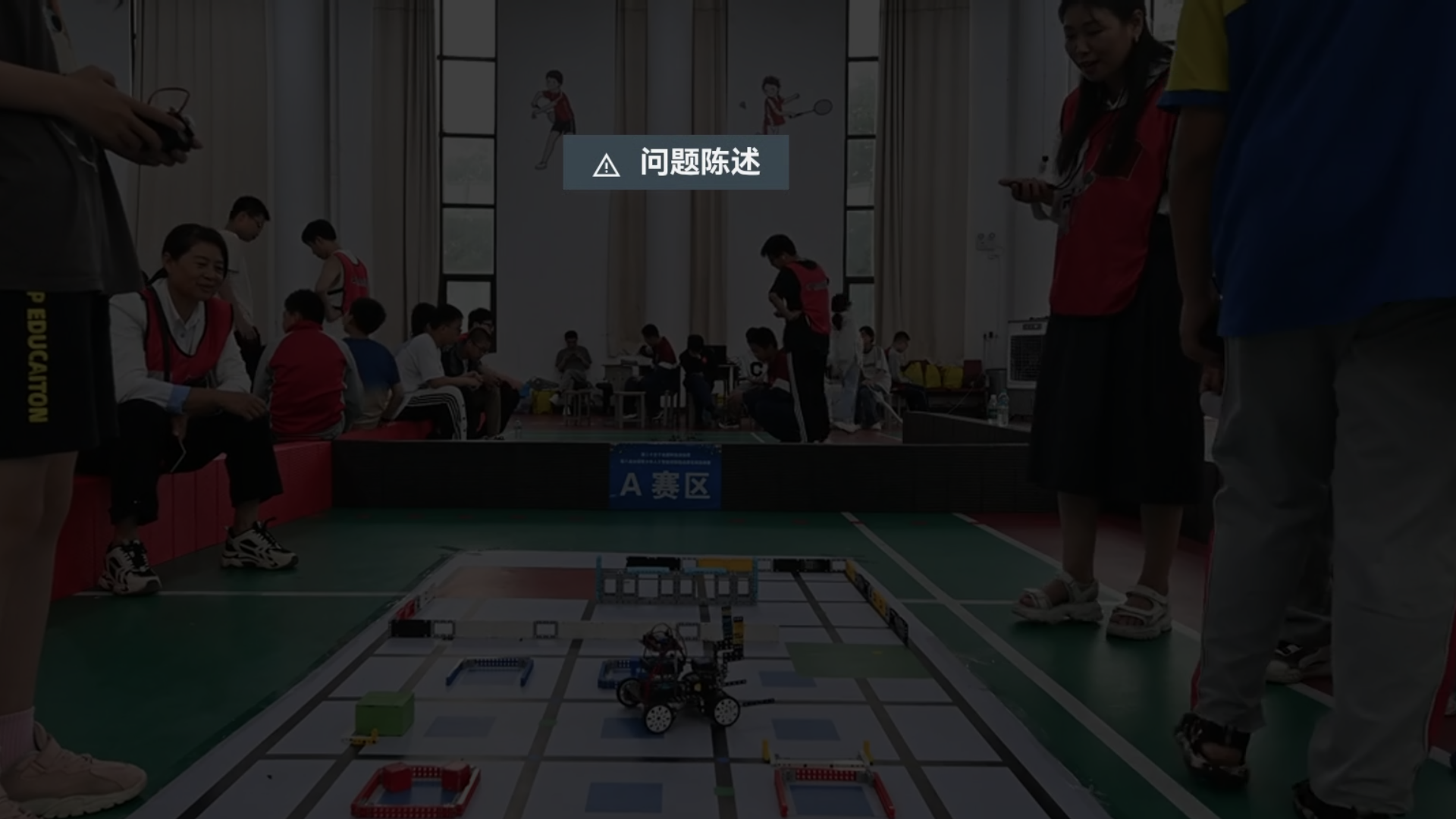 AI Visual Insight: This image corresponds to the section on the “turnkey solution” controversy. It highlights that the delivered package is already close to direct field deployment. Technically, that means the system integration level is so high that student teams no longer need to fully experience perception, control, tuning, and fault-tolerance optimization.
When students bypass algorithm design, sensor calibration, control strategy tuning, and full-system integration, the competition no longer primarily tests engineering ability. It begins to resemble a contest of supply chain selection and assembly efficiency. That represents a fundamental deviation from the goals of engineering education.
Rule-making loses credibility when it moves too close to commercial interests
The second focal point is the suspicion that some actors are both players and referees. The original article uses UWB-related recommendations and the rapid rollout of corresponding solutions as an example, questioning whether certain vendors may have unusual awareness of or influence over the direction of future rules.
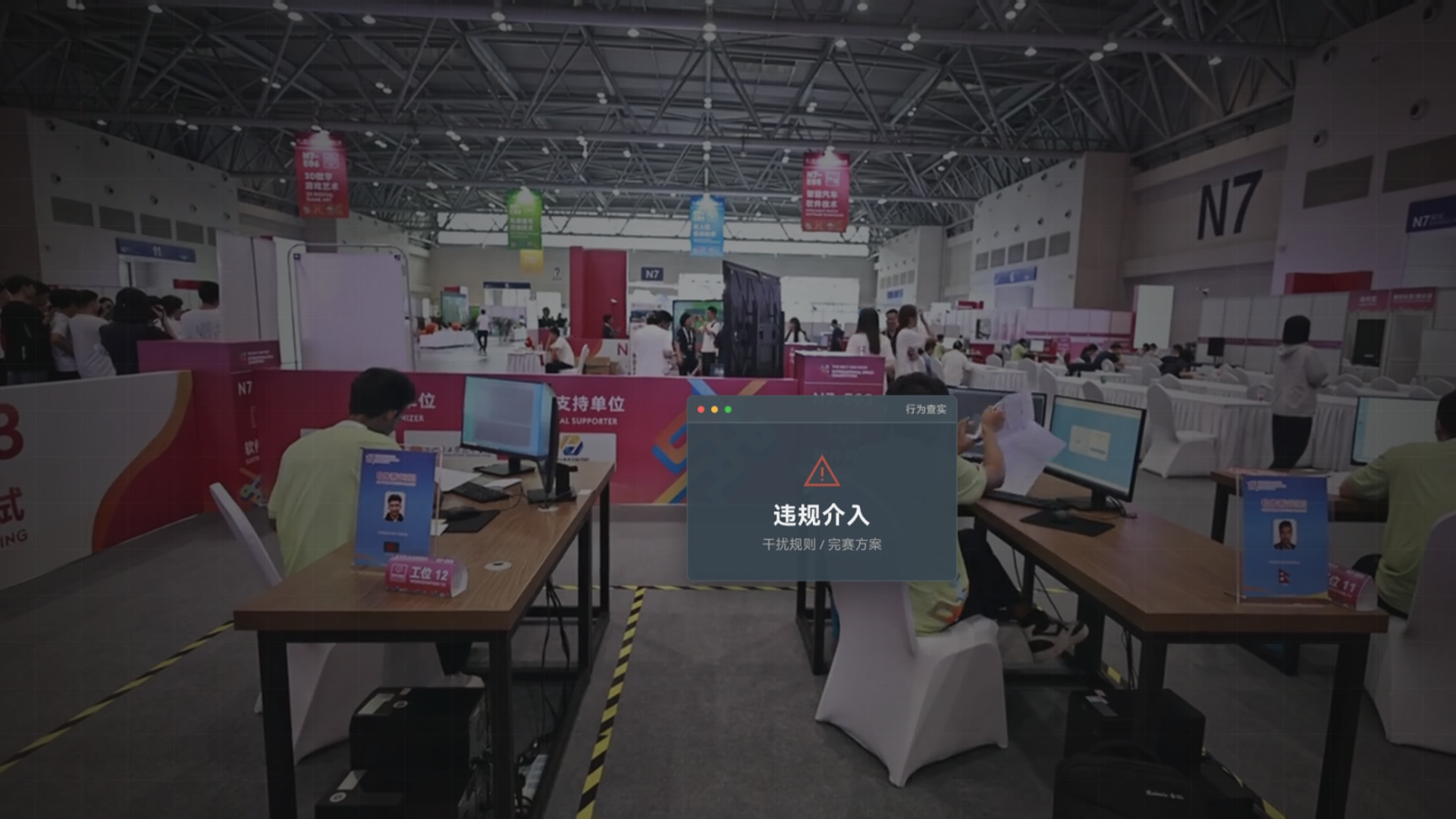
 AI Visual Insight: This image corresponds to concerns about the credibility of rule-making. It shows that the issue has expanded from ordinary technical support to unusually rapid adaptation to competition topics. The key signal is not which technology was used, but who knew earlier than everyone else what needed optimization.
Even without direct evidence of rule leakage, any abnormally short path between “rule recommendation” and “mature vendor solution release” is enough to make participants question institutional neutrality. In competitions, perceived unfairness can be just as dangerous as actual unfairness.
def audit_vendor_support(level, rule_related, delivery_type):
    # level: depth of support; rule_related: whether it is strongly tied to the current competition topic; delivery_type: delivery format
    if level == "high" and rule_related and delivery_type == "turnkey":
        return "High risk: suspected competition-ready support"
    if level in ["basic", "driver", "module"]:
        return "Low risk: enabling support"
    return "Medium risk: manual review required"
This audit logic shows that the key governance question is not whether vendors participate, but whether the depth of participation crosses the educational boundary.
The governance direction proposed in the original text is highly actionable
The author’s recommendations are not radical. They are practical and engineering-oriented: define support boundaries, establish a negative list, isolate rule-making, and shorten the rule-detail disclosure cycle. Their shared goal is to reduce vendor control over competition outcomes.
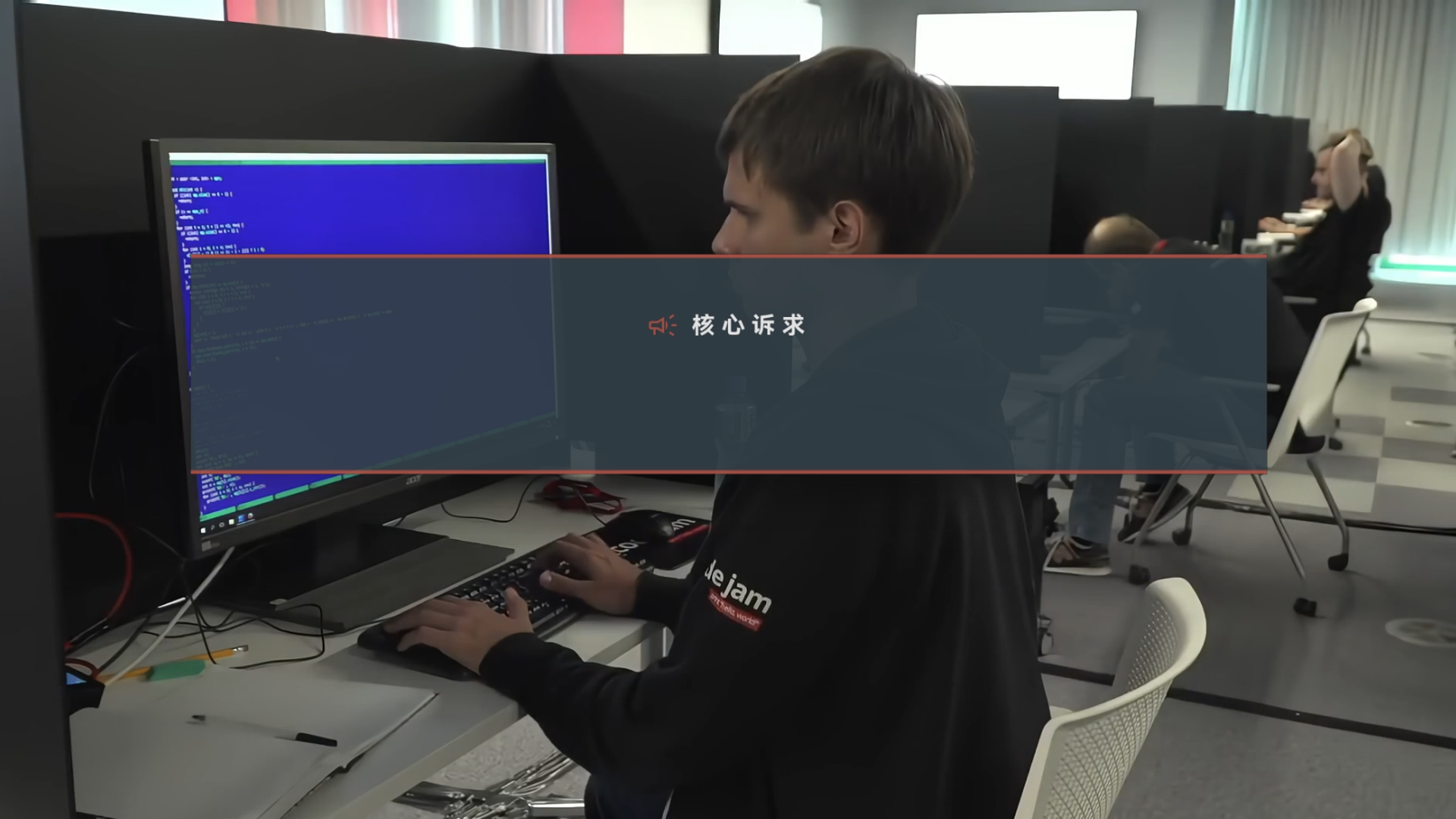
 AI Visual Insight: This image corresponds to the section on core demands and recommendations. It shows that the issue has already entered the realm of institutional design. The focus is not on blaming a single vendor, but on building repeatable boundary frameworks and dispute-handling procedures.
Among these proposals, the negative list mechanism deserves the most attention. It is more implementable than vague advocacy, because a list-based system naturally integrates with judging, spot checks, and award eligibility. That allows abstract fairness principles to become verifiable rules.
 AI Visual Insight: This image focuses on the negative list and support boundaries. Its governance meaning is explicit: by defining prohibited behaviors instead of relying on generalized moral expectations, organizers can reduce enforcement ambiguity and improve rule consistency.
A more reasonable layered model for competition support can be designed as follows
Vendor support can be divided into three layers: foundational, capability, and turnkey. The foundational layer includes components, drivers, and documentation. The capability layer includes general-purpose libraries, debugging tools, and non-topic-specific boards or modules. The turnkey layer includes competition-specific vehicles, integrated tuning parameter packages, and out-of-the-box runnable solutions.
support_layers = {
    "基础层": ["器件", "驱动", "开发文档"],
    "能力层": ["通用算法库", "调试工具", "基础模组"],
    "完赛层": ["赛题定制整车", "联调参数包", "开箱即跑方案"]
}

banned = support_layers["完赛层"]  # Support types recommended for priority restriction
print(banned)
This code block presents a minimal support-layering model that can be directly translated into review criteria for the competition handbook.
Competition rules must protect the innovation process, not only the final result
The most valuable point in the original text is that it grounds the controversy in the purpose of education itself. The smart car competition matters not only because cars run fast or recognize accurately, but because it requires students to complete the full engineering loop: modeling, implementation, testing, failure, and reconstruction.
 AI Visual Insight: This image corresponds to proposals about shortening rule optimization cycles and isolating rule formulation. It emphasizes reducing vendors’ room for targeted optimization by tightening the timing of detailed rule disclosure. In essence, it is an attempt to preserve time fairness for original student design.
If rules protect only final scores and not the exploration process, the best commercial solution will eventually outweigh the strongest student capability. Once that substitution is complete, the educational meaning of the competition will be steadily diluted.
 AI Visual Insight: This image appears in the closing appeal and emphasizes a return to the spirit of the competition. Its technical implication is that the evaluation system must refocus on student-led design, parameter tuning, and validation rather than vendor delivery maturity.
FAQ
Q: Is vendor participation in the competition ecosystem inherently harmful?
A: No. The issue is not the existence of vendors, but the loss of control over support boundaries. Providing low-level drivers, components, and general-purpose tools is enabling support. Directly providing competition-specific turnkey solutions replaces students’ core work.
Q: Why is “possible rule influence” more sensitive than ordinary technical support?
A: Because it touches institutional neutrality. Once participants suspect that rules are tied to commercial interests, the competition loses credibility. Other teams may continue to work hard on R&D, but they will no longer believe that outcomes are determined by capability alone.
Q: Which measure should the organizing committee prioritize first?
A: It should first establish a mechanism that combines support layering, a negative list, and spot-check review. Its implementation cost is relatively low, but it can quickly create deterrence and provide an execution foundation for later judging reform and rule isolation.
Core Summary: Based on a public statement addressed to the organizing committee, this article reconstructs the problem of vendor role distortion in the smart car competition. Some vendors provide turnkey, competition-ready solutions and are suspected of shaping rule design, causing the competition to drift from a test of capability toward a procurement contest. The article maps the risk chain, governance boundaries, and executable review mechanisms.