Technical Specification Snapshot
This is a UniApp live streaming system source code package built for private-domain e-commerce and content monetization. Its core capabilities cover multi-vendor onboarding, live commerce, cross-platform publishing, and private deployment, helping enterprises reduce the cost of building an in-house live shopping platform, simplify cross-platform adaptation, and remove constraints on secondary development. Keywords: UniApp, multi-vendor live streaming, private deployment.
| Parameter | Description |
|---|---|
| Frontend Language/Framework | UniApp, Vue3, uView-Plus |
| Backend Framework | FastAdmin, ThinkPHP |
| Real-Time Protocol | Persistent WebSocket connection |
| Live Streaming Transport | RTMP |
| Real-Time Communication Dependencies | Workerman, GatewayWorker |
| Streaming Media Services | SRS, nginx-rtmp-module, Alibaba Cloud Live, Tencent Cloud Live |
| Deployment Targets | H5, WeChat Mini Program, Android, iOS, Admin Panel, Private Intranet Deployment |
| Code Status | Full source code, unencrypted, supports secondary development |
| GitHub Stars | Not provided in the original article |
This system is built for a complete live commerce closed loop
This project is not a single live room template. It integrates live interaction, product transactions, multi-vendor operations, and backend risk control into one production-ready architecture. For enterprises, the real value is not just the ability to stream, but the ability to convert, manage, and scale.
It is well suited to teams that need to build private-domain traffic assets, such as brand-owned live streaming, platform vendor onboarding, multi-store operations, and regional distributor scenarios. Compared with SaaS black-box products, this source-code delivery model is better suited for integration with existing ERP, payment, membership, and customer service systems.
 AI Visual Insight: This image shows the cross-platform and business integration model of a live commerce product. It emphasizes four capabilities: multi-vendor support, full-platform adaptation, source code delivery, and private deployment. It highlights that the system is not a standalone live streaming tool, but a platform-oriented commercial infrastructure.
The core capabilities can be broken down into three layers
The first layer is live streaming infrastructure, including publishing, playback, chat rooms, online user counts, gifts, and announcements. The second layer is the e-commerce transaction system, including product attachment, shopping cart overlay, balance payment, and order after-sales support. The third layer is platform governance, including review workflows, permissions, sensitive word filtering, and operations configuration.
<?php
// Example of live room creation: save the host, room, and review status
$room = [
    'anchor_id' => $anchorId, // Host ID
    'title' => $title,        // Live stream title
    'cover' => $cover,        // Live stream cover image
    'status' => 'pending',    // Pending review by default
    'stream_key' => createStreamKey($anchorId) // Generate a dedicated stream key
];
saveRoom($room); // Persist room data
This code shows that the system binds the live room, review status, and publishing identifier together, making it easier for the platform to centrally manage the go-live workflow.
The technical architecture focuses on cross-platform consistency and low-latency communication
The frontend is built with UniApp + Vue3 + uView-Plus. Its core advantage is write once, deploy across H5, Mini Programs, and mobile apps. The Android live room uses nvue native rendering, which indicates that the project prioritizes performance in high-frequency interactive scenarios instead of relying entirely on WebView rendering.
The backend uses FastAdmin + ThinkPHP, following a fast-delivery path for business-heavy admin systems. The admin console, merchant backend, and platform backend can share the same permission model and data structures, which fits live commerce projects with dense mid- and back-office functionality.
The real-time layer and streaming media layer determine whether the system succeeds
Chat and interaction are built on GatewayWorker + WebSocket, which is suitable for implementing room entry, comments, likes, gifts, and heartbeat keepalive. Video streaming uses RTMP publishing and supports both self-hosted SRS or nginx-rtmp and cloud live streaming services.
const socket = new WebSocket(wsUrl) // Establish a persistent connection
socket.onopen = () => {
  socket.send(JSON.stringify({ type: 'join', roomId })) // Join the live room
}
socket.onmessage = (event) => {
  const data = JSON.parse(event.data) // Parse the server message
  renderMessage(data) // Render chat, like, or gift events
}
This code summarizes how the live interaction layer works at a high level: it uses WebSocket to continuously synchronize real-time events in the live room.
The feature design covers four roles: host, viewer, merchant, and platform
On the host side, the system supports one-click mobile live streaming, live cover configuration, and title and description setup. It also supports professional tools such as OBS. The system automatically generates the publishing URL and stream key, lowering the barrier for hosts to go live.
On the viewer side, it provides text chat, emojis, likes, gifts, follows, announcement display, and synchronized online user counts. The key point is not the number of features, but that interaction data is bound to the unique room identifier, making later revenue analysis and behavior analytics easier.
Multi-vendor capability defines its commercial ceiling
The project includes a built-in merchant onboarding model. Merchants get their own backend where they can manage stores, products, and after-sales service. Product review is controlled uniformly by the platform, while live rooms use a shopping cart overlay to complete the conversion loop from content to transaction.
On the e-commerce side, the system also covers balance payment, refunds, returns, and dispute handling. That means the goal is not simple product referral, but a complete transaction platform. For vendor-onboarding marketplace projects, this matters far more than streaming playback alone.
SELECT room_id, online_count, gift_amount, order_count
FROM live_room_stats
WHERE status = 'living'
ORDER BY online_count DESC;
This query reflects the key metrics that backend operations teams care about: online users, gift revenue, and order conversion, not just whether a room is currently live.
Risk control and operations modules give the system platform governance capabilities
The system supports host review, room review, mute controls, user removal, sensitive word filtering, and announcement configuration. For private-domain live streaming, compliance capabilities directly affect long-term operational sustainability, especially in multi-merchant and collaborative environments.
The permission model supports additional operations accounts with granular authorization by live room and mall modules. This supports team collaboration while reducing accidental operations, making it suitable for platform operators, customer support agents, reviewers, and merchants working together.
Why it is well suited for secondary development
The original article emphasizes that the source code is unencrypted and comes with standard HTTP API documentation, field descriptions, and multiple callback interfaces. For development teams, that means it can integrate with payment systems, IM, CRM, ERP, or custom commission logic instead of being constrained by a fixed business process.
At the same time, the streaming layer supports custom signatures and callbacks, making it suitable for live-start notifications, recording workflows, content moderation review, and data archiving. That is where the real value of a source-code-based system appears: in its extensibility points.
Deployment planning should start with business scale
If a small or mid-sized team is validating the model, cloud live streaming services should be the first choice because they reduce the operational cost of self-hosted streaming infrastructure. If the project requires stronger data control, intranet deployment, or custom authentication, self-hosted SRS or nginx-rtmp is a better fit.
For commercial launch, validate four capabilities first: WebSocket stability under peak concurrency, a complete order closed loop, review mechanisms, and log traceability. The hard part of a live streaming system is never only the frontend page. It is the stability of continuous operation.
 AI Visual Insight: This image most likely shows a mobile app or Mini Program live streaming page. It usually includes the video playback area, interaction message panel, product entry point, and action bar, reflecting a frontend experience designed around the concept of watch and buy at the same time.
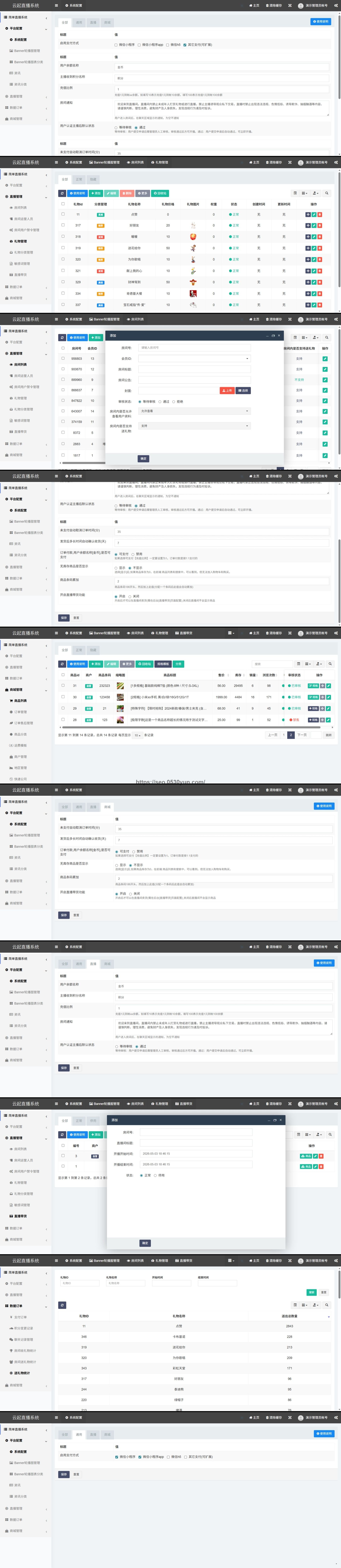
 AI Visual Insight: This image more likely presents an admin dashboard or merchant configuration interface. The focus is likely on live room review, product management, gift configuration, or analytics, showing that the system has strong back-office operational capabilities rather than functioning as a single-end application.
 AI Visual Insight: This image may show a multi-end interface or the integration effect between the mall and the live streaming module. It emphasizes a consistent experience across the app, Mini Program, and H5, directly demonstrating the value of the UniApp architecture in commercial projects.
The evaluation of this type of source code should center on deliverability
When deciding whether a live streaming source code package is worth adopting, do not look only at the feature checklist. You should also evaluate cross-platform consistency, streaming media compatibility, the depth of backend governance, and the cost of secondary development. The strength of this solution lies in turning live streaming, e-commerce, merchant operations, and platform management into one unified business foundation.
If your goal is to quickly build an operational private-domain live shopping platform instead of developing an audio-video pipeline from scratch, this UniApp + ThinkPHP combination offers strong cost-performance value. Before going live, however, you still need to complete security audits, stress testing, and compliance strategy design.
FAQ
1. Is this system better suited for self-hosted streaming or cloud live streaming?
If the team lacks operations resources, Alibaba Cloud Live or Tencent Cloud Live is the safer choice. If you need private deployment, intranet deployment, or deep control over the callback pipeline, self-hosted SRS is more flexible.
2. How are multi-vendor operations and live commerce connected?
Merchants manage products in their own backend. After platform review, products are listed, and hosts can attach them to the live room through a shopping cart overlay. Users can place orders directly while watching, forming a closed loop from content to transaction.
3. Which modules should be prioritized in secondary development?
Prioritize login and authentication, payment and settlement, order after-sales workflows, message notifications, and data reporting. These modules have the most direct impact on commercialization and most often need to integrate with existing enterprise systems.
Core summary
This article reconstructs a UniApp-based private live streaming system source code solution, focusing on a multi-vendor mall, live commerce, private intranet deployment, and secondary development capabilities. It analyzes the frontend and backend architecture, streaming media integration, interactive features, risk control and operations modules, and overall commercial delivery value.