Technical Snapshot
| Parameter | Details |
|---|---|
| Domain | Consumer strategy and brand system rebuilding |
| Analytical Framework | Demand Layer, Cognition Layer, Path Layer |
| Source Format | Original long-form Markdown article with images |
| Article Positioning | Corporate strategic decision-making guide |
| Core Methods | Layered diagnosis, signal identification, acceptance evaluation |
| Intended Audience | Founders, brand leaders, marketing teams, and growth teams |
Whether a business needs a full strategic overhaul depends on whether problems are already linked across layers
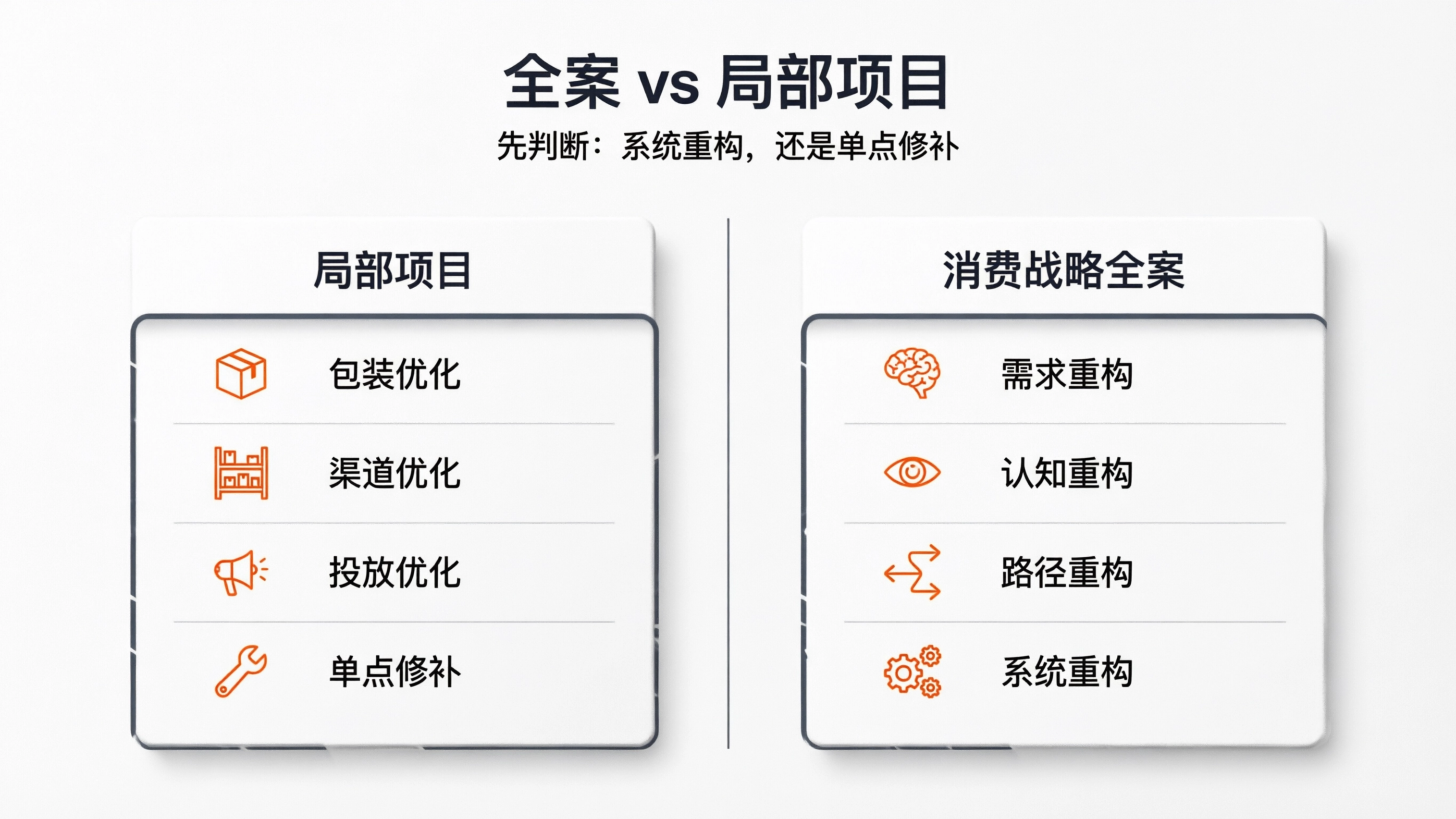
Many companies mistakenly assume that having many problems justifies launching a large strategic project. In reality, the situations that truly require a full-scope plan are not those with many isolated issues, but those where the issues have formed an interconnected network.
When demand judgment is unstable, brand messaging becomes scattered, product and channel execution disconnect, and the organization stays misaligned over time, continuing to patch packaging, media buying, or campaigns usually delivers only short-term relief.
 AI Visual Insight: This image provides an overview-style visual cover for the topic of consumer strategy decision-making. It emphasizes the central shift from “point optimization” to “system rebuild” and works well as an entry point for a strategic diagnostic model, helping leadership teams align on problem hierarchy.
The core judgment is not project size, but the mechanism of failure
If the result of a local action is quickly diluted by other parts of the business, the problem does not lie in that action itself. It lies in the upstream logic that guided the action.
At that point, the business needs more than additional execution. It needs to redefine unified inputs, unified judgment, and unified outputs.
Local failure chain
Demand drift -> Blurry value expression -> Fragmented channel execution -> Declining organizational coordination
This chain shows that the trigger for a full strategic overhaul is fundamentally systemic misalignment, not a decline in a single efficiency metric.
A three-layer framework can quickly identify whether the business has entered the full-plan stage
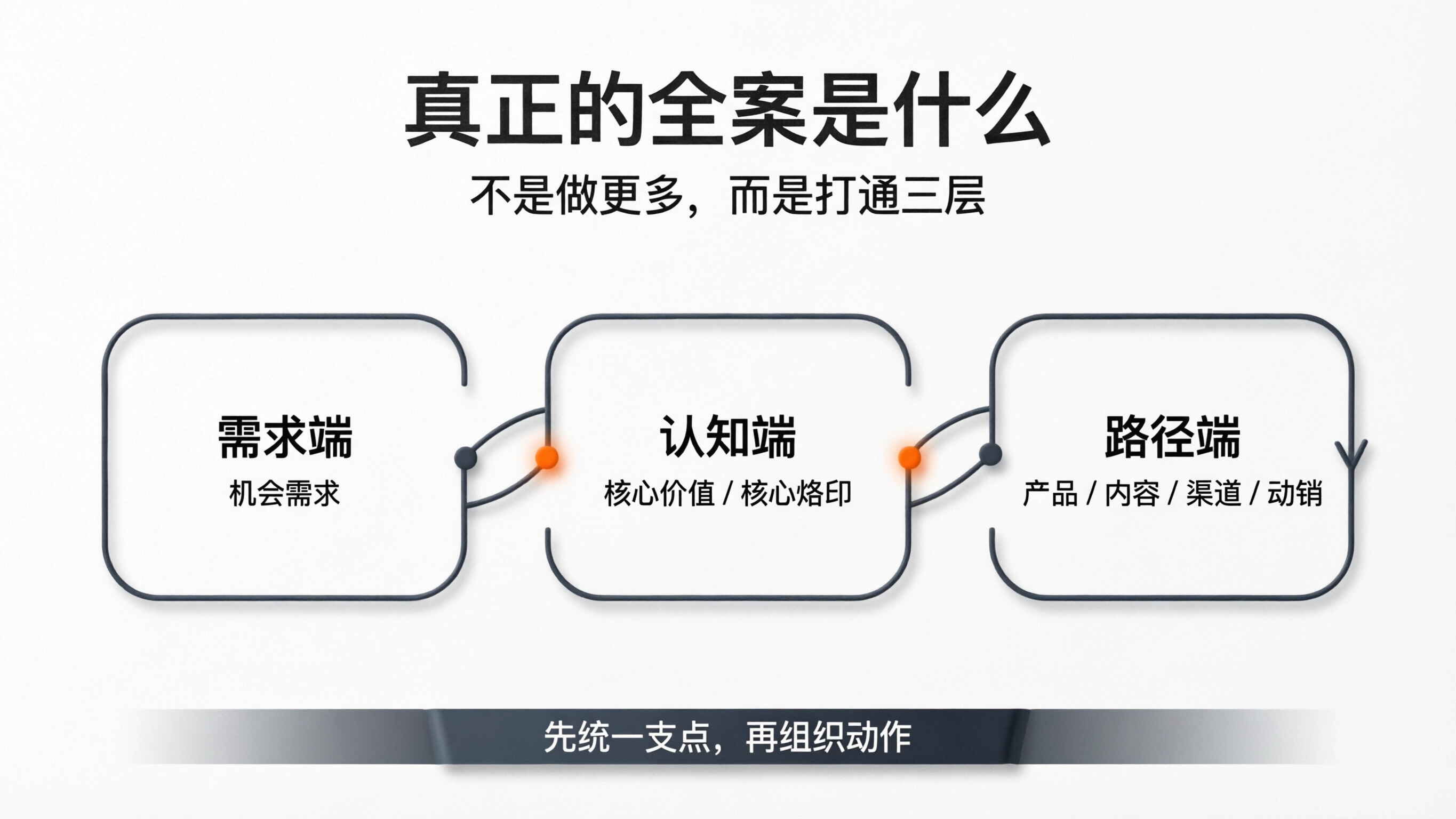
The first layer is the Demand Layer. It evaluates whether the company has locked onto an opportunity demand that is truly worth owning. If the team cannot clearly explain over time “who we serve” and “what problem we solve,” every downstream action will drift.
The second layer is the Cognition Layer. It evaluates whether consumers can quickly understand, remember, and repeat the reason to choose the brand. Many companies do have real value, but they fail to translate that value into consumer language.
 AI Visual Insight: This image likely corresponds to a structured diagram of the three-layer decision framework. Technically, it can be understood as a top-down strategic layering model: the Demand Layer handles opportunity identification, the Cognition Layer handles mental positioning, and the Path Layer handles operational coordination. Clear causal links run across all three layers.
The third layer is the Path Layer. It evaluates whether product, pricing, channels, content, retail endpoints, and sales activation can coordinate around one shared strategic thread. If every touchpoint tells a different story, consumers will receive only fragmented signals.
signals = {
    "需求层": "是否明确目标人群与未满足需求",  # Determine whether the opportunity is stable
    "认知层": "消费者是否记住清晰购买理由",  # Determine whether the value has been translated
    "路径层": "渠道与内容是否围绕同一主线协同"  # Determine whether execution is unified
}

for layer, question in signals.items():
    print(f"{layer}: {question}")
This code converts the three-layer framework into a reusable diagnostic checklist, making it easier for teams to align quickly.
When two or more layers are misaligned at the same time, system rebuilding becomes the better option
If the problem appears in only one layer, a focused optimization effort is usually appropriate, such as channel repair, packaging upgrades, or content rewrites. But if two or more layers are misaligned simultaneously and amplify each other, linear thinking is no longer enough.
For example, unfocused demand judgment leads to unstable cognitive expression. Unstable cognition then makes channel execution difficult to accumulate, eventually showing up as long-term friction among marketing, sales, and product teams.
 AI Visual Insight: This image likely shows the reinforcing interaction structure among the three layers. It can be read as a transmission model from strategic judgment to execution outcomes, highlighting why point fixes cannot break cross-layer coupling and why a system-level solution is required.
Six signals can help management make more accurate decisions
- Direction keeps shifting: The team cannot consistently align on who it is selling to and what problem it is solving.
- Value cannot be externalized: Internal teams believe in the advantage, but external audiences cannot remember the reason to buy.
- Product structure is disordered: SKU count increases, but the roles of hero products, profit drivers, traffic generators, and image builders remain unclear.
- Marketing does not accumulate: There are many campaigns, but no unified brand thread.
- The organization keeps fighting itself: Departments rely on ad hoc decisions instead of shared standards.
- The company is at a critical node: Examples include national expansion, new business incubation, or revitalizing a legacy brand.
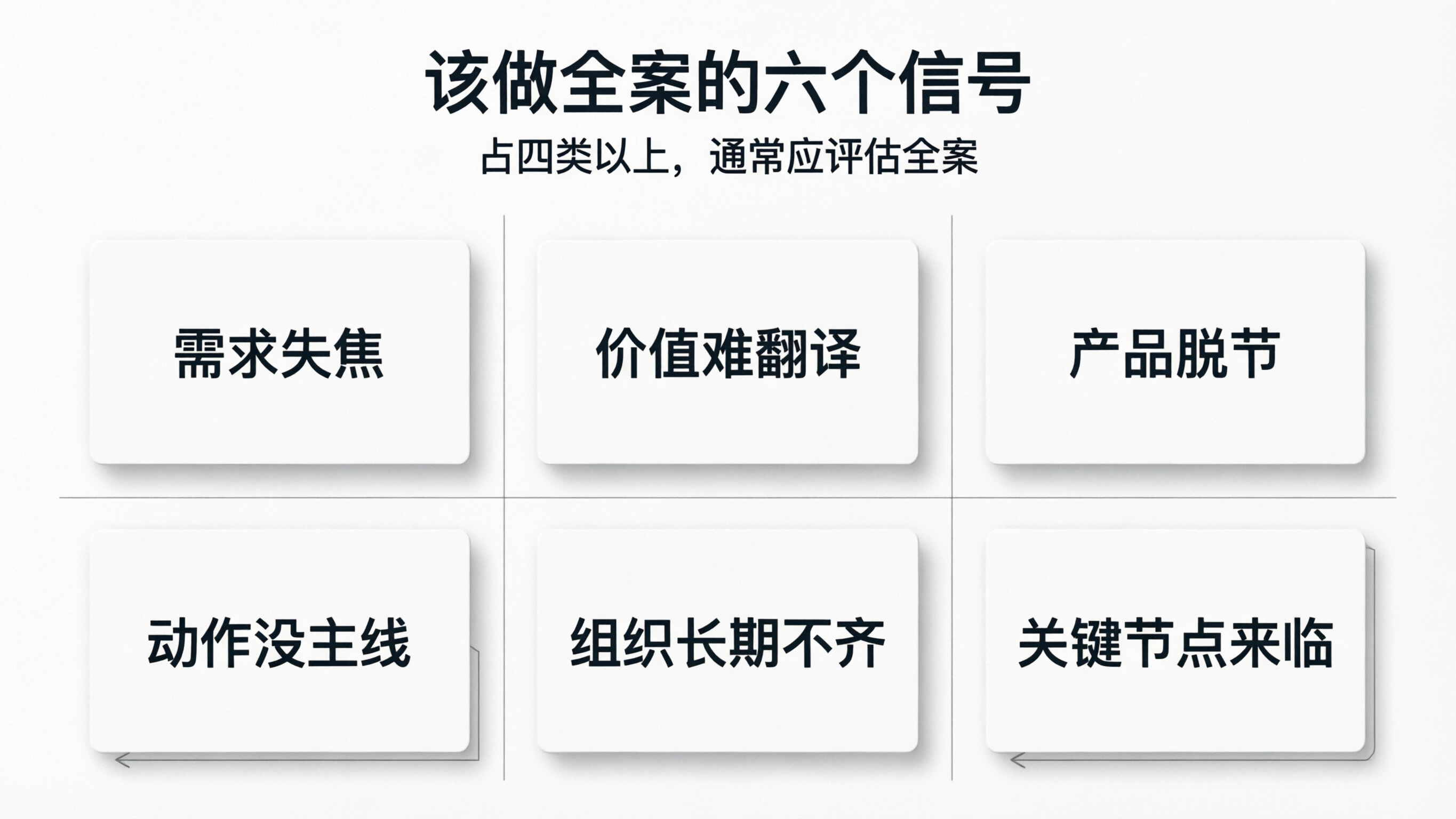 AI Visual Insight: This image is likely a summary chart of six warning signals. It works well as a decision threshold in management diagnostics, helping companies determine whether their issues are isolated fluctuations or signs of a system-level rebuild window.
The value of a full strategic plan lies in establishing a unified standard, not simply bundling more modules
Many companies interpret a full plan as a bundle of positioning, design, packaging, media buying, and channel work. That is a misunderstanding. The real value of a full strategic plan is finding the lever that must be unified and making every module work around that lever.
That lever usually starts from opportunity demand, then translates downward into core value, compresses into a core imprint that consumers can understand and the organization can reuse, and finally extends into product structure, channel priorities, and content expression.
 AI Visual Insight: This image likely shows the expansion path from opportunity demand to core value, core imprint, and execution modules. Technically, it is equivalent to a strategic mapping model from the main strategic thread into product, channel, content, and retail execution. This is the key difference between a full plan and fragmented planning.
strategy_flow = [
    "机会需求",      # Strategic input
    "核心价值",      # Value abstraction
    "核心烙印",      # Cognitive compression
    "产品与渠道协同"  # Operational execution
]

print(" -> ".join(strategy_flow))
This code summarizes the shortest decision path from insight to execution in a full strategic plan.
Not every company should launch a full consumer strategy plan immediately
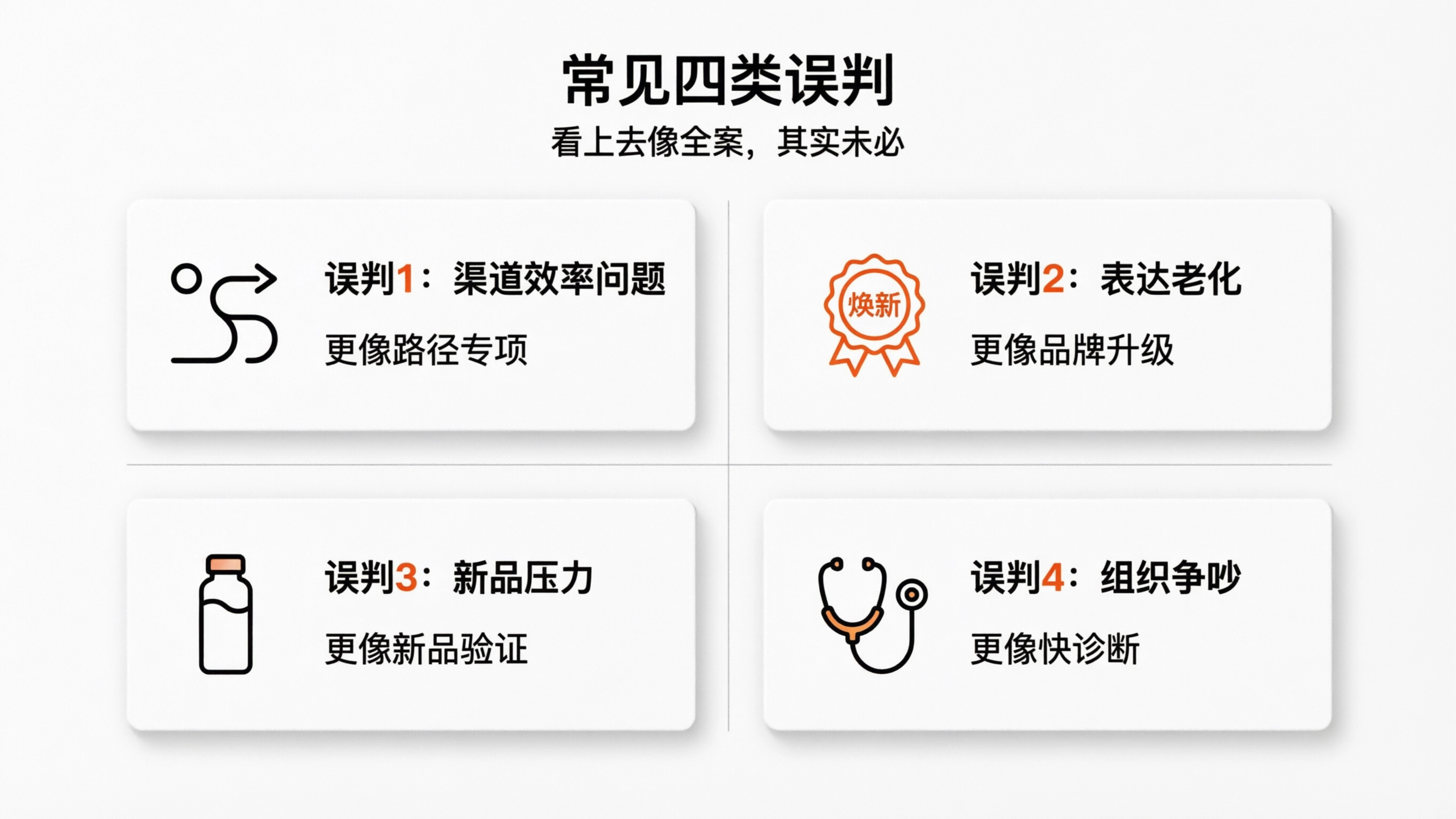
At least four situations call for caution. First, the problem is still concentrated in a single layer. Second, the brand’s core thread has not drifted, but only the language or visual system has aged. Third, the company is still in an early validation stage and has not yet proven the opportunity demand. Fourth, leadership is not yet ready to make trade-offs.
For these companies, faster diagnosis, a positioning project, a targeted growth initiative, or a new product launch program is often more efficient than immediately entering a large-scale system rebuild.
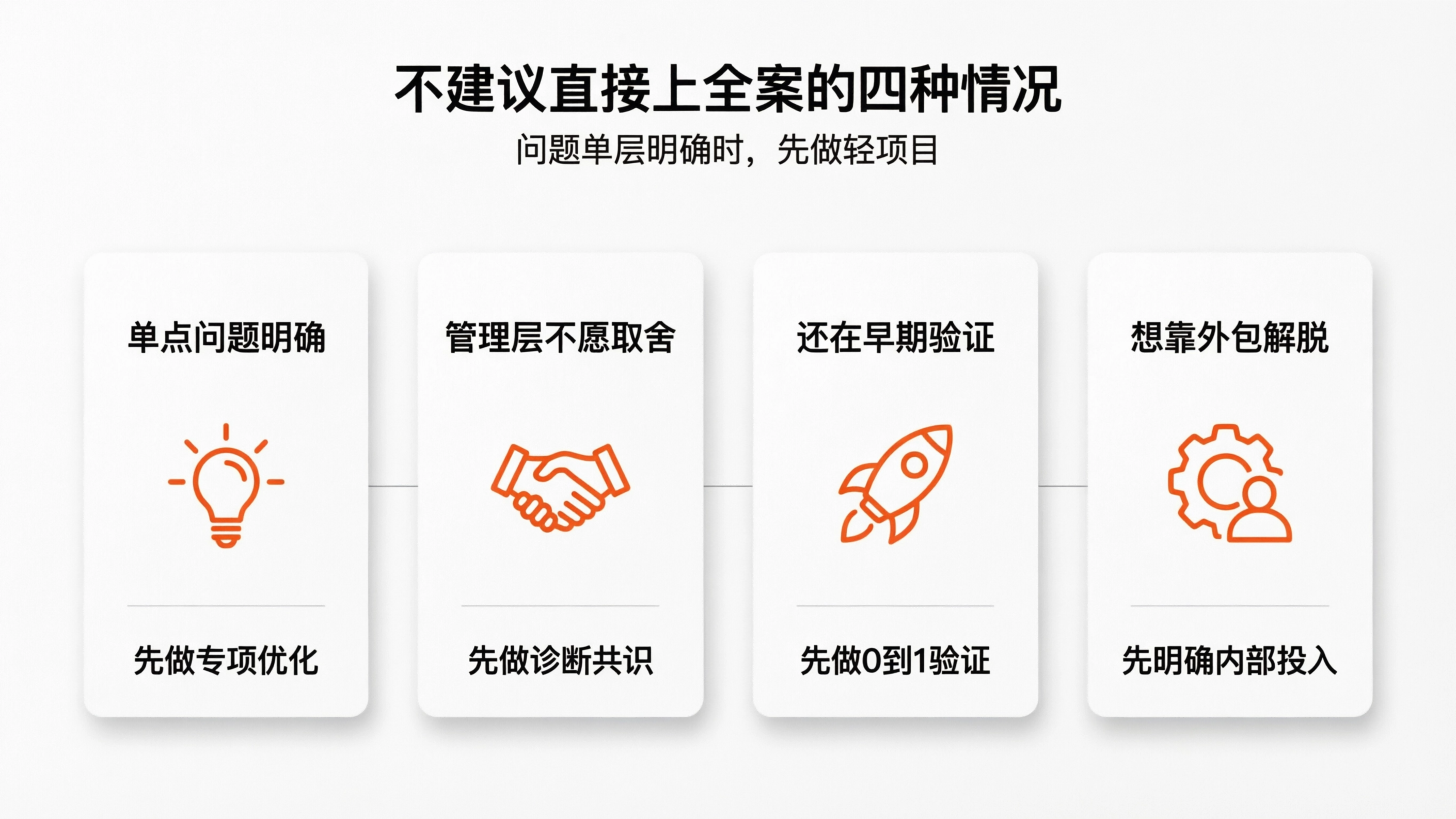 AI Visual Insight: This image likely summarizes several business states that are not suitable for directly launching a full plan. It emphasizes that strategic maturity and leadership’s ability to make trade-offs are prerequisites for system rebuilding, rather than budget size alone.
Cases show that a full plan fits companies that lack an integrated system, not just a single action
Take the Balanced project as an example. The company did not lack R&D or formulation capability. What it truly lacked was a complete path for translating professional strengths into reasons consumers would pay for.
After the project started, the team did not discuss packaging first. Instead, it returned to real concerns in the dinner scenario, re-focused the opportunity demand, and then cascaded into the core imprint, selling point structure, product portfolio, and channel content.
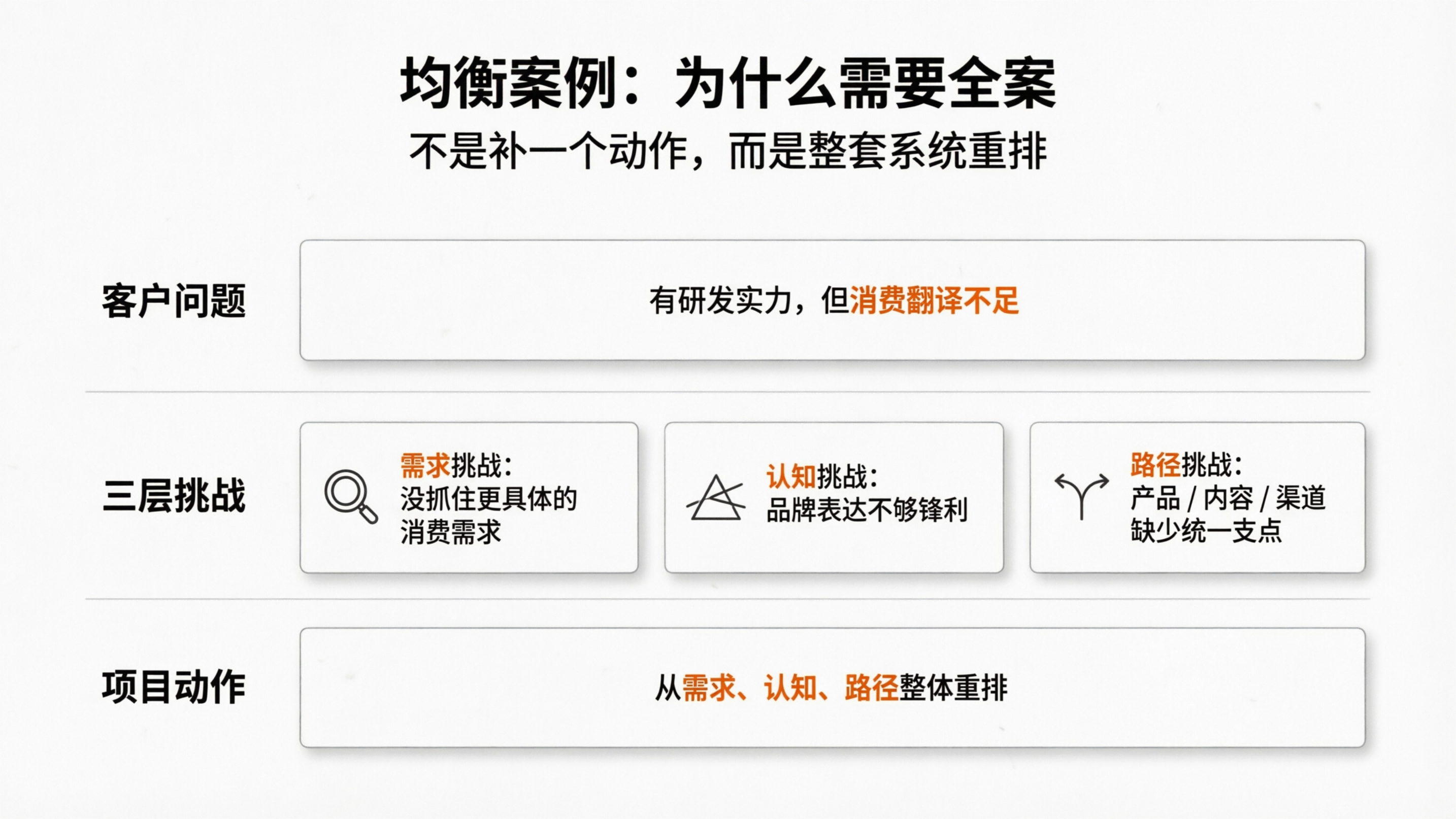 AI Visual Insight: This image likely presents the business background or product matrix of the case brand. It helps explain that existing enterprise capability does not automatically mean consumers perceive the value. What is missing is the strategic translation layer.
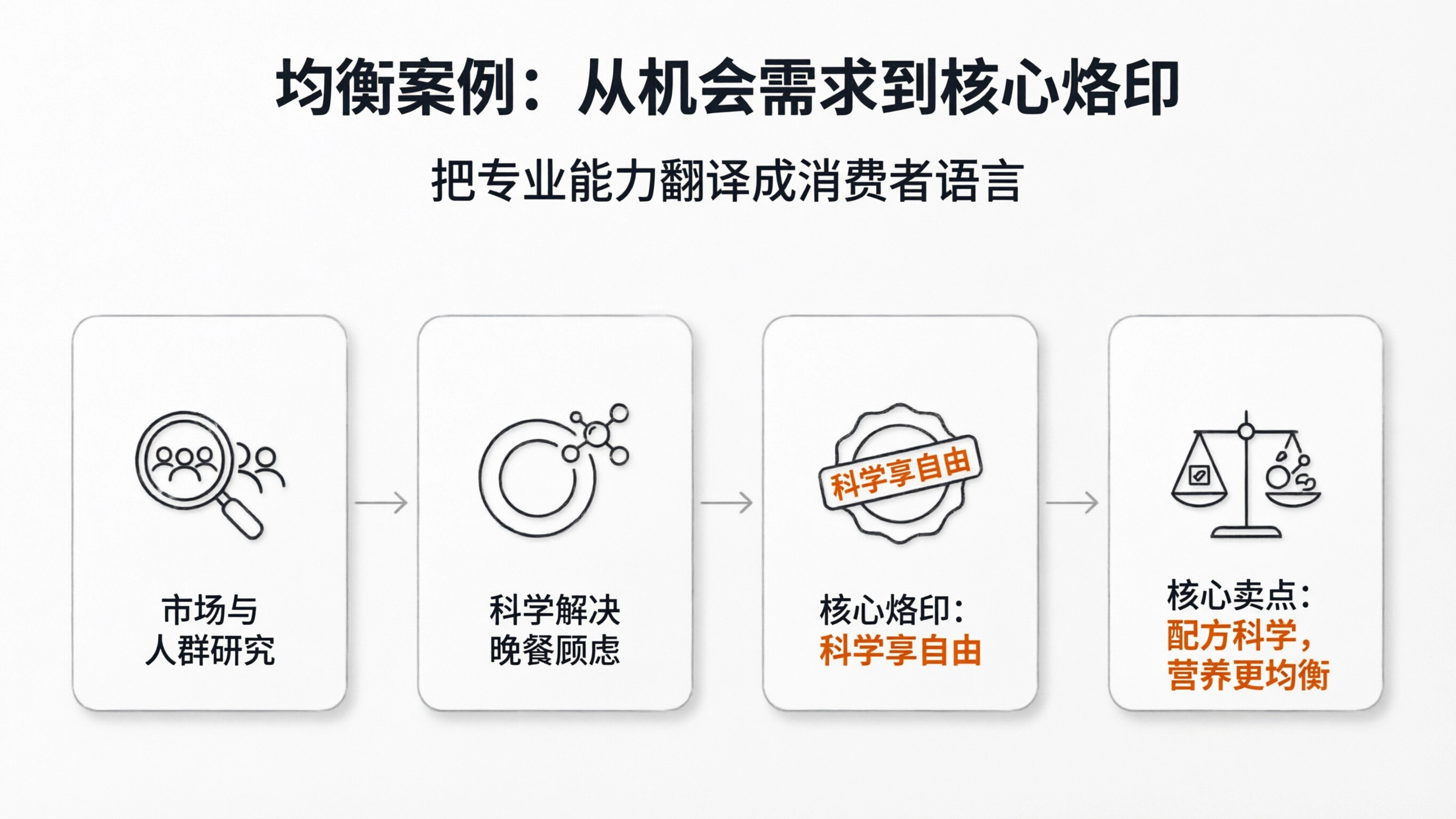 AI Visual Insight: This image likely illustrates the path from consumer scenario insight to value translation and then to product and channel execution. It represents a typical full-plan workflow and emphasizes that narrowing the demand focus comes before visual and communication execution.
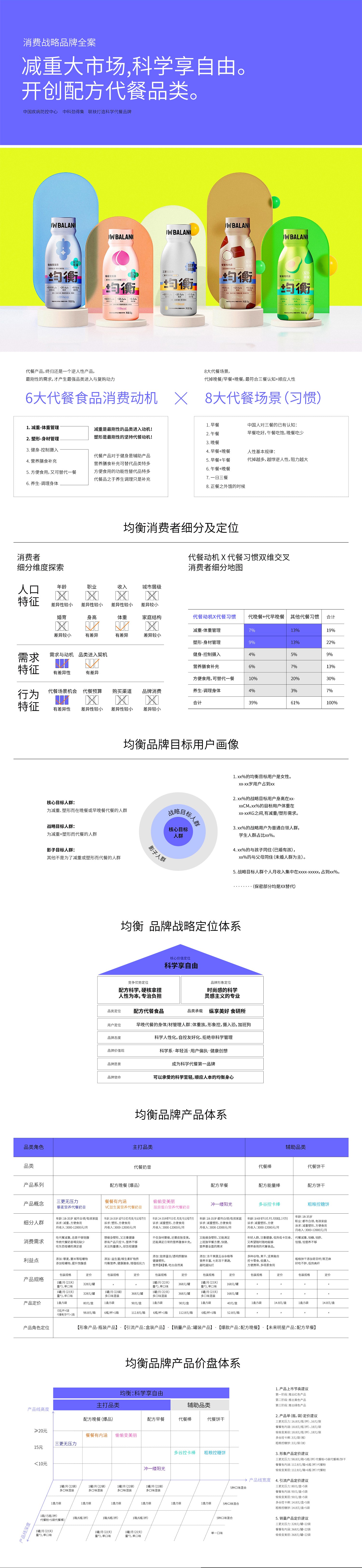 AI Visual Insight: This image appears to be a case-results presentation page. It shows that the output of a full plan is not a single proposal deck, but a unified system that runs through brand, product, content, and channels to support reusable growth actions.
A full plan should be accepted based on five kinds of outcomes, not the thickness of the PPT deck
An effective full plan should produce at least five changes: opportunity demand is stably locked in; the core imprint is used consistently; product, content, channels, and retail endpoints coordinate around the same thread; the team develops a shared language; and follow-up actions have a clear roadmap and review standard.
If these outcomes do not appear, then no matter how rich the deliverables look, the result is still just a proposal, not a system rebuild.
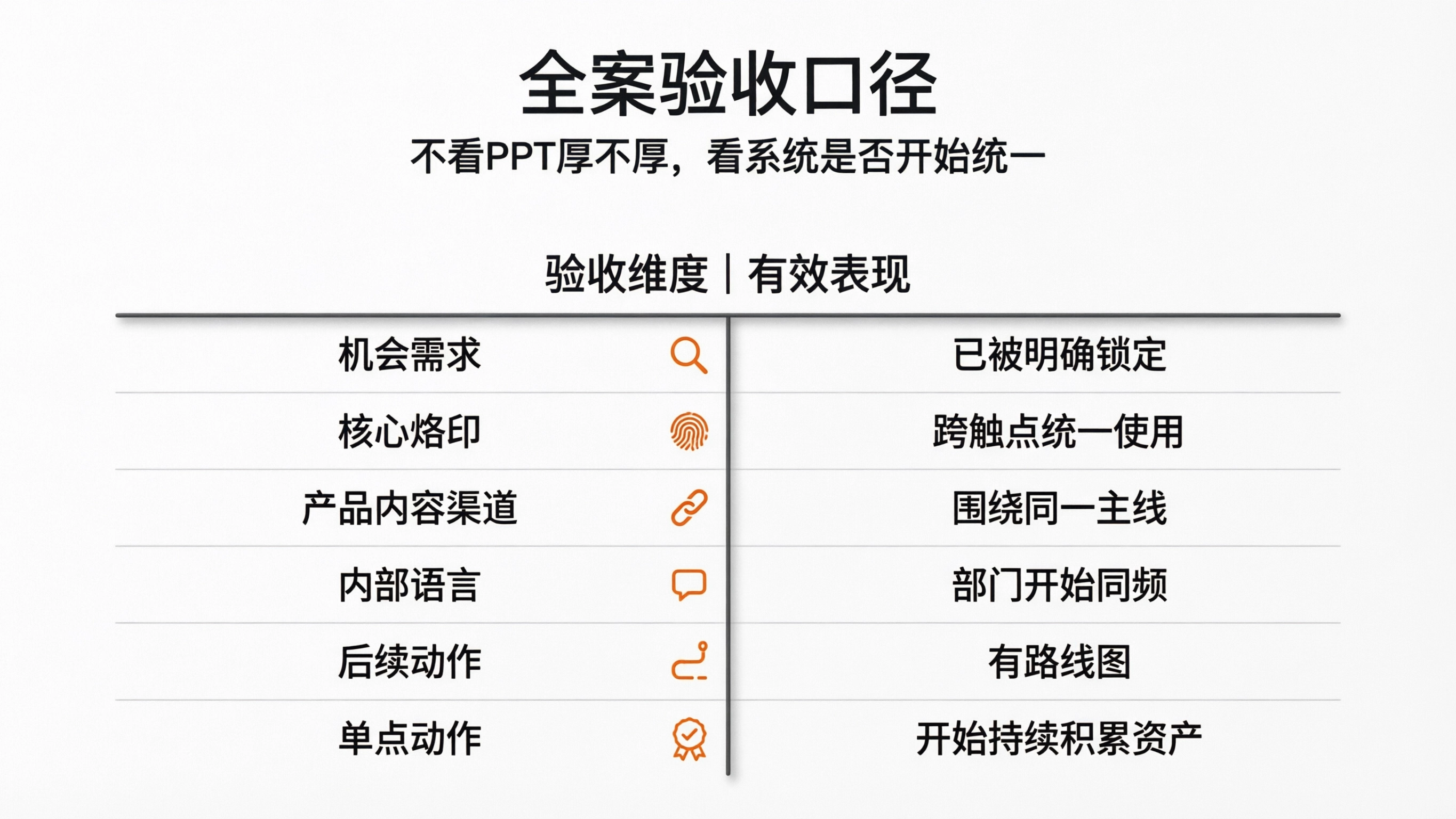 AI Visual Insight: This image likely presents acceptance criteria or a review framework for a full plan. It focuses on metrics such as shared language, roadmap clarity, coordination efficiency, and reusability, showing that acceptance should center on operating-mechanism changes rather than visual outputs alone.
acceptance = [
    "机会需求锁定",   # Whether the long-term opportunity is clearly defined
    "核心烙印统一",   # Whether a unified expression has been established
    "多触点协同",     # Whether product and channels are aligned across touchpoints
    "团队共同语言",   # Whether internal debate has been reduced
    "后续路线图清晰"  # Whether decision-making costs have been reduced
]

print("全案验收项:", acceptance)
This code structures the acceptance criteria, making it useful for project reviews or management evaluation.
FAQ: Structured questions and answers
FAQ 1: When is targeted optimization enough instead of a full strategic plan?
When the problem is concentrated in a single layer—for example, declining channel efficiency, outdated packaging expression, or weak retail conversion at a specific endpoint—and the issue will not be quickly diluted by other parts of the system, targeted optimization is usually the better option.
FAQ 2: What is the biggest difference between a consumer strategy full plan and ordinary brand planning?
Ordinary planning tends to focus on outputs for a single module. A full plan emphasizes unified inputs, unified judgment, and unified outputs. Its goal is not to complete a set of actions, but to establish reusable operating standards.
FAQ 3: How can a company tell whether a full plan has really created value?
The key question is whether it has reduced the cost of future decisions. If the team starts sharing the same judgment framework, reduces rework and ineffective meetings, and becomes clear about what to do first and what to do next, then the full plan is beginning to create real value.
Core Summary: This article reconstructs the original material into an executable consumer strategy decision framework. It explains when a company should move from local patching to full-scale system rebuilding and uses a three-layer model, six signals, four caution scenarios, and acceptance criteria to help management reduce decision-making costs.