WinHex 19.8 SR-8 Expert Edition is a professional tool for low-level data processing. It covers hex editing, disk operations, data recovery, and forensic verification, addressing scenarios that ordinary editors cannot handle directly, such as sectors, disk images, and damaged partitions. Keywords: WinHex, data recovery, digital forensics.
Technical Specifications at a Glance
| Parameter | Details |
|---|---|
| Tool Name | WinHex 19.8 SR-8 Expert Edition |
| Primary Platforms | Windows 7 / 10 / 11, 32-bit and 64-bit |
| Core Capabilities | Hex editing, disk access, data recovery, memory analysis, hash verification |
| Protocols / Formats | MBR, GPT, NTFS, FAT, and raw sector data |
| Article Popularity | The original article shows approximately 390 views, 10 likes, and 14 bookmarks |
| Core Requirements | Windows administrator privileges and low-level disk access |
| Target Users | Operations engineers, forensic investigators, reverse engineers, and data recovery engineers |
This tool serves as an all-in-one workspace for low-level data processing
The value of WinHex is not simply that it can display hexadecimal data. Its real strength lies in unifying files, partitions, physical disks, and images under a single operating model. For engineers who need to handle corrupted file headers, abnormal partition tables, and forensic images, this unified view is critical.
Compared with lightweight hex editors, this version emphasizes stability, a fully localized Chinese interface, and a complete feature set. The source material repeatedly highlights its suitability for operations, forensics, reverse engineering, and recovery scenarios. In essence, that means it is not a single-purpose tool but a platform-style workspace for low-level tasks.
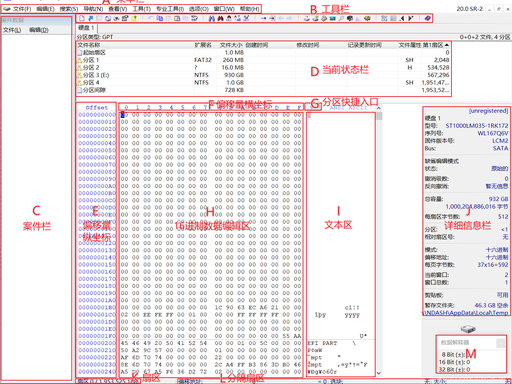 AI Visual Insight: The image shows a typical WinHex main interface layout, usually including a hexadecimal data pane, an ASCII/text mapping pane, an offset address column, and menu and toolbar areas. This interface structure indicates that its core workflow is built around byte-level positioning, offset-based repair, and structure-driven analysis, making it well suited for partition boot sectors, file headers, and raw image data.
Version selection should prioritize stability and compatibility
Version 19.8 SR-8 is described as a classic stable branch. Its key strengths include low resource usage, broad system compatibility, and complete localization. That makes it a better fit for environments where reliable operation matters more than the newest features, such as older office PCs, virtual machines, and industrial control systems.
In production environments, stable releases usually matter more than newly added features. This is especially true in disk repair and image analysis workflows, where a single crash can interrupt long-running tasks and may even affect the integrity of the evidence chain.
# Start as administrator to ensure low-level disk access permissions
Start-Process "C:\Tools\WinHex\WinHex.exe" -Verb RunAs
This command starts WinHex with administrator privileges to prevent physical disk read and write operations from failing due to insufficient permissions.
It covers the most common low-level operations and data recovery scenarios
First, it provides full-scope hex editing. It supports offset-based navigation, block marking, and synchronized character views, which makes it suitable for repairing corrupted file headers, boot sectors, and partition tables. When problems cannot be resolved at the file system layer, byte-level editing is often the last and most effective option.
Second, it supports direct physical disk access. You can inspect the sector contents of disks and partitions directly, making it much easier to troubleshoot MBR, GPT, hidden sectors, and bad sectors without relying on multiple intermediary tools.
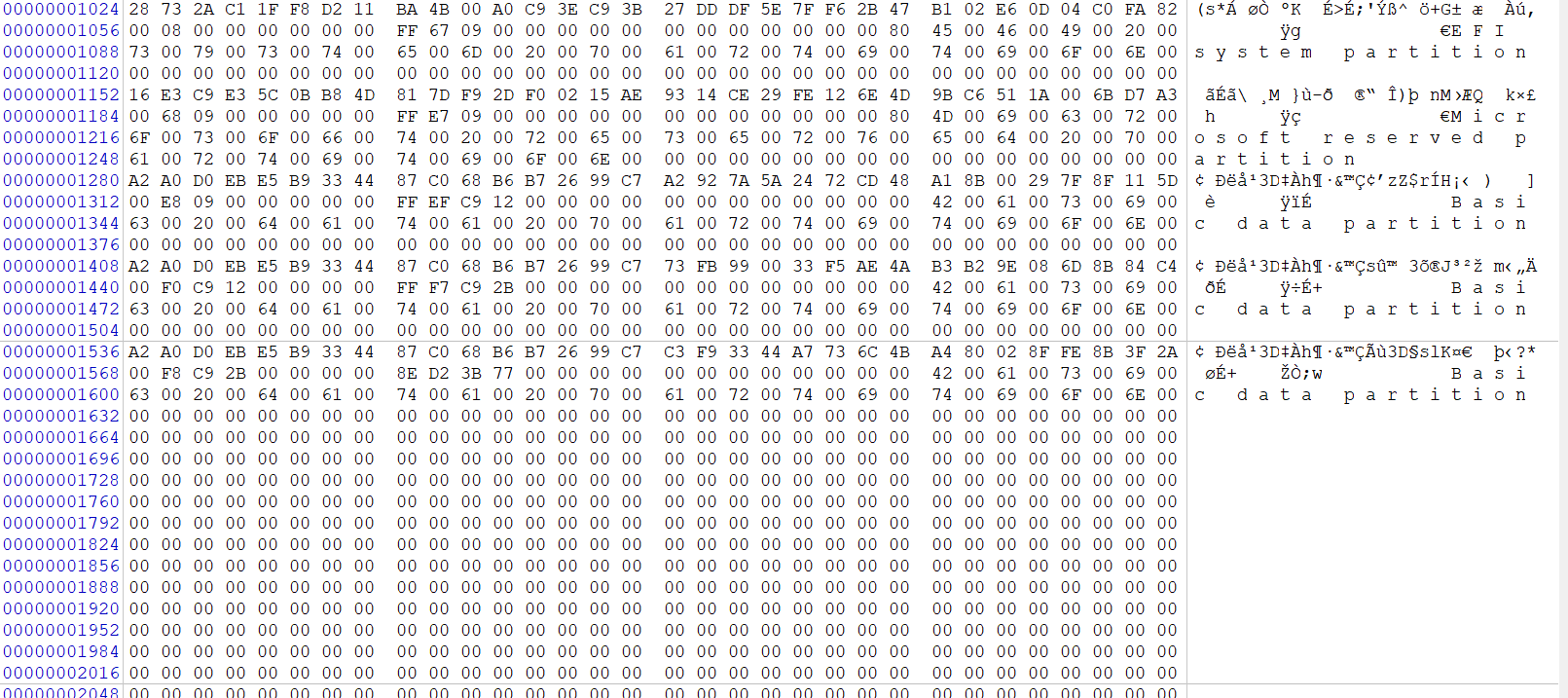 AI Visual Insight: The image shows a hex data browsing and editing workflow. The most important technical elements usually include offset addresses on the left, a raw byte stream in the middle, and a character interpretation pane on the right. This layout helps identify file signatures, structural boundaries, and corruption points, and it forms the core interface for manually repairing partition tables, boot records, and damaged file headers.
Data recovery and memory analysis extend it beyond an ordinary editor
The original article highlights raw scan recovery, which is an important capability. It means the tool does not rely only on directory entries. Instead, it can identify data fragments based on residual low-level patterns. That makes it especially valuable in scenarios involving accidental deletion, quick formatting, and RAW partitions.
At the same time, it supports reading memory regions, comparison, search and replace, and batch tasks. This allows it to participate in reverse debugging, anomaly troubleshooting, and batch-oriented operations work, rather than serving only as a static file viewer.
def classify_recovery_scene(partition_state, has_directory, file_signature_found):
    # Determine the recovery strategy based on partition state and residual indicators
    if partition_state == "RAW":
        return "Run raw scan recovery first"  # Go directly to low-level scanning when the partition is unreadable
    if not has_directory and file_signature_found:
        return "Reconstruct fragments by file header signatures"  # Use signature-based recovery when the directory is damaged but signatures remain
    return "Start with file system-level analysis"  # Prefer conventional recovery when the directory structure still exists
This example abstracts the decision logic used in data recovery scenarios and helps explain how WinHex fits different failure states.
Its core advantage lies in consolidating multiple tools into one place
The source content emphasizes capabilities such as comparison, hashing, encryption, shredding, and image backup. Taken together, these features are highly suitable for evidence preservation and compliance-oriented operations. A typical workflow looks like this: create an image backup first, lock in its hash, then perform analysis or recovery, and finally securely erase retired media.
This closed-loop workflow reduces the cost of switching between multiple tools and lowers the risk of human error. In sensitive environments or offline internal networks, a single tool that can complete more actions is often more reliable than software with flashier features but stronger network dependencies.
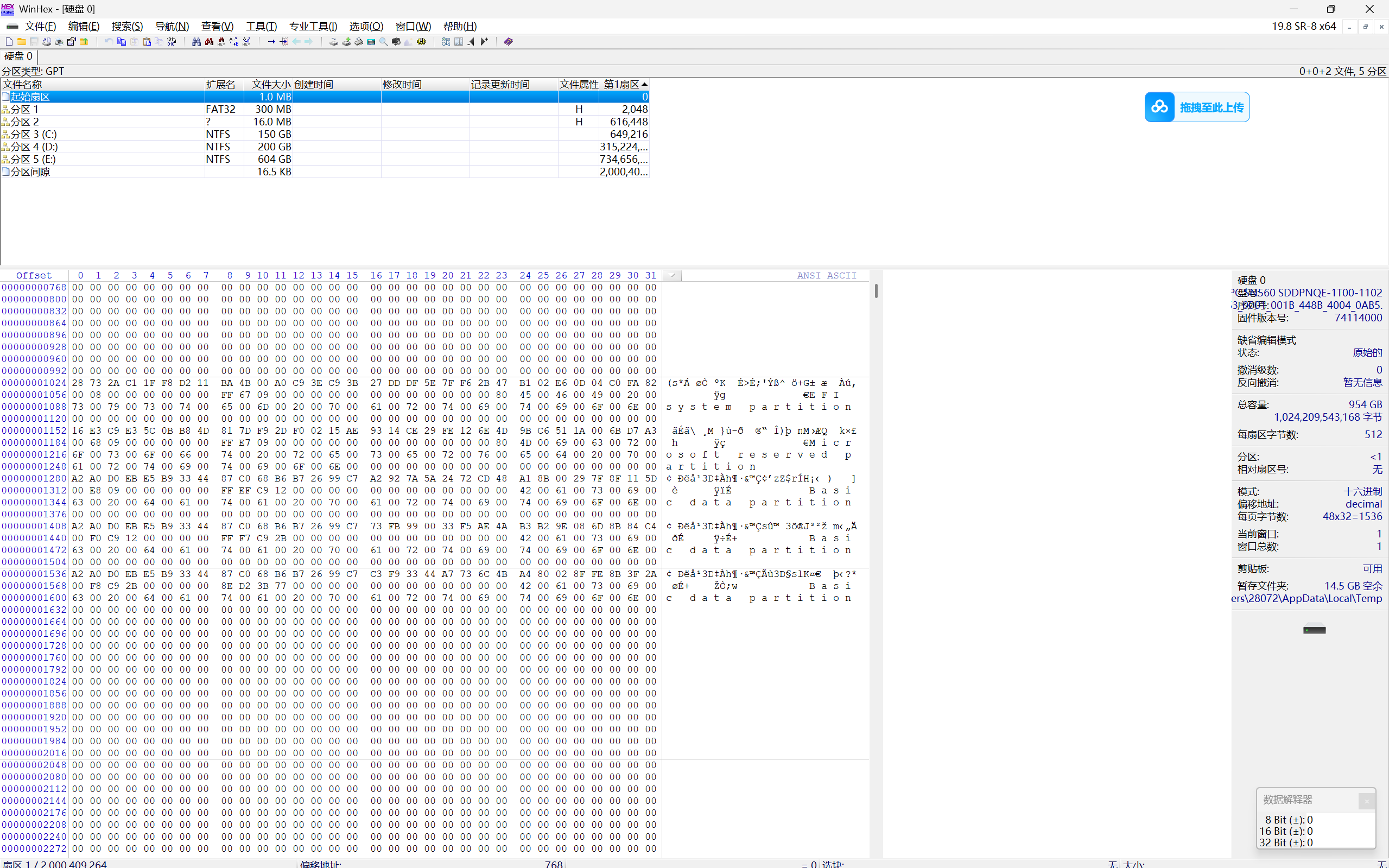 AI Visual Insight: The image reflects a multi-window workflow for disk, image, or file analysis. It typically presents an object tree, a data view, and a results area at the same time. This shows that WinHex is not just a single-file editor, but a low-level analysis platform that supports cross-object browsing, positioning, and comparison.
You should establish a safe operating baseline before use
Any tool that can write directly to disk sectors carries significant risk. The correct sequence is read-only analysis first, image backup second, and localized repair last. In accidental deletion recovery and partition repair especially, preserving the original image matters more than trying to fix the source media immediately.
If you are working in an enterprise or forensic environment, you should also run the tool offline, document each operation step, and retain verification values. This reduces the chance of secondary damage while also meeting audit and post-incident review requirements.
# Pseudo-workflow: image first, verify second, analyze last
acquire_disk_image /dev/disk0 disk0.img
sha256sum disk0.img > disk0.img.sha256
analyze_image disk0.img
This pseudo-command sequence summarizes the recommended order for handling low-level storage media: image first, verification second, and analysis last.
This tool works best as a stable foundation for professional workflows
Based on the source material, the core strength of WinHex 19.8 SR-8 Expert Edition is not a modern interface. Its real advantages are stability, accessibility, and a complete set of low-level capabilities. It is designed for tasks that require direct interaction with sectors, partitions, images, and residual data, rather than ordinary office-style file editing.
If your work involves boot repair, disk failure troubleshooting, deleted file recovery, image comparison, or forensic preservation, a tool like this offers much more value than a general-purpose editor. For low-level engineers, it is closer to a precision instrument that should always be within reach.
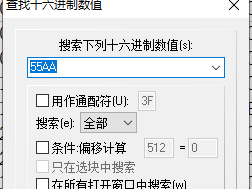 AI Visual Insight: The image shows another feature interface, typically used to inspect disk objects, review analysis results, or execute batch tasks. It highlights multi-module coordination: from raw data acquisition to final output, the entire workflow can be completed in a single workspace, which is ideal for long-chain operations and forensic procedures.
FAQ
Who should use WinHex?
It is well suited for system operations, data recovery, digital forensics, reverse engineering, and security research professionals. If your work requires direct handling of disk sectors, partition tables, image files, or damaged file headers, it is a better fit than a standard editor.
Why should you create an image before working on a failed disk?
Because any direct write operation can expand the scope of the damage. Creating a raw image first preserves a reversible sample. Subsequent recovery, repair, and forensic analysis should be performed against the image whenever possible rather than the original disk.
How is WinHex different from a standard hex editor?
Standard tools are usually limited to file-level viewing and simple modification. WinHex places greater emphasis on low-level disk access, raw data recovery, hash verification, image handling, and batch analysis, making it a comprehensive low-level tool for professional scenarios.
Core Summary
This article reconstructs the core capabilities, use cases, and deployment considerations of WinHex 19.8 SR-8 Expert Edition. It focuses on hex editing, disk operations, data recovery, hash verification, and forensic analysis, making it a useful quick reference when evaluating low-level data processing tools.