Enterprise-grade Certificate Lifecycle Management is shifting from manual spreadsheets to automated issuance, intelligent alerting, and unified governance. This article explains how CLM addresses three major pain points—certificate expiration, inefficient deployment, and limited compliance visibility—and examines implementation paths through the capabilities of TrustAsia and iTrustSSL. Keywords: CLM, ACME, SSL certificate automation.
Technical Specifications at a Glance
| Parameter | Description |
|---|---|
| Domain | SSL/TLS Certificate Lifecycle Management (CLM) |
| Core Capabilities | Automated request, issuance, deployment, renewal, monitoring, and alerting |
| Key Protocols | ACME, OCSP, TLS |
| Primary Delivery Models | API, SDK, and Certificate as a Service (CaaS) platforms |
| Referenced Brands | TrustAsia, iTrustSSL |
| Domestic Compliance Capabilities | Support for SM2 cryptography and domestic trust chain governance |
| Ecosystem Focus | DevOps integration, business continuity, and security compliance |
| Reference Context | Originally published as a CSDN column article with SSL and certificate automation tags |
Traditional Certificate Management No Longer Fits Short-Lived Certificates
In the past, enterprises commonly used Excel spreadsheets, email reminders, and manual logins to CA platforms to handle certificate requests and renewals. That approach was manageable when certificate volume was low, but it quickly breaks down in multi-domain, multi-environment, and multi-cloud architectures.
As certificate validity periods continue to shrink, the weaknesses of manual processes become more pronounced: renewal windows get shorter, change frequency increases, and deployment chains become more complex. Once a certificate expires, the consequences often include HTTPS outages, failed API calls, browser security warnings, and revenue loss.
The Core Risks of Manual Management Concentrate on Visibility and Execution Consistency
- Certificate assets are scattered, with no unified inventory
- Renewals depend on individual experience, making the process difficult to audit
- Deployment spans multiple servers, so teams can easily miss steps
- Teams cannot consistently optimize certificate chains, algorithms, and regional access performance
# Quickly check the expiration time of a live certificate with OpenSSL
openssl s_client -connect example.com:443 -servername example.com </dev/null 2>/dev/null \
| openssl x509 -noout -dates
This command provides a minimal but effective way to validate a target site’s certificate validity and expiration dates when investigating certificate risk.
Automated Architectures Are Rewriting Certificate Operations Workflows
The first-stage value of CLM is automation. The core idea is to bring certificate request, issuance, installation, rotation, and revocation into a programmatic workflow, then connect systems through APIs or the ACME protocol.
In DevOps environments, certificates are no longer treated as ad hoc operations tasks. They become part of orchestrated infrastructure. Certificate requests can integrate with domain validation, load balancer releases, container updates, and canary deployments, which reduces the need for manual intervention.
The ACME Protocol Serves as the Key Interface Layer for Automated Certificate Management
ACME standardizes certificate requests so that clients can automatically complete identity validation, CSR submission, and renewal operations. It is especially well suited for high-frequency changes, large domain inventories, and cloud-native environments.
import requests

api = "https://clm.example/api/cert/renew"
payload = {
    "domain": "api.example.com",  # Target domain
    "deploy": True,                 # Automatically deploy after renewal
    "notify": True                  # Send a notification after completion
}

resp = requests.post(api, json=payload, timeout=10)
print(resp.status_code, resp.text)   # Output the renewal result
This example shows the simplest workflow for triggering certificate renewal and deployment through an API, making it suitable for integration with internal platforms or CI/CD pipelines.
Intelligent Capabilities Are Turning Certificate Management from Reactive Maintenance into Proactive Governance
Automation improves execution efficiency, while intelligence improves risk prediction. What enterprises actually need is not just a reminder after a certificate is close to expiration, but the ability to identify abnormal certificates, failed deployments, and potential points of interruption in advance.
An alerting system built on AI and rules engines can create multidimensional monitoring across certificate expiration, revocation status, trust chain anomalies, algorithm noncompliance, and regional access performance. This enables CLM to evolve from a certificate tool into a security operations capability.
The Value of Intelligent Alerting Lies in Lead Time and Actionable Guidance
Intelligent CLM platforms typically provide the following capabilities:
- Identify renewal risks 7 days, 30 days, or even further in advance
- Detect undeployed new certificates or incomplete certificate chains
- Analyze certificate usage distribution to locate shadow assets
- Provide recommendations for algorithm migration, deployment sequencing, and certificate replacement
alert_policy:
  expire_in_days: 30   # Alert 30 days in advance
  chain_validation: true  # Check certificate chain integrity
  algorithm_check:
    - RSA
    - ECC
    - SM2
  notify:
    - email
    - webhook
This policy example shows how a CLM platform converts certificate risk into executable monitoring rules.
TrustAsia Represents the Combination of a Domestic Trust System and Platform-Based CLM
The source material shows that TrustAsia emphasizes the integration of automation and AI-driven intelligence within its CaaS 2.0 platform. Its core direction is to reconstruct certificate lifecycle governance through a platform-based model.
Its value extends beyond issuance. It also includes independent trust chain management, support for domestic cryptographic systems, and unified API interfaces. For finance, government, enterprise, and other highly regulated industries, this kind of platformized certificate capability matters more than simply purchasing certificates one by one.
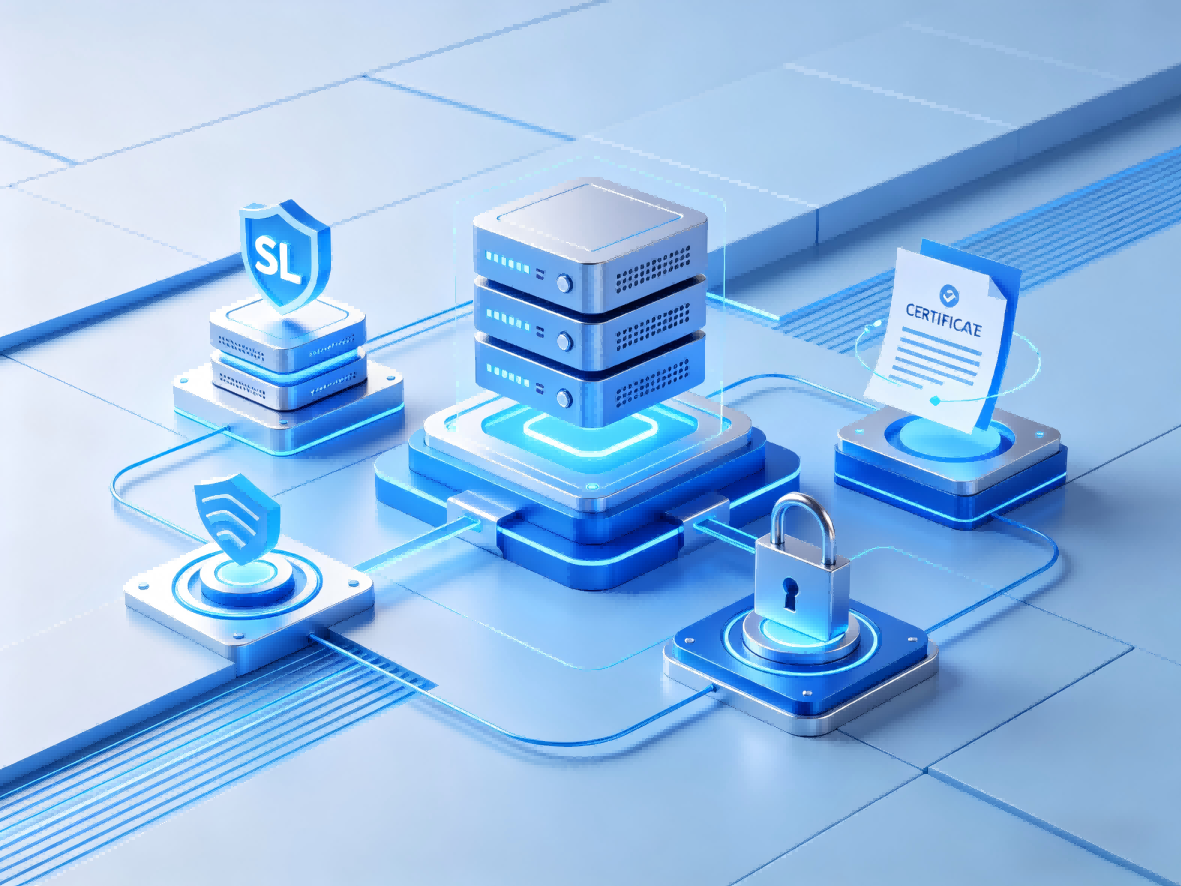 AI Visual Insight: The image is a promotional infographic centered on Certificate Lifecycle Management. It highlights CLM upgrades driven by automation and intelligence, typically illustrating unified governance across certificate request, deployment, monitoring, and risk alerting.
iTrustSSL Lowers the Adoption Barrier for Small and Medium-Sized Businesses with Strong Cost Efficiency
iTrustSSL is positioned more around low cost, integration readiness, and deployment simplicity. In the original material, its advantages include lower procurement cost, rich API/SDK support, China-region OCSP support, and technical backing from TrustAsia.
That means small and medium-sized businesses do not need to build a complex PKI infrastructure first in order to gradually implement automated certificate management. For e-commerce, SaaS, international websites, and regional applications, better access performance and simpler deployment have direct business value.
 AI Visual Insight: The image is another visual related to certificate products or platform capabilities. It emphasizes branded certificate services, automated onboarding, and cost advantages, and is commonly used to illustrate the implementation convenience of adopting CLM services for small and medium-sized businesses.
Enterprise Evaluation Should Focus on Four Practical Implementation Questions
- Does it support ACME, API, and SDK integration?
- Does it provide unified inventory, alerting, and auditing capabilities?
- Does it meet requirements for SM2 cryptography, compliance, and domestic access performance?
- Can it adapt to Kubernetes, Nginx, CDN, and load balancing scenarios?
The Post-Quantum Cryptography Era Will Continue to Push CLM Platforms Forward
In the future, certificate management will involve more than automated renewal. It will also need to address algorithm migration, hybrid certificate systems, and more complex trust governance. As post-quantum cryptography becomes more widely adopted, CLM platforms will need stronger policy orchestration and compatibility control capabilities.
For that reason, when enterprises build CLM capabilities today, they should not focus only on whether a platform can issue certificates. They should also evaluate whether it supports long-term evolution, including algorithm upgrades, asset discovery, policy layering, and unified governance across multiple environments.
FAQ
Why must Certificate Lifecycle Management be automated?
Because once certificate validity periods shrink, manual renewal processes cannot reliably cover large-scale certificate inventories. Automation reduces expiration incidents, minimizes human error, and brings certificates into standardized operations workflows.
What is the practical value of ACME in enterprise CLM?
ACME provides a standardized interface for certificate request and renewal. It can integrate directly with scripts, CI/CD pipelines, and cloud platforms, making it the critical protocol layer for large-scale, unattended certificate operations.
Which scenarios are better suited to TrustAsia and iTrustSSL?
TrustAsia is better suited to medium and large organizations that prioritize platform-based governance, domestic trust chains, and compliance capabilities. iTrustSSL is better suited to small and medium-sized businesses seeking high cost efficiency, rapid onboarding, and API integration.
AI Readability Summary
This article reconstructs the technical evolution of Certificate Lifecycle Management (CLM), focusing on automated issuance, intelligent alerting, ACME integration, and domestic trust systems. It explains how TrustAsia and iTrustSSL help enterprises respond to shorter certificate validity periods, inefficient manual operations, and compliance risk.