This GitHub Trending roundup shows that developer attention is shifting from isolated LLM calls to AI Agent engineering systems that can execute, remember, and be observed. The core themes include Claude Code skill libraries, browser-based Graph RAG, long-term memory enhancement, and high-performance compiler migration. Keywords: AI Agent, Graph RAG, TypeScript.
Technical Specifications Snapshot
| Parameter | Details |
|---|---|
| Data Range | GitHub Daily Trending 2026-04-27 |
| Number of Trending Projects | 13 |
| Primary Languages | Python, TypeScript, Go, C |
| Key Protocols / Interfaces | GitHub API, CLI, Graph RAG, desktop control sandbox |
| High-Interest Areas | AI Agents, code understanding, compiler infrastructure, developer analytics platforms |
| Representative Projects | skills, GitNexus, typescript-go, cua, beads |
| Highest Star Count | build-your-own-x (496777) |
| Core Dependencies | GitHub Trending, GitHub Public API, browser-based knowledge graphs, LLM workflows |
This Trending List Shows That AI Agents Have Entered the Engineering Competition Phase
The strongest signal in this daily ranking is not a gain in standalone model capability. It is the rise of full-stack infrastructure built around one goal: making models do real work. The rapid emergence of Claude Code ecosystem projects shows that developers are now competing on skill templates, context organization, and execution environments.
Unlike early prompt engineering, today’s trending projects emphasize three things: reusable skills, controllable execution sandboxes, and durable memory. Together, these determine whether an Agent can evolve from “able to answer” to “able to deliver.”
projects = [
    "skills", "free-claude-code", "GitNexus", "cua", "beads"
]

for name in projects:
    print(f"Analyzing project: {name}")  # Print each key project name one by one
This snippet quickly enumerates the Agent ecosystem projects most worth tracking in this cycle.
 AI Visual Insight: The image presents an overview of the ranking and clustered trends. Its visual center highlights the concentrated rise of AI Agents, code intelligence, and toolchain upgrades. This suggests that momentum is not scattered across isolated tracks, but instead forms a clear axis around development automation.
Claude Code Ecosystem Projects Are Becoming Force Multipliers for Developer Productivity
mattpocock/skills, with 23,515 stars, is a representative example. Its value does not come from the model itself, but from turning reusable day-to-day engineering operations into Skills, which lowers the barrier for teams building Agent workflows.
Alishahryar1/free-claude-code targets the cost problem directly, allowing developers to access Claude Code with low friction through terminals, VSCode, and Discord. Projects like this often grow quickly because they connect directly to real usage scenarios.
 AI Visual Insight: The image highlights a modular skill organization model, often including multiple task scripts or directory structures. This shows that the core of the project is not the UI, but the standardization of coding, analysis, and repair tasks into reusable Agent capability units.
 AI Visual Insight: The image reflects multi-entry access paths, likely spanning terminal commands, editor extensions, and chat interfaces. The technical focus is on a unified invocation chain and user-facing packaging rather than on underlying model training.
Browser-Based Code Knowledge Graphs Are Becoming a New Entry Point for Understanding Large Repositories
GitNexus is one of the most structurally innovative projects in this cycle. It reframes code understanding as a browser-based knowledge graph construction problem, then layers on a Graph RAG Agent to enable zero-server code exploration.
This addresses two long-standing pain points. First, large repositories are expensive to read and understand. Second, traditional RAG struggles to express relationships between code entities. Graph RAG is strong precisely because it can represent functions, modules, dependencies, and call chains in a structured way.
git clone https://github.com/abhigyanpatwari/GitNexus.git
cd GitNexus
# Inspect the local project structure to understand the frontend knowledge graph entry point
ls -la
This command sequence quickly pulls and inspects GitNexus so you can understand how the project is organized.
 AI Visual Insight: The image appears to be the repository’s Open Graph preview, typically showing the project name and a one-line description. The emphasis is likely on capabilities such as “Zero-Server,” “Knowledge Graph,” and “Graph RAG,” indicating that its architectural core is pure client-side execution and interactive code relationship exploration.
Infrastructure Projects Are Filling in the Agent Execution Environment and Memory Stack
trycua/cua provides open infrastructure for Computer-Use Agents, including a cross-platform desktop sandbox, SDK, and evaluation benchmarks. It solves the problem of uncontrollable Agent actions and unreproducible environments.
gastownhall/beads targets the memory layer. Long-running tasks, multi-turn collaboration, and cross-session context continuity are all weak points for current coding Agents. As a “memory upgrade,” Beads is fundamentally about turning context into a durable asset.
 AI Visual Insight: The image likely shows desktop control, sandbox instances, or cross-platform execution flows. This indicates that the project centers on providing an isolated execution surface and a standardized evaluation environment for Agents across macOS, Linux, and Windows.
 AI Visual Insight: The image typically emphasizes the memory layer, indexing, or context chaining. Technically, this maps to persistent storage, retrieval augmentation, and session linking, enabling coding assistants to perform more reliably on long-horizon tasks.
Compilers and Classic Infrastructure Software Still Maintain High Value Density
microsoft/typescript-go deserves close attention. Microsoft’s push to port TypeScript to a native Go implementation sends a clear signal: frontend infrastructure is also pursuing higher performance, lower resource usage, and faster compilation feedback.
At the same time, curl, home-assistant/core, PostHog, and build-your-own-x remain near the top of the list. This shows that mature infrastructure tools, privacy-first platforms, and systematic learning resources continue to attract sustained attention.
package main

import "fmt"

func main() {
    fmt.Println("The TypeScript toolchain is moving toward high-performance native implementations") // Output the trend assessment
}
This Go snippet symbolically represents the infrastructure migration direction reflected by typescript-go.
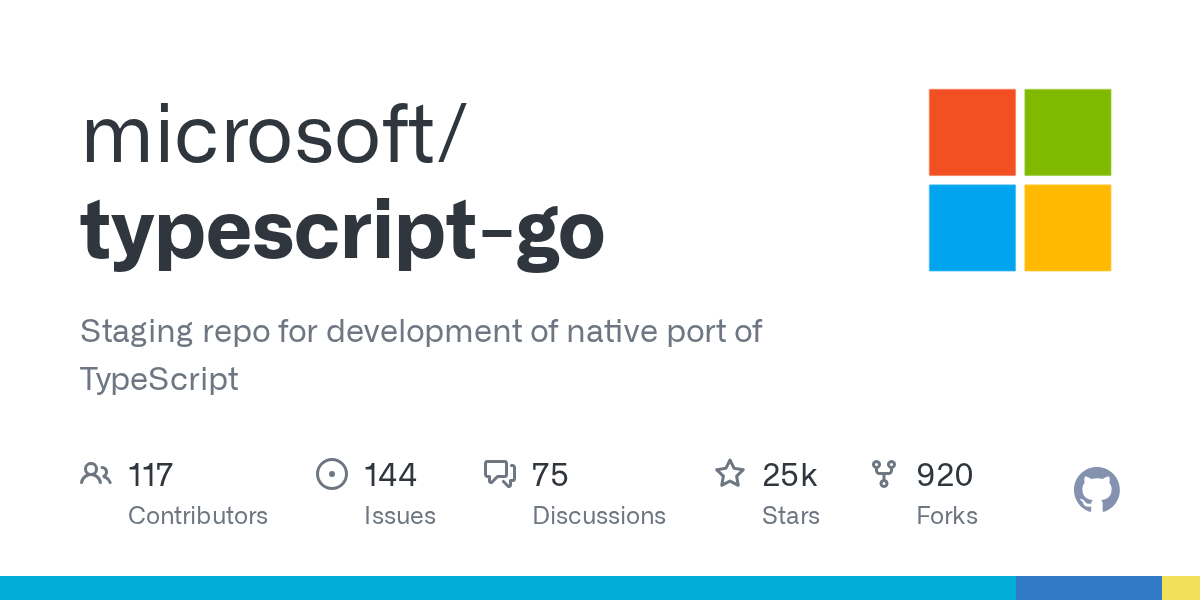 AI Visual Insight: The image usually highlights the dual-language relationship between TypeScript and Go. The implied message is compiler rewrites, native performance gains, and toolchain evolution, typically aiming for faster type checking and build speeds.
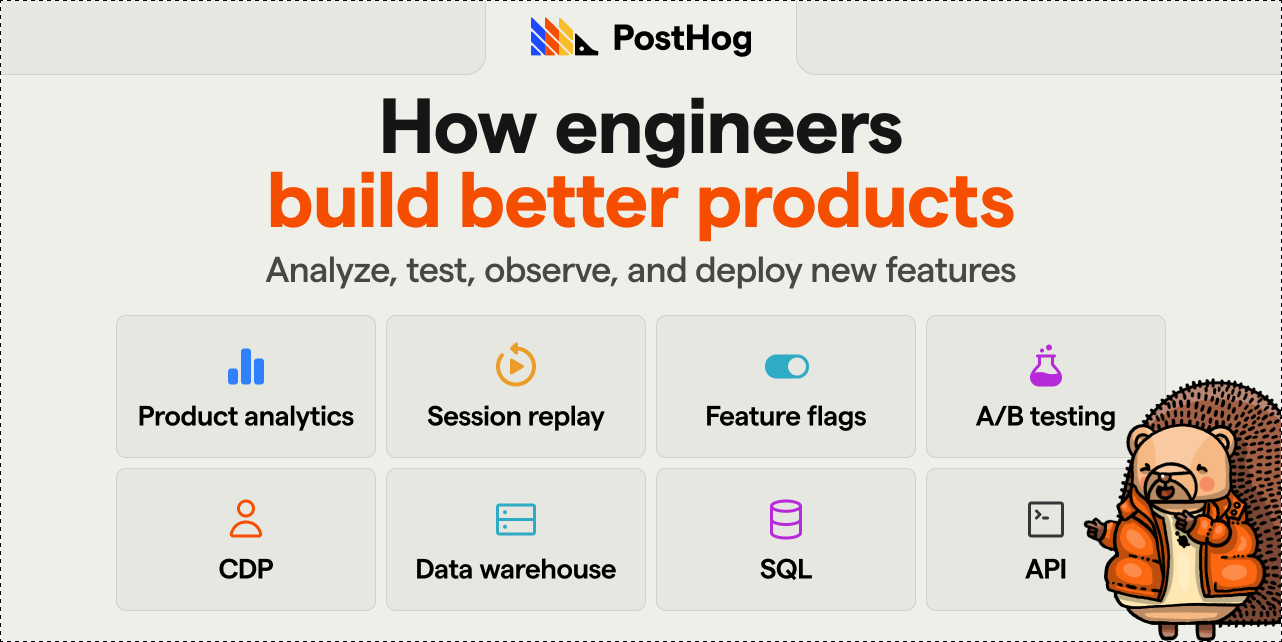 AI Visual Insight: The image often shows metrics dashboards, event analysis, or product data flows. This indicates that PostHog’s core value lies in integrating analytics, experimentation, error tracking, and user behavior observability into a unified development platform.
Developers Should Prioritize Three Project Combinations
The first category is the skill layer, such as skills and awesome-codex-skills, which is well suited for quickly reusing established Agent workflows. The second category is the execution layer, such as cua and openclaw, which fits teams building autonomous assistants that can operate within system environments.
The third category is the understanding and memory layer, such as GitNexus and beads. These directly determine how stable an Agent will be when working with complex codebases and long-running tasks. If a team only connects a model but ignores these three layers, it will be difficult to build a real productivity loop.
FAQ
Q1: Which projects should engineering teams evaluate first from this cycle?
A1: If your focus is AI coding in production, start with skills, GitNexus, cua, beads, and typescript-go. They cover skill reuse, code understanding, execution environments, memory enhancement, and infrastructure performance upgrades respectively.
Q2: Why are Graph RAG projects like GitNexus important?
A2: Because a codebase is not just a collection of plain text. It is a highly connected network of relationships. Graph RAG can represent dependencies, call paths, module boundaries, and knowledge links, making it better suited than traditional vector retrieval for analyzing large repositories.
Q3: How can individual developers use this trending list to improve productivity?
A3: Do not spread your attention evenly. Start by combining one skill library project, one code understanding project, and one execution or memory project. Then validate the stack before deciding whether to adopt it into your team’s formal toolchain.
Core Summary: Based on the GitHub Trending list for 2026-04-27, this article distills the technical signals behind 13 high-attention open-source projects. It focuses on AI Agents, Graph RAG, code intelligence, compiler infrastructure, and automation platforms to help developers quickly identify the toolchains and architectural directions worth tracking.