This is a progressive UDP socket project based on Linux C++: start with an Echo server, extend it into a dictionary translation service, and finally evolve it into a multi-user chat room. It addresses common UDP beginner pain points, including API comprehension, address binding, business-layer separation, and concurrent send/receive design. Keywords: UDP Socket, C++ network programming, multi-user chat room.
| Item | Description |
|---|---|
| Language | C++ |
| Protocol | UDP / IPv4 |
| Runtime Environment | Linux, with Windows/Linux protocol interoperability |
| Star Count | Not provided in the original article |
| Core Dependencies | <sys/socket.h>, <netinet/in.h>, <arpa/inet.h>, <thread>, unordered_map |
This project upgrades UDP server capabilities across three versions
V1 focuses on the minimum viable UDP Echo server. The core task is to connect socket, bind, recvfrom, and sendto into a working flow. V2 adds translation logic on top of the I/O layer and demonstrates how to decouple the network layer from the business layer. V3 expands the design into a multi-user chat room by introducing address encapsulation, routing distribution, and a thread pool.
This evolutionary path is ideal for learning network programming because each step adds only one key layer of complexity: first make it work, then separate concerns, then handle concurrency.
The key takeaway from V1 is that UDP communication is datagram-oriented, not byte-stream-oriented
The server first creates a socket, then binds a local address and port to the file descriptor. The most common point of confusion here is this: bind does not bind a process. It binds the local communication endpoint represented by the socket.
The image shows the function prototypes for socket and bind, the address structures, and the return-value semantics. It serves as foundational material for understanding UDP initialization.
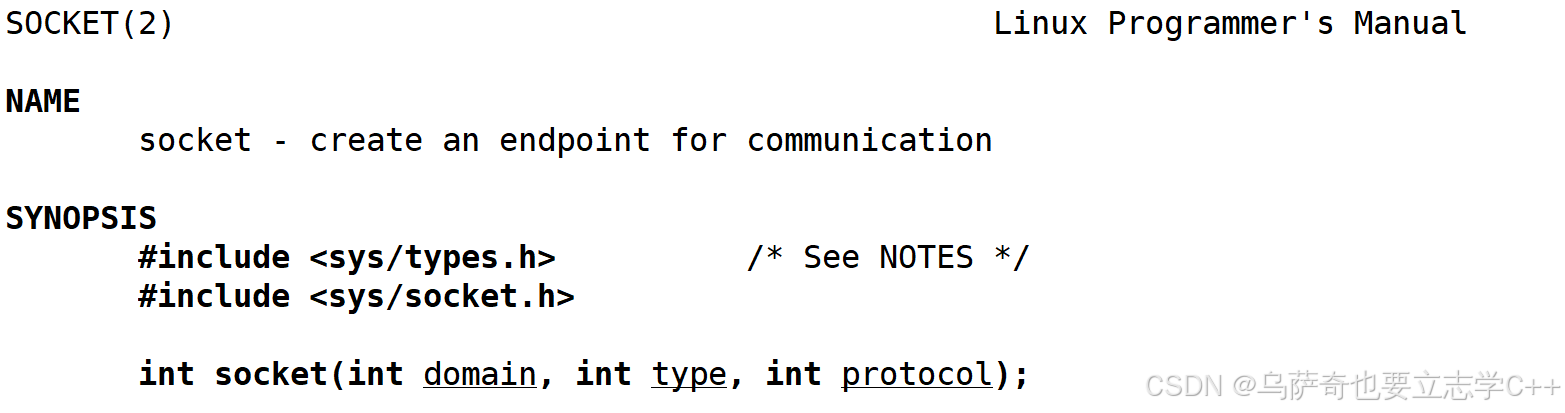 AI Visual Insight: The image shows the function prototype of the
 socket system call and the meaning of its parameters. It emphasizes the protocol family, socket type, and the semantics of the returned file descriptor, helping build the Linux mental model that network communication is also an operation on file descriptors.
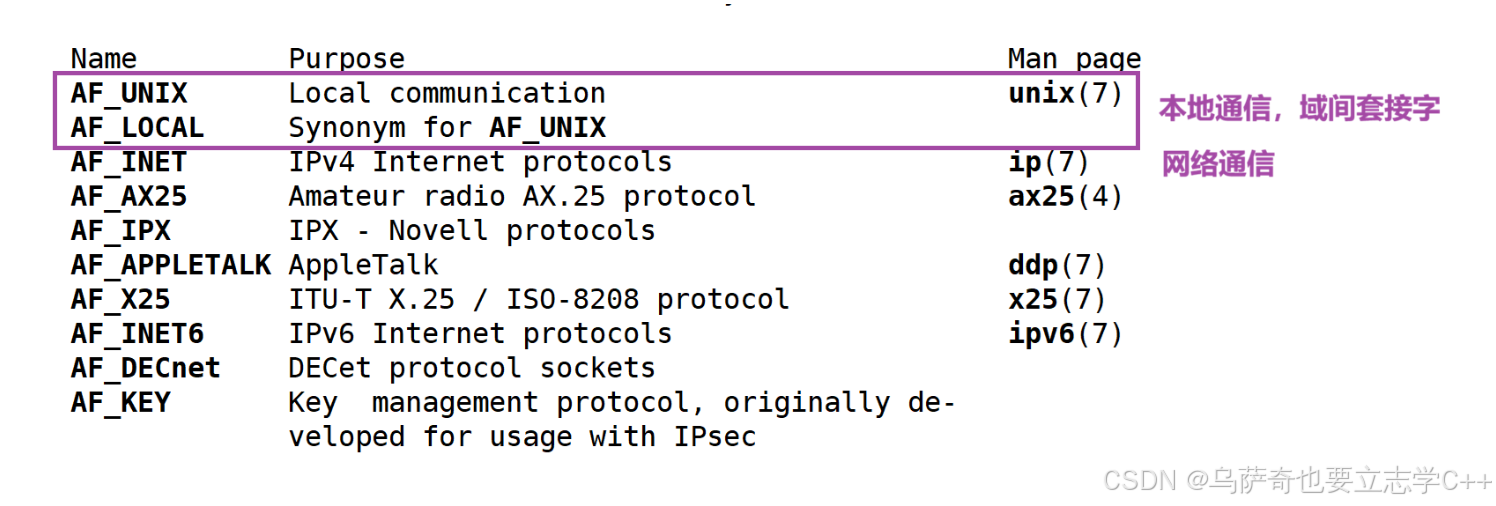 AI Visual Insight: The image lists typical values for protocol families or address domains, helping distinguish local communication, IPv4, IPv6, and other address spaces. This is essential background for understanding why
 AF_INET is selected.
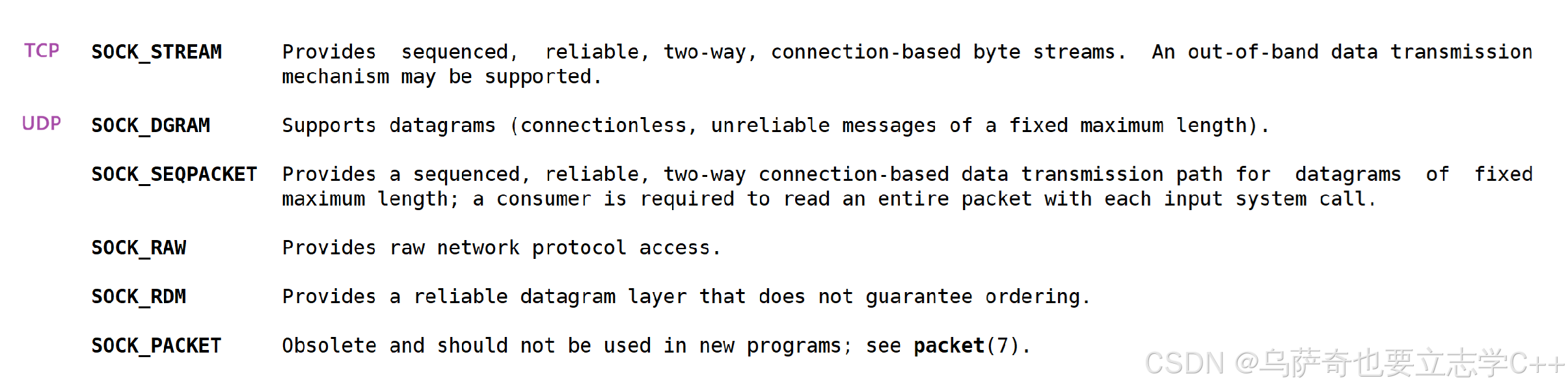 AI Visual Insight: The image explains the differences among socket types, especially that
 SOCK_DGRAM corresponds to UDP datagram communication. This provides the basis for choosing recvfrom/sendto instead of read/write.
Correct address handling and byte order are critical during server initialization
sin_family must be set to AF_INET. The port must be converted to network byte order with htons, and the IP address can be converted to a 32-bit network-order address with inet_addr. In cloud-hosted or multi-NIC environments, it is usually better to bind to INADDR_ANY so the service is not locked to a single IP address.
int sockfd = socket(AF_INET, SOCK_DGRAM, 0); // Create a UDP socket
sockaddr_in local;
bzero(&local, sizeof(local));               // Clear the address structure
local.sin_family = AF_INET;                 // Specify IPv4
local.sin_port = htons(port);               // Convert the port to network byte order
local.sin_addr.s_addr = htonl(INADDR_ANY);  // Bind to any local IP
bind(sockfd, (sockaddr*)&local, sizeof(local)); // Bind the address and port
This code completes the most essential preparation for a UDP server before communication begins: create the communication endpoint and expose a port externally.
A UDP server must explicitly carry peer address information when receiving and sending messages
UDP is connectionless, so every recvfrom call returns not only the data but also the sender’s address. Then sendto must explicitly send the response back to that address. This is one of the most fundamental differences between the UDP and TCP programming models.
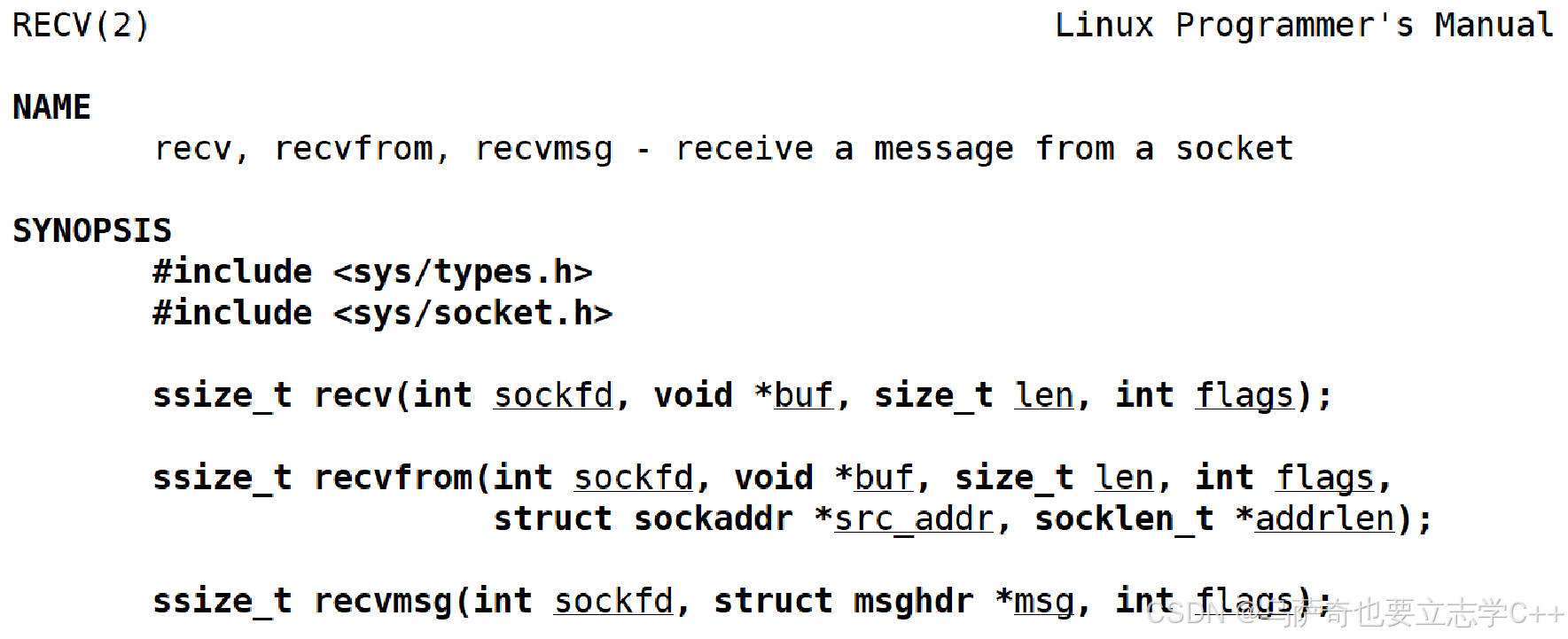 AI Visual Insight: The image shows the full parameter layout of
 recvfrom, highlighting the buffer, flags, peer-address output parameter, and the input/output address-length parameter. It makes clear that UDP receive operations do more than just read data—they also resolve the message source.
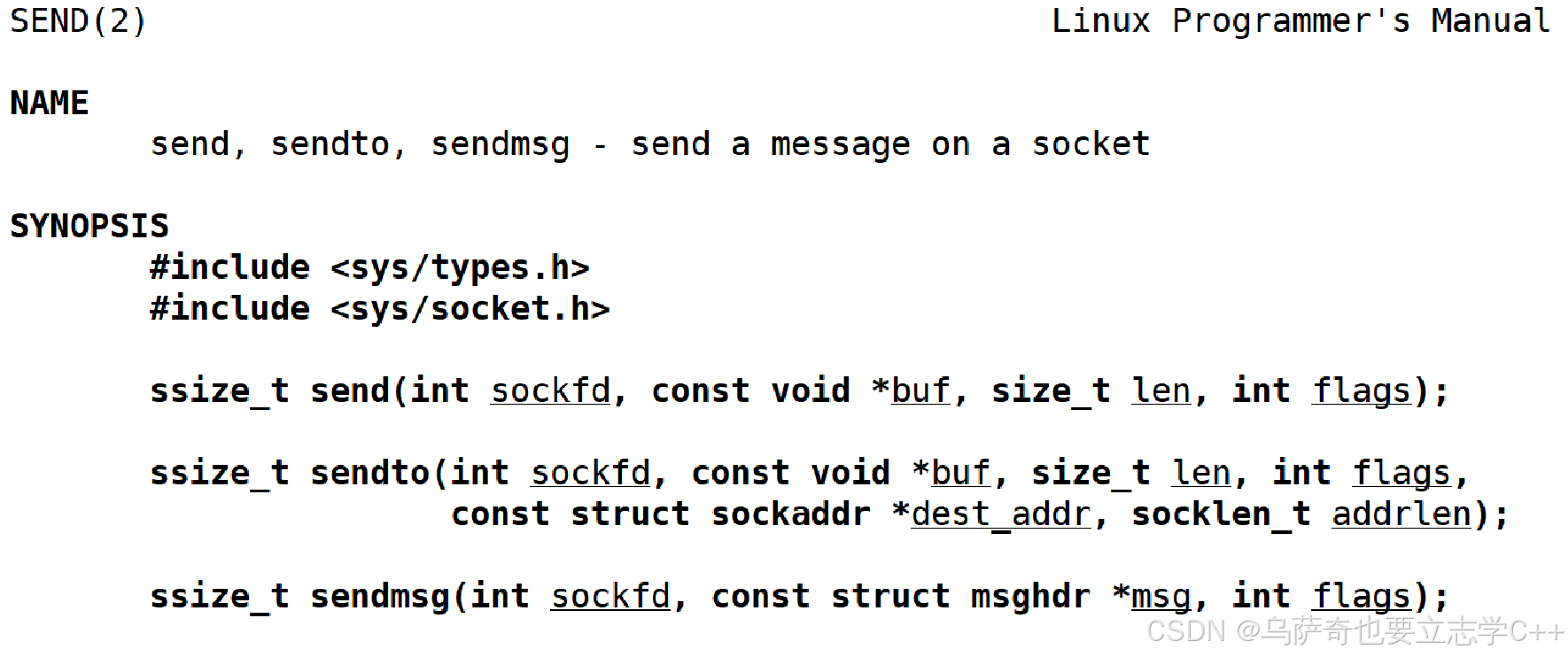 AI Visual Insight: The image shows the parameter signature of
 sendto, emphasizing that the target address structure must be explicitly provided during transmission. This reveals how UDP works as a connectionless but still directed messaging mechanism.
char buffer[1024];
sockaddr_in peer;
socklen_t len = sizeof(peer);
ssize_t n = recvfrom(sockfd, buffer, sizeof(buffer), 0,
                     (sockaddr*)&peer, &len); // Read data and obtain the peer address
if (n > 0) {
    buffer[n] = 0; // Append the string terminator
    sendto(sockfd, buffer, n, 0,
           (sockaddr*)&peer, len); // Echo the data back to the sender as-is
}
This code implements the minimum Echo semantics: whatever the server receives, it sends back unchanged.
A client usually does not need to manually bind a local port
When a UDP client sends its first packet, the operating system automatically assigns an ephemeral port and binds a local address. This avoids contention among multiple client processes for a fixed port and matches most real-world application scenarios.
To verify whether the service is running, use netstat -nulp or ss -u -lpn to inspect UDP listening ports.
V2 completely separates network I/O from translation logic through callbacks
The core of the second phase is not the UDP API itself, but the engineering structure. DictServer is responsible only for receiving packets, extracting words, and sending responses. Dictionary is responsible for loading the dictionary and performing lookups. With this design, the network layer does not care about business implementation details, and the business layer does not touch socket-level details.
using callback_t = std::function<std::string(const std::string&, const std::string&, uint16_t)>;

std::string result = cb(word, clientIp, clientPort); // Invoke the business-layer callback
sendto(sockfd, result.c_str(), result.size(), 0,
       (sockaddr*)&peer, len); // Return the business result to the client
This code demonstrates the classic design pattern of an I/O framework plus business callbacks.
The dictionary service is fundamentally an in-memory hash lookup model
The dictionary file is organized as word:value pairs and loaded into an unordered_map at startup. Query operations then run at average O(1) complexity, which is well suited to high-frequency short-message requests. This pattern can also evolve naturally into a configuration center, command mapping layer, or lightweight key-value query service.
V3 scales a single-user service into a multi-user chat room with address encapsulation and a thread pool
The chat-room version starts to focus on concurrency and user management. After the server receives a message from any user, it does not reply directly. Instead, it submits a message-forwarding task to a thread pool, and the routing module broadcasts the message to all online users.
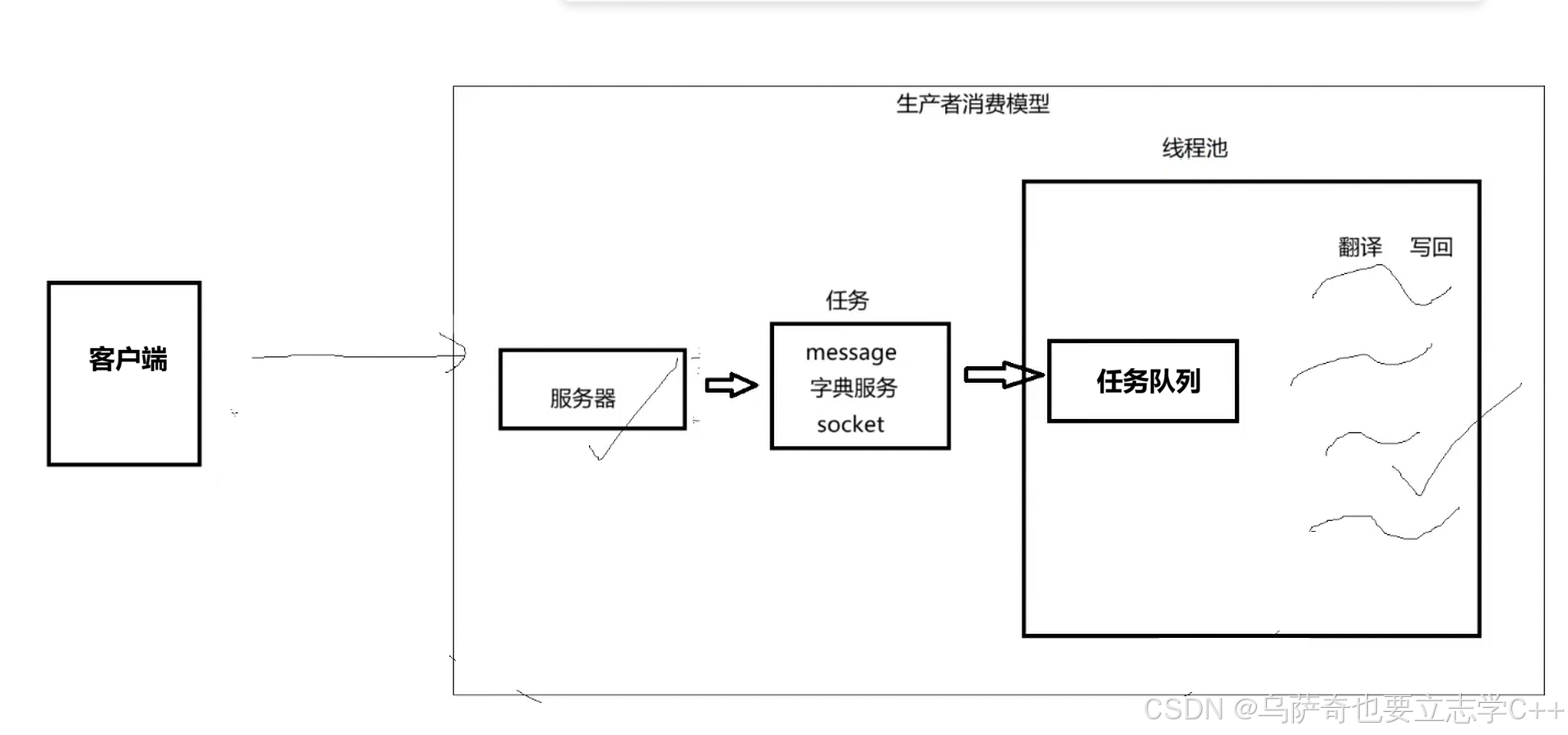 AI Visual Insight: The image shows a concurrency model in which the main thread receives packets while the thread pool handles asynchronous processing and broadcasting. It clearly expresses a producer-consumer style task-distribution structure and helps explain why the chat room evolves from single-threaded I/O to concurrent processing.
task_t task = std::bind(&Route::RouteMessageToAll,
                        route.get(), sockfd, message, addr); // Package the broadcast task
threadPool->Enqueue(task); // Submit it to the thread pool for asynchronous execution
This code removes message distribution from the main receive loop and reduces the risk of blocking.
InetAddr encapsulation reduces address-handling complexity
Raw sockaddr_in is expensive to use directly because it involves host/network byte-order conversion as well as conversions between string and integer address formats. After InetAddr encapsulates this logic, the routing module only needs to work with abstract interfaces such as Ip(), Port(), and ToString().
The client must become dual-threaded to truly support a group-chat experience
A single-threaded client blocks while waiting for user input, which means it cannot display messages sent by others in real time. The solution is to split the client into a sending thread and a receiving thread so that sendto and recvfrom can run concurrently. This is how UDP full-duplex capability appears at the application layer.
std::thread recvThread(recver); // Continuously receive broadcast messages
std::thread sendThread(sender); // Read user input and send messages
recvThread.join();
sendThread.join();
This code allows the client to continue displaying group-chat messages in real time even when the user is not typing.
UDP communication between Windows and Linux is naturally compatible at the protocol layer
The original article concludes by noting that cross-platform communication is not complicated because both sides share the same TCP/IP protocol stack. The main differences lie in socket initialization details and header files, not in the packet format itself. As long as both sides agree on the address family, port, encoding, and protocol payload, they can interoperate.
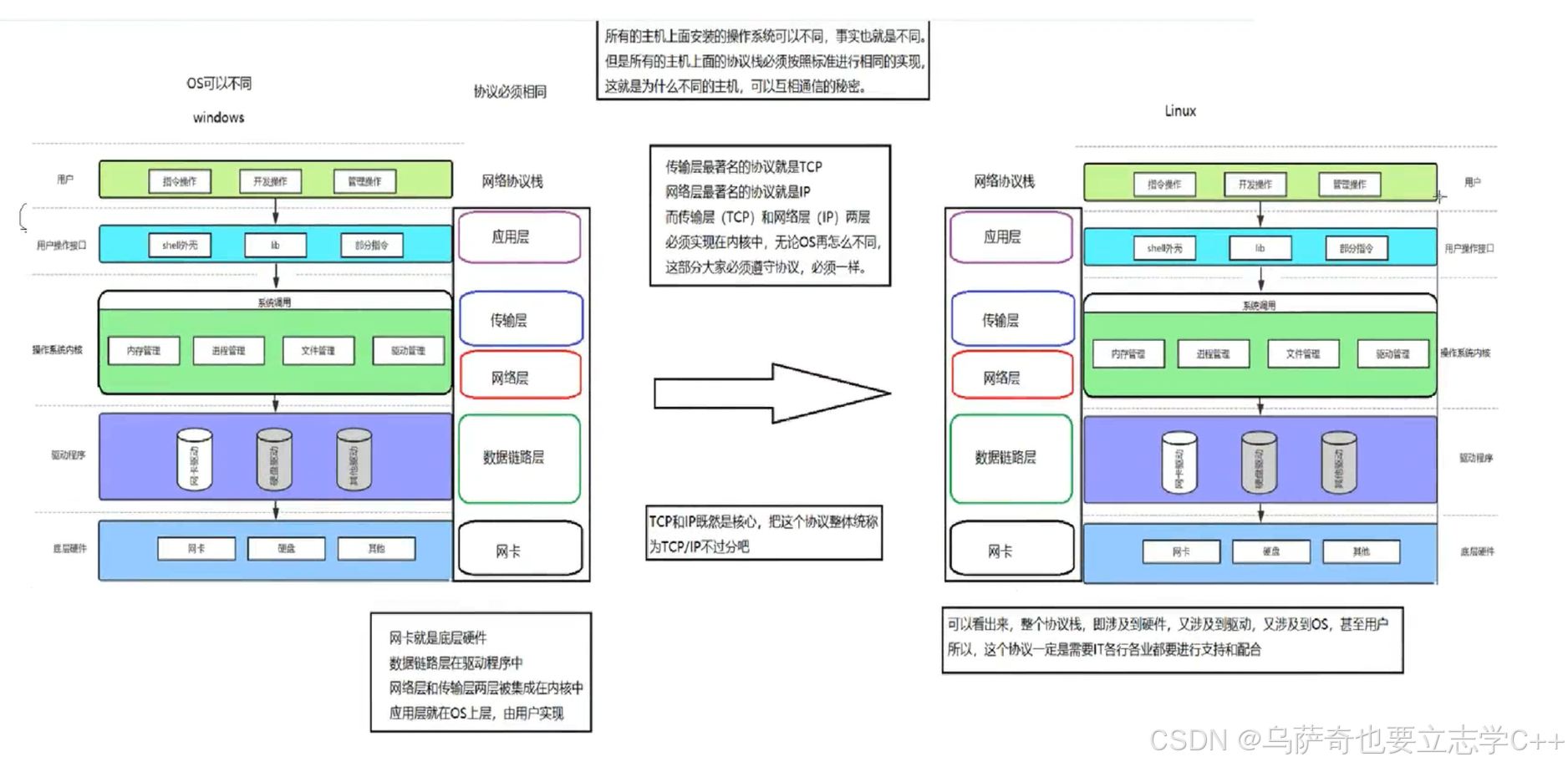 AI Visual Insight: The image shows how Windows and Linux communicate over the same network protocol stack. It emphasizes that cross-platform differences mainly remain at the API wrapper layer rather than in the UDP packet transport mechanism itself.
The most reusable value in this project lies in three engineering lessons
First, servers should prefer binding to INADDR_ANY to improve deployment flexibility. Second, business logic should be isolated through callbacks or modular layering. Third, a concurrent chat room must correctly manage the critical shared resource of the online user list. In a more advanced version, this can be improved further with locking strategies or lock-free queues combined with an event-driven model.
FAQ
Q1: Why can a UDP server avoid maintaining connection state?
A: Because UDP is a connectionless protocol. Every datagram carries its own source and destination addressing context. The server gets peer information through recvfrom and sends directed replies through sendto.
Q2: Why do clients usually not bind a port manually?
A: When the client sends its first packet, the operating system automatically allocates an ephemeral port. This reduces port conflicts and works well when many endpoints access the same server concurrently.
Q3: Why does the chat-room version have to introduce multithreading?
A: A single-threaded client blocks on input and cannot receive broadcasts in real time. A server that broadcasts synchronously can also stall the main receive loop. As a result, the client needs separate send/receive execution paths, and the server needs asynchronous dispatch through a thread pool.
[AI Readability Summary]
This article reconstructs a hands-on Linux C++ UDP socket project in three stages: an Echo server, a dictionary translation service, and a multi-user chat room. It explains the core design of socket, bind, recvfrom, sendto, thread pools, and address encapsulation, while also covering cross-platform communication and practical engineering considerations.