This structured overview of the Slay the Spire 2 mobile resource bundle focuses on Android and iOS compatibility, cross-platform multiplayer, and 40+ integrated MODs. Its core value lies in addressing common player pain points around installation, compatibility, multiplayer setup, and runtime smoothness. Keywords: Slay the Spire 2, cross-platform multiplayer, MOD integration.
The resource bundle specifications can be summarized quickly
| Parameter | Details |
|---|---|
| Platform / Language | Android, iOS; original source material in Chinese |
| Multiplayer protocol model | Mobile multiplayer, mobile-to-PC cross-platform multiplayer |
| Page engagement | Approx. 718 views, 21 likes, 5 bookmarks |
| Package contents | Installer, 40+ MODs, save import tutorial |
| Core capabilities | Full-platform multiplayer, touch optimization, stability fixes |
| Dependency model | Base game, compatible MODs, save migration solution |
This release aims to compress the PC experience into a mobile format
The original article emphasizes more than simply “running on mobile.” Its actual goal is to reproduce the official PC experience as closely as possible. That implies three layers of intent: content parity, multiplayer interoperability, and input adaptation. For players, the mobile version is no longer just a stripped-down access point, but a viable primary platform for long-term play.
Cross-platform multiplayer stands out as the clearest differentiator. Mobile players can not only team up with each other, but also connect with PC players. The source text also claims interoperability between unofficial and official versions. This design significantly lowers the barrier to forming groups and broadens the audience for multiplayer gameplay.
Version priorities
1. Sync with PC content
2. Support mobile-to-PC cross-platform multiplayer
3. Provide integrated distribution for the installer, MODs, and tutorials
4. Optimize stability for lower-end devices
This checklist captures the core functional positioning of the bundle.
The stability fixes reveal the real challenges of mobile adaptation
Compared with marketing-style descriptions, the most valuable part of the original article is its list of concrete fixes. Examples include multiplayer save files failing to load, preload toggles not taking effect, and abnormal logic in specific shop scenarios. These details suggest that the integrator addressed critical usability issues in the actual gameplay loop, not just superficial packaging.
Touch layout optimization also deserves close attention. Card games on PC depend heavily on mouse hover, drag actions, and precise clicks. When moved to mobile, the interface must reduce interaction density; otherwise, players will see accidental taps, failed card drags, and crowded UI layouts. Adding a confirmation step is essentially a way to reduce the uncertainty of touch input.
features = {
    "save_fix": True,      # Fix multiplayer save loading issues
    "preload_fix": True,   # Fix preload configuration failures
    "touch_opt": True,     # Improve touch tapping and drag interactions
    "confirm_guard": True, # Add confirmation prompts for shops and card selection
    "perf_boost": True     # Reduce lag and crash frequency
}

for name, enabled in features.items():
    if enabled:
        print(f"Enabled: {name}")  # Output the active key optimization items
This sample code expresses the key optimization capabilities from the source material in a structured way.
The 40+ MOD integration turns the package from an installer into a gameplay platform
The original article divides the MOD set into cosmetic, functional, and multiplayer categories. That classification is reasonable. Cosmetic MODs primarily improve character distinction and visual freshness. Functional MODs reduce repetitive tasks through features such as unified saves, enhanced shop behavior, and card upgrades. Multiplayer MODs directly expand the gameplay boundary.
The most important factor is not the raw count, but the fact that these MODs are adapted for mobile. Common issues when porting PC MODs to mobile include inconsistent file paths, input event conflicts, broken UI scaling, and excessive performance overhead. If all 40+ modules are already adapted, that suggests significant work in filtering, validation, and compatibility testing.
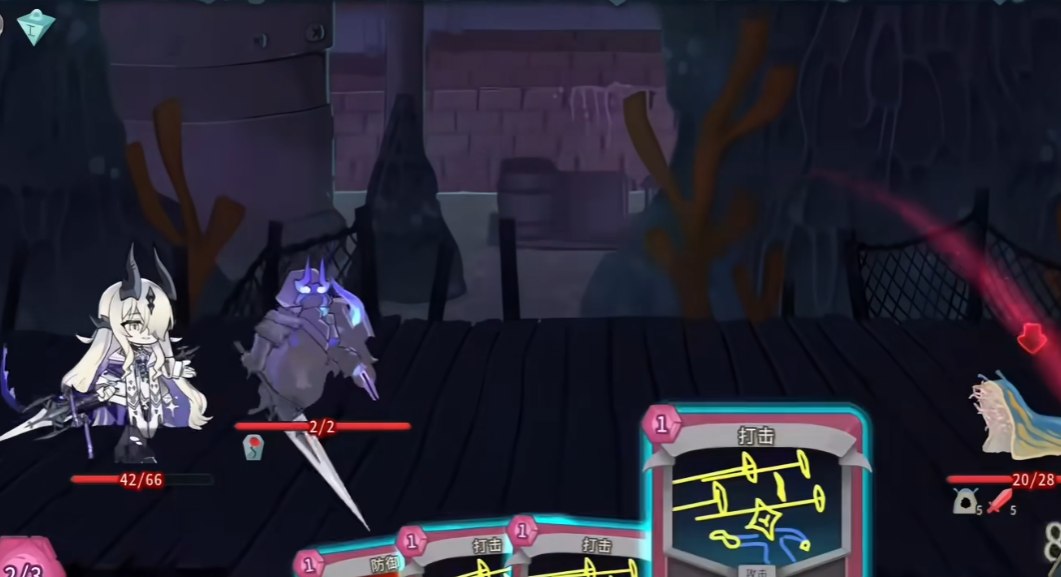
The screenshots directly reflect the mobile UI and MOD presentation
 AI Visual Insight: This image shows the game running on a mobile device. The key areas to evaluate are the combat UI, card layout, and screen-space allocation. If interface elements remain readable at phone-sized dimensions, that indicates the touch target zones, font scaling, and information hierarchy were adjusted for mobile use.
 AI Visual Insight: This image appears to show the resource bundle or MOD integration result, likely intended to highlight skins, UI styling, or the post-install content set. From a technical adaptation perspective, this kind of image indirectly suggests that texture replacement, asset loading, and UI compatibility have reached a usable state.
The distribution model lowers the deployment barrier for regular players
The original article provides download access and emphasizes that the Android package, iOS package, MOD bundle, and save tutorial are delivered together. The value of this all-in-one distribution model is that it reduces context switching across multiple sources and lowers the risk of compatibility problems caused by mismatched versions.
That said, this page is fundamentally a resource-sharing guide, not an official release document. Before using it in practice, a more responsible approach is to verify the version number, confirm that the source is trustworthy, and test installation and save import procedures in an isolated environment or on a secondary device.
# Suggested validation workflow (illustrative)
sha256sum game_package.zip   # Verify installer integrity
sha256sum mods_bundle.zip    # Verify MOD archive integrity
unzip -l mods_bundle.zip     # Check whether the file structure is complete
These commands illustrate the basic integrity checks that should be performed before installation.
For developers and power users, maintainability is the real long-term value
If a bundled release is meant to stay up to date over time, it needs at least three things: clear version notes, traceable MOD dependencies, and a stable save compatibility strategy. Otherwise, every upgrade risks breaking multiplayer connectivity or invalidating old save data.
Based on the original wording, the author plans to continue iterating on optimization and adding new MODs. That suggests the package has already evolved from a one-time release into a continuously maintained community distribution model. For the player community, that offers much greater long-term value than a single static share.
FAQ
Q1: What is the biggest highlight of this resource bundle?
A: It is not just a standalone installer. It is an integrated delivery of the base game, multiplayer capability, 40+ MODs, and tutorials, with the main value centered on cross-platform multiplayer and mobile adaptation.
Q2: Why are touch optimization and confirmation prompts so important?
A: On mobile, card dragging, purchasing, and card selection are more prone to accidental input. Confirmation prompts and layout optimization can significantly reduce mistakes and improve stability during long play sessions.
Q3: What should users pay the most attention to when using this kind of bundled resource?
A: First verify the source and file integrity, confirm that version numbers match, back up your save files, and then test MOD compatibility. If possible, support the original game and official distribution channels.
Core summary
This article reconstructs the original resource page for Slay the Spire 2 mobile and focuses on Android and iOS dual-platform support, cross-platform multiplayer, stability fixes, and 40+ MOD integration. It also adds a developer-oriented functional summary, technical specifications, image analysis, and a structured FAQ.