This article compresses key notes from The Beauty of Software Engineering into an actionable software engineering knowledge map. It covers the lifecycle, process models, project management, testing, security, and operations retrospectives to address a common gap: many developers can write code, but struggle to build systems. Keywords: software engineering, agile development, project management.
Technical specification snapshot
| Item | Details |
|---|---|
| Content Type | Reconstructed reading notes / engineering methodology summary |
| Language | Chinese |
| Topic Scope | Software lifecycle, Waterfall model, Scrum, XP, CI/CD |
| Stars | Not provided |
| Core Dependencies | Git, CI, tickets, Kanban, automated testing, ELK |
| Intended Audience | Developers, project managers, architects, test engineers |
The core conclusion is that software development is first and foremost an engineering activity
The most important contribution of the original notes is not a list of concepts, but a decision framework: software engineering = tools + methods + process. It emphasizes that the key to delivering high-quality software is not isolated coding skill, but systematic control over complexity, changing requirements, collaboration costs, and quality risks.
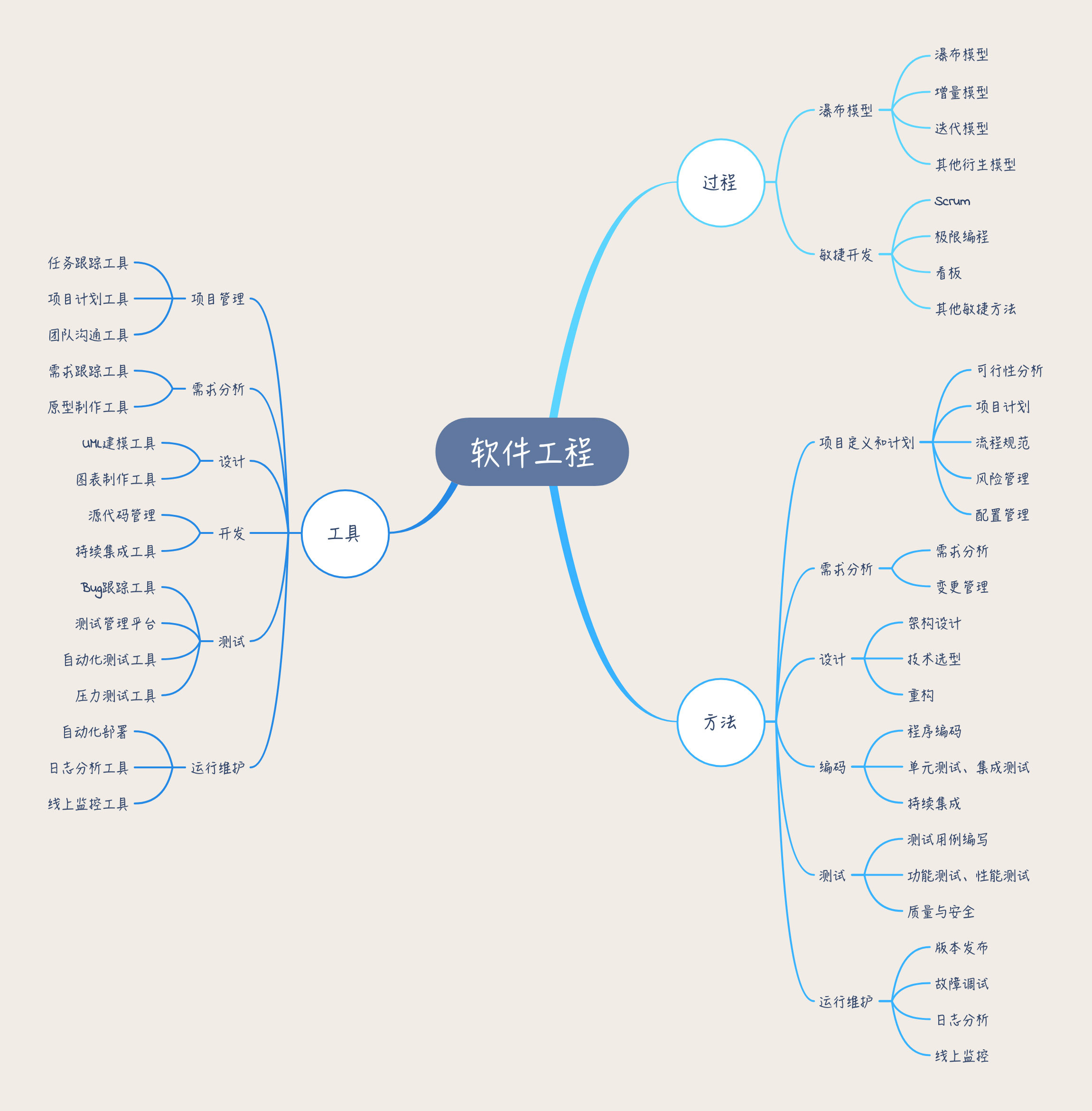 AI Visual Insight: The image illustrates a mental model for moving from individual coding to team-based engineering practice. It typically maps tools, methods, and processes to quality goals, helping readers understand that software engineering is not a single development action, but a complete organizational delivery system.
The software lifecycle can be compressed into six steps: planning, requirements, design, coding, testing, and operations. This sequence is not just a textbook definition. It is the minimum closed loop that no real project can avoid. The differences between methodologies mainly lie in how these six steps are ordered, fed back, and iterated.
The lifecycle can be abstracted into a unified process skeleton
stages = ["规划", "需求分析", "设计", "编码", "测试", "运行维护"]

for stage in stages:
    print(f"当前阶段: {stage}")  # Advance through the core stages of the software lifecycle in sequence
This code expresses, in minimal form, the standard order of a software project from initiation to operations.
The essential difference between Waterfall and Agile is how they allocate the cost of change
The Waterfall model emphasizes linear progression, explicit phases, and documentation first. It fits scenarios with stable requirements and a clear scope. Its strength is management clarity, while its weakness is that changes become more expensive the later they occur. Derived models such as prototyping, incremental delivery, and iterative development are fundamentally attempts to reduce rework cost without breaking the main flow.
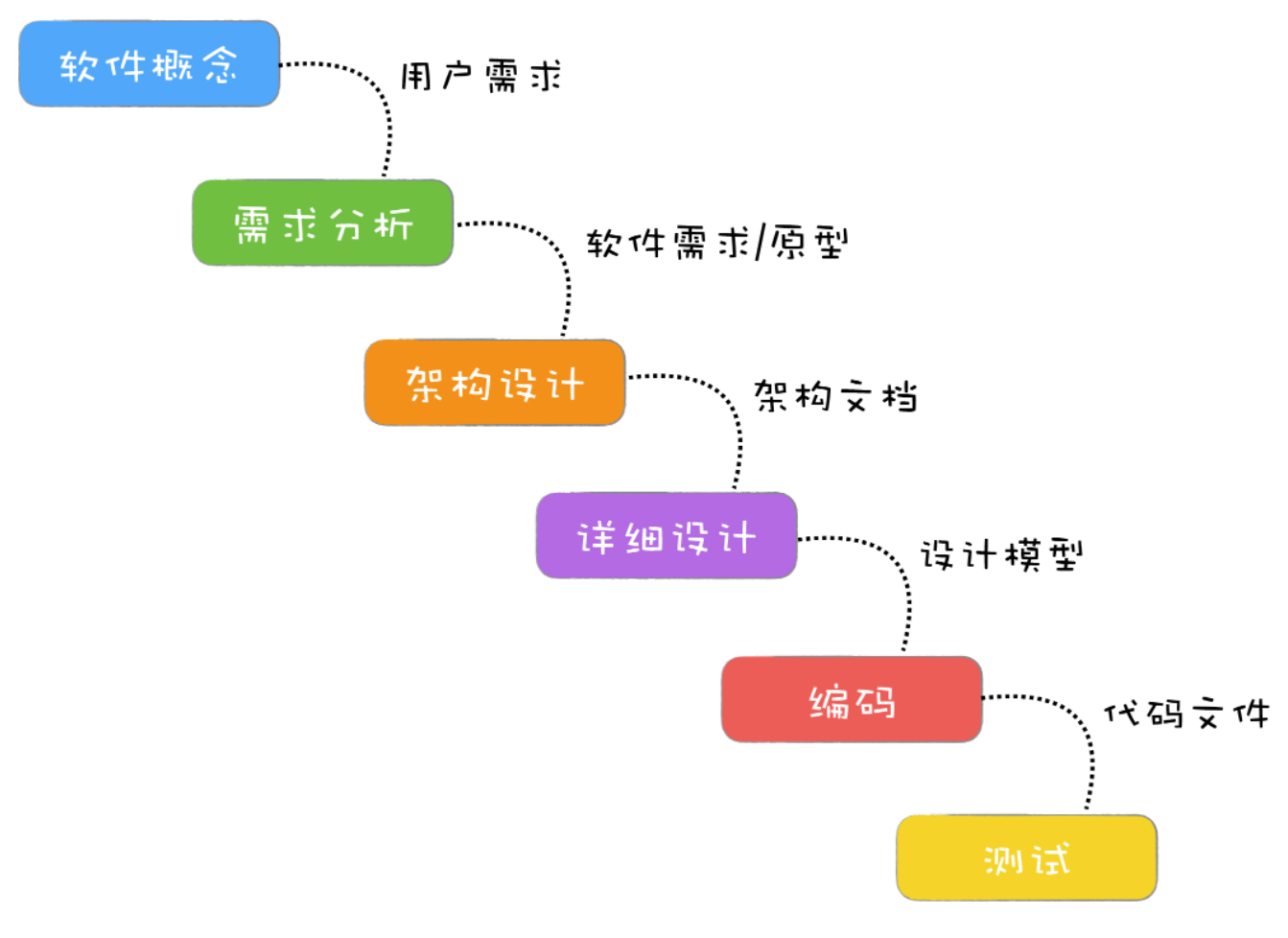 AI Visual Insight: The image shows a typical sequential development flow. Phases usually move top-down through requirements, design, implementation, testing, and delivery. It emphasizes clear phase boundaries, where the output of one phase becomes the input of the next, making it suitable for plan-driven and low-change environments.
Agile development is not a fixed process, but a set of values: rapid iteration, continuous delivery, and embracing change. Through user stories, short Sprint cycles, automated testing, and continuous integration, it shifts feedback earlier and compresses the cost of mistakes into shorter development windows.
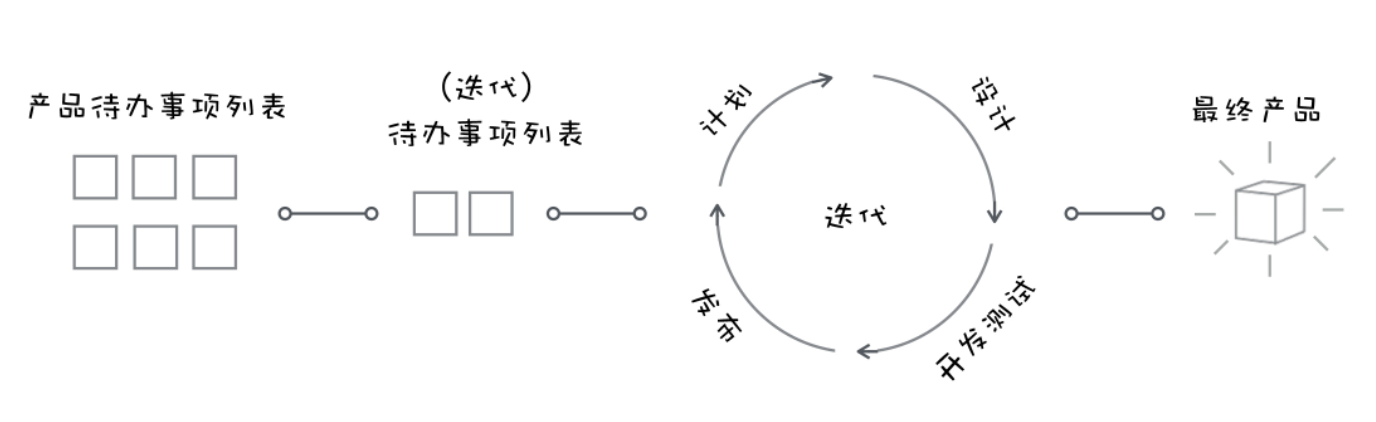 AI Visual Insight: The image presents a cyclical development rhythm, often including backlog, iteration planning, development, testing, review, and retrospective as a closed loop. It emphasizes continuous feedback and incremental delivery rather than completing all design at once.
The key to process model selection is not ideology, but constraints
# Prefer Waterfall when requirements are stable; prefer Agile when requirements change frequently
if [ "$REQUIREMENT_CHANGE" = "low" ]; then
  echo "Choose Waterfall or a derived model"
else
  echo "Choose an Agile development model"
fi
This script shows that choosing a process model is fundamentally a response to requirement uncertainty.
Engineering thinking requires treating every complex effort as a project
“Everything is a project” is the cognitive anchor of the book. Whether you are building a system or renovating a kitchen, the work can be broken down into analysis, design, implementation, testing, and completion. The value of engineering thinking is that it gives problems structure, gives execution rhythm, and gives outcomes a basis for retrospective learning.
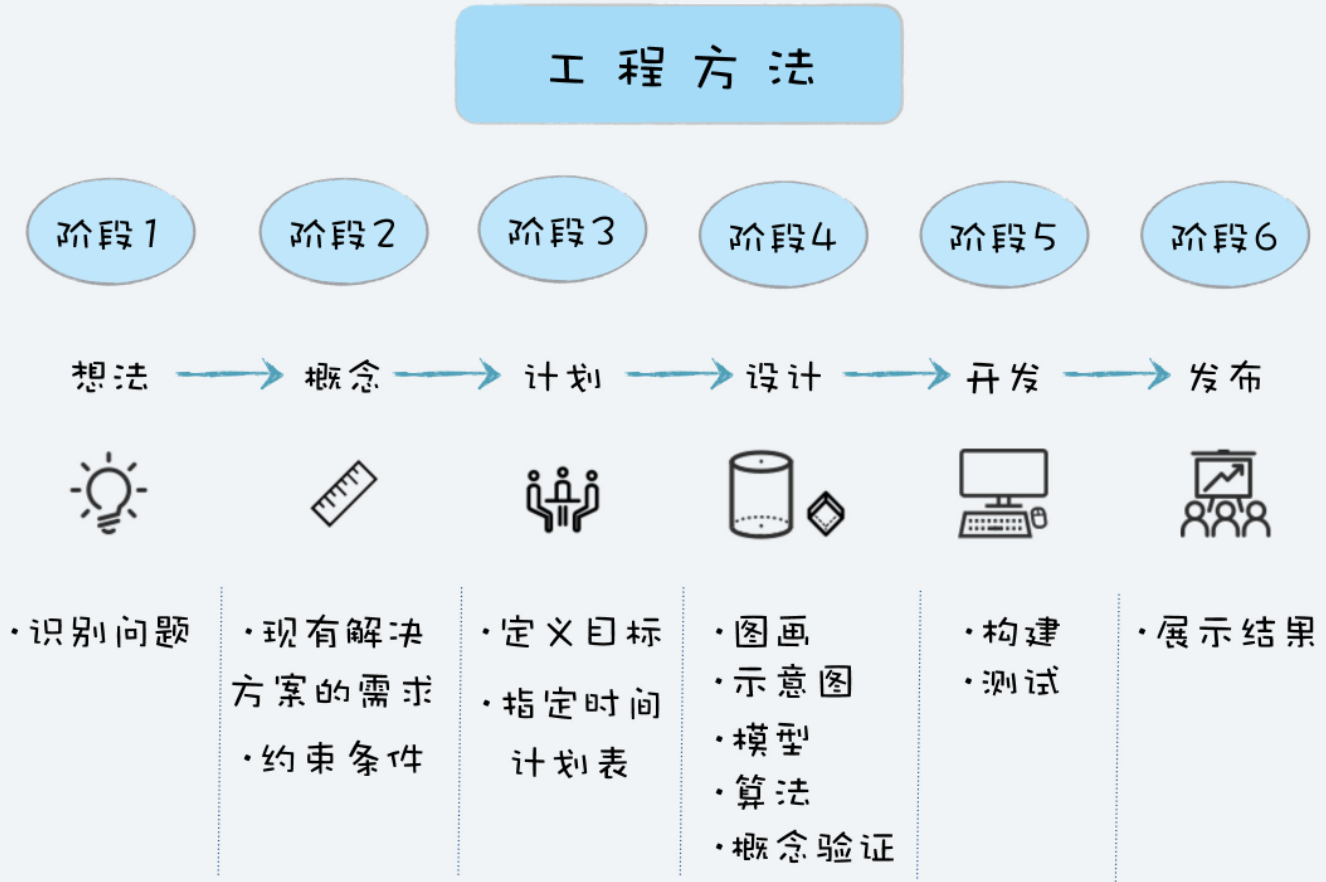 AI Visual Insight: The image shows a phased path from concept and planning to design, development, and release. It reflects that engineering methods do not solve only technical problems. They reduce complexity through phase decomposition and establish a manageable closed loop.
It also reminds developers to focus on four constant metrics: quality, schedule, cost, and users. Talking about “technical advancement” without these four dimensions rarely creates engineering value.
The essence of software project management is balancing scope, time, and cost around quality as the anchor
In the original notes, the classic project management triangle is expanded into a four-part relationship: quality, scope, time, and cost. The most important point is that quality usually should not be the first item to compromise, because poor quality will consume more time, more cost, and more user trust in return.
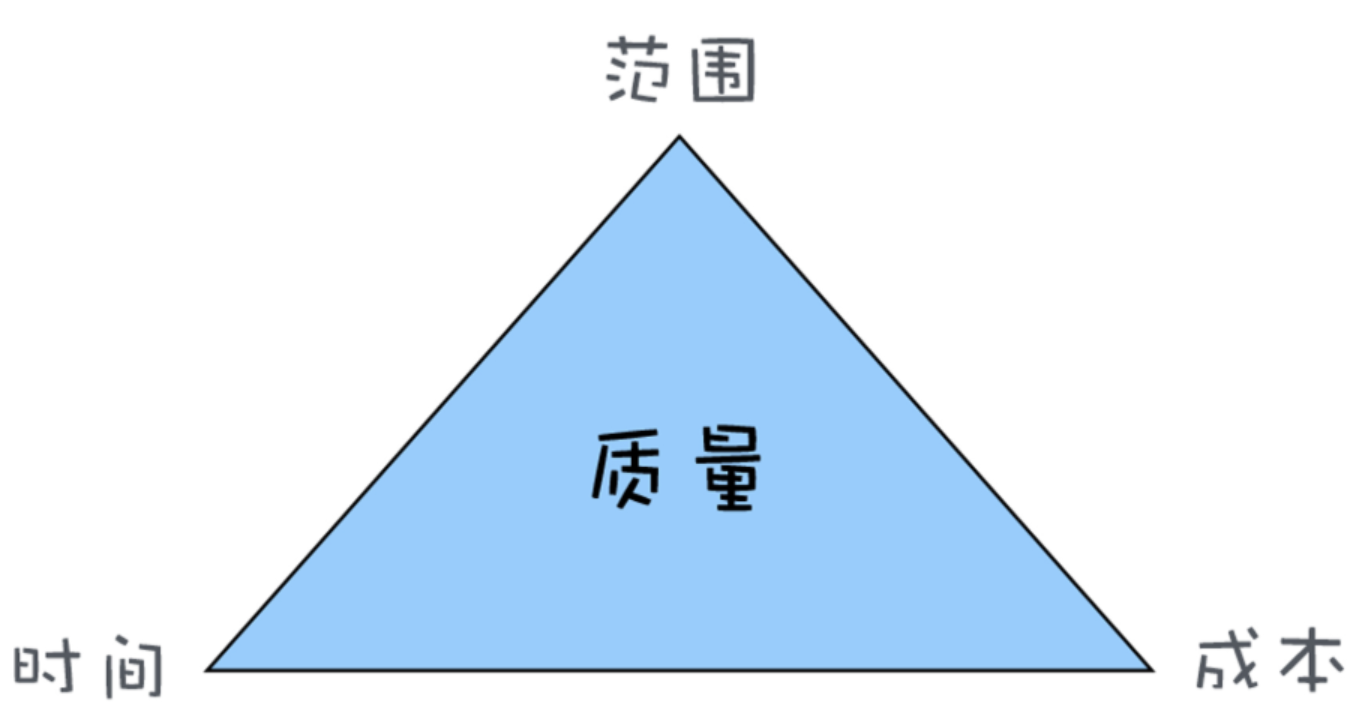 AI Visual Insight: The image usually presents scope, time, cost, and quality as a triangle or four-factor constraint structure. It highlights the basic rule of project management: changing any side affects the overall balance.
Waterfall often fixes scope and sacrifices time and cost. Agile usually fixes time and team cost, then adjusts requirement scope dynamically. That is why the most common Sprint decision is not “work overtime and finish everything,” but “remove lower-priority requirements.”
The skeleton of project planning is WBS plus dependency ordering
tasks = {
    "需求": [],
    "设计": ["需求"],
    "开发": ["设计"],
    "测试": ["开发"],
    "发布": ["测试"]
}

for task, deps in tasks.items():
    print(task, deps)  # Output each task and its prerequisite dependencies
This code expresses the basic idea of project planning, from task breakdown to path arrangement.
Effective Agile implementation depends on tickets, Git, CI, and meeting cadences forming a closed loop
The most valuable addition in the original discussion of Agile practice is that it turns ideas into executable mechanisms: all work goes into tickets, Kanban provides visualization, Git manages code flow, CI validates every commit, and meeting cadences handle synchronization, planning, and retrospectives.
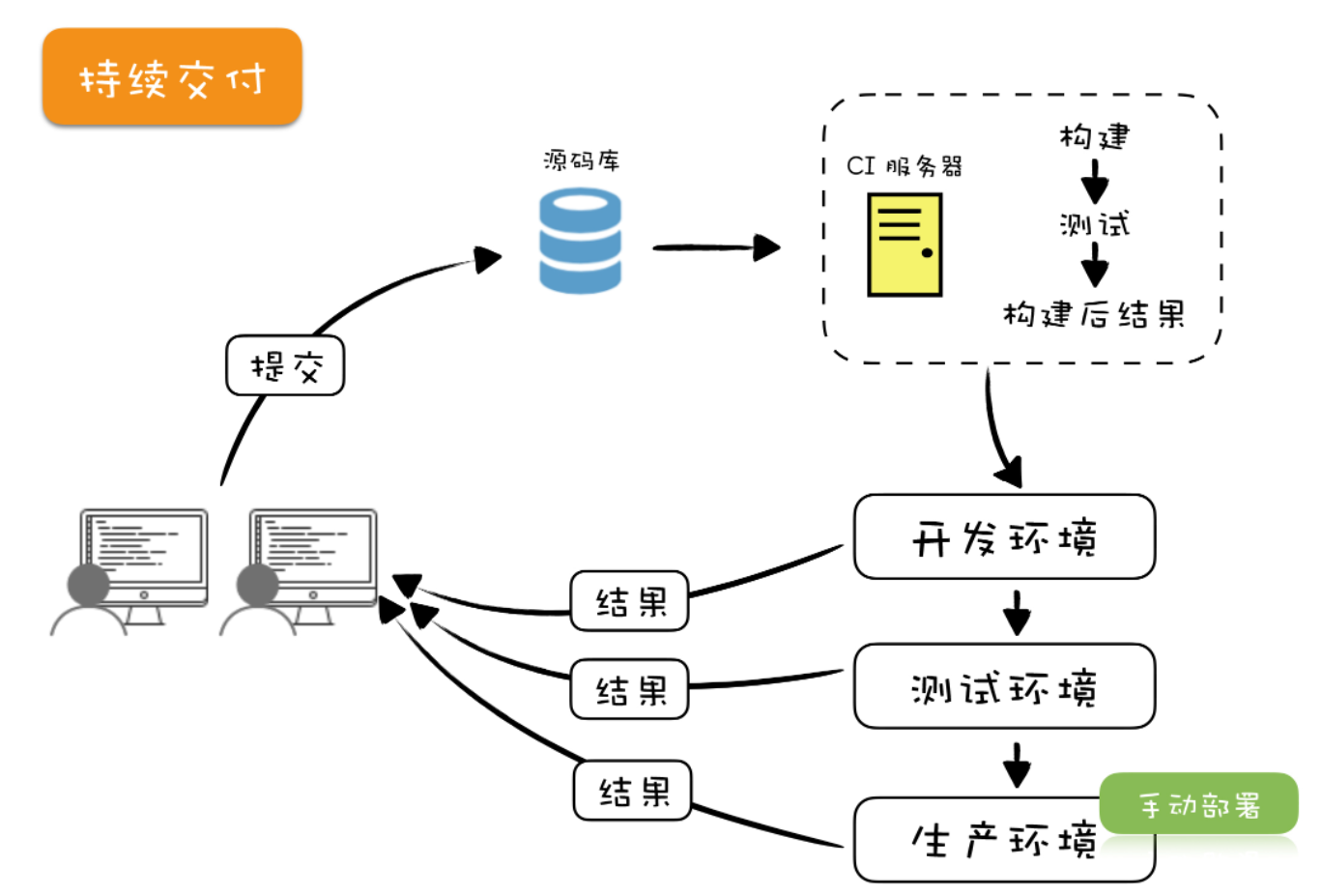 AI Visual Insight: The image shows a pipeline from code commit and code review to automated build and testing. It emphasizes shifting quality gates earlier and reducing manual integration risk through automation.
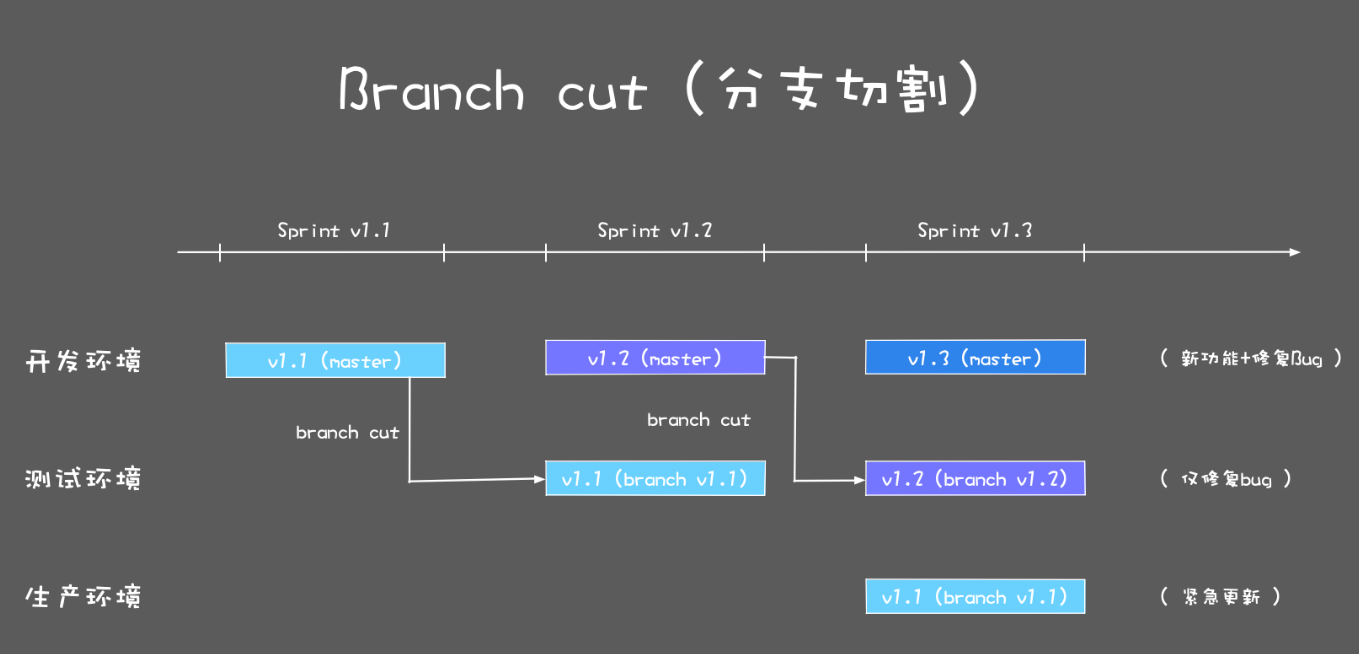 AI Visual Insight: The image shows the flow among the main branch, pre-release branches, test environments, and production environments. It reflects the role of branch cuts in parallel development, test isolation, and stable releases.
This mechanism shows that Agile does not abandon discipline. It automates discipline, shortens its cycle, and makes it visible. Truly efficient teams usually have a stronger sense of process, not a weaker one.
Requirements management, system design, testing, and security together determine whether software is sustainable
The main flow of requirements management is: collection, analysis, evaluation, design, and validation. User needs are not the same as product requirements. Product requirements are implementable solutions produced through abstraction, validation, and constraint. Prototypes serve as a communication and calibration tool in this process.
The system design section proposes a strong engineering principle: the goal of architecture is not technical showmanship, but responding to change with the lowest possible labor cost and ensuring stability with the lowest possible operating cost. The corresponding mindset is abstraction, divide and conquer, reuse, and iteration.
For quality assurance, testing is divided into small, medium, and large tests, corresponding to unit, integration, and system levels. Security must participate across the full lifecycle, from requirements and design to development, testing, and operations, rather than being treated as a last-minute scan before release.
Shift quality left with automated testing
def add(a, b):
    return a + b

def test_add():
    assert add(1, 2) == 3  # Verify that the core behavior matches expectations
    assert add(0, 0) == 0  # Cover a boundary scenario
This code shows how unit tests can catch regression issues early at minimal cost.
Operations retrospectives and risk management determine whether a team can keep evolving
A project does not end at launch. It enters the stages of version release, production incidents, log management, and retrospective analysis. The original notes emphasize a commonly overlooked fact: the first goal in handling a production incident is not fixing the bug, but restoring production and reducing loss. After that, preserve evidence, identify the root cause, and define a long-term solution.
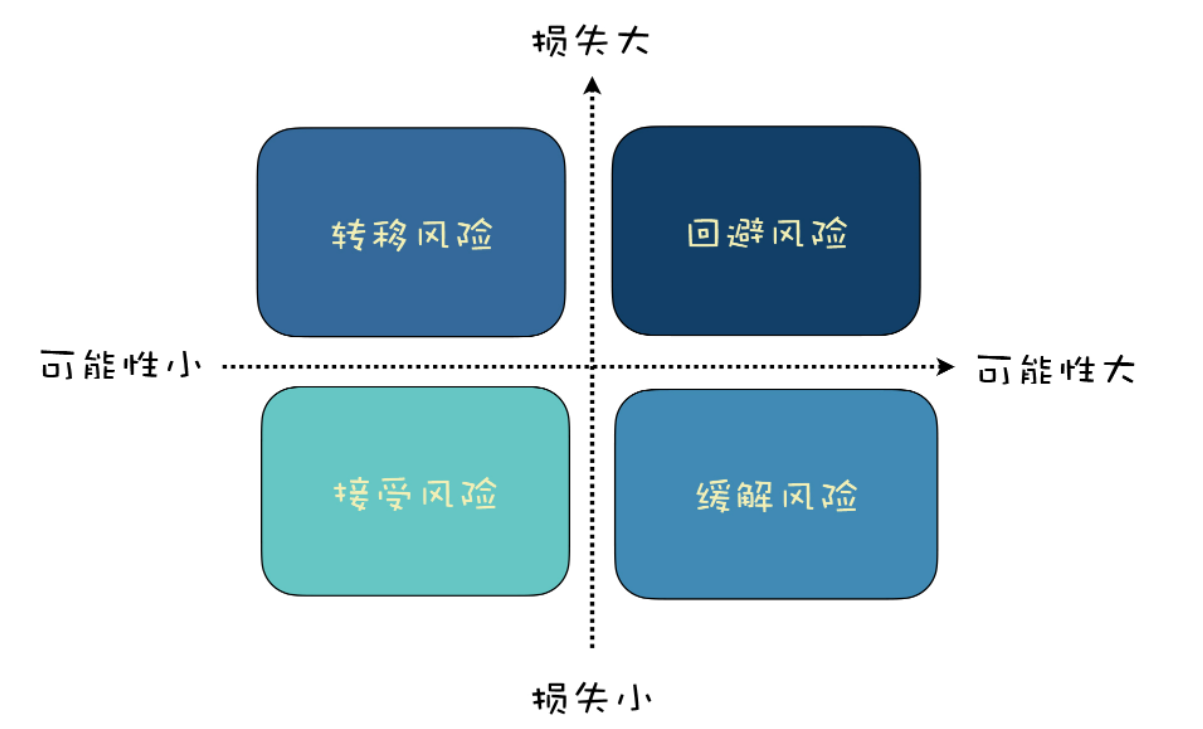 AI Visual Insight: The image usually shows four risk strategies—avoid, transfer, mitigate, and accept—in a quadrant or decision-branch format. It helps teams choose differentiated responses based on impact and probability.
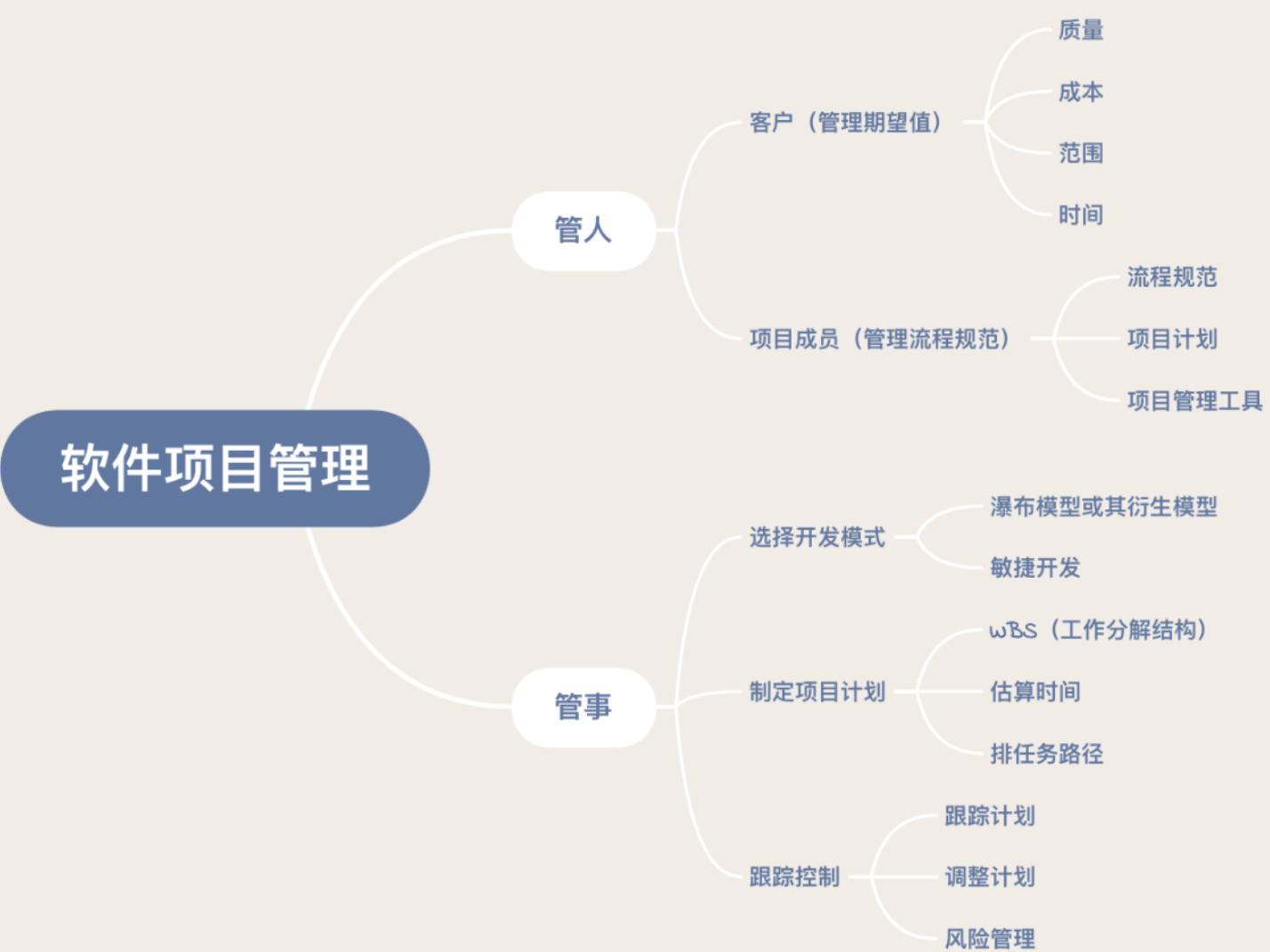 AI Visual Insight: The image shows the control chain of project management from planning and tracking to resource coordination. It highlights the central role of task visualization and process control in team collaboration.
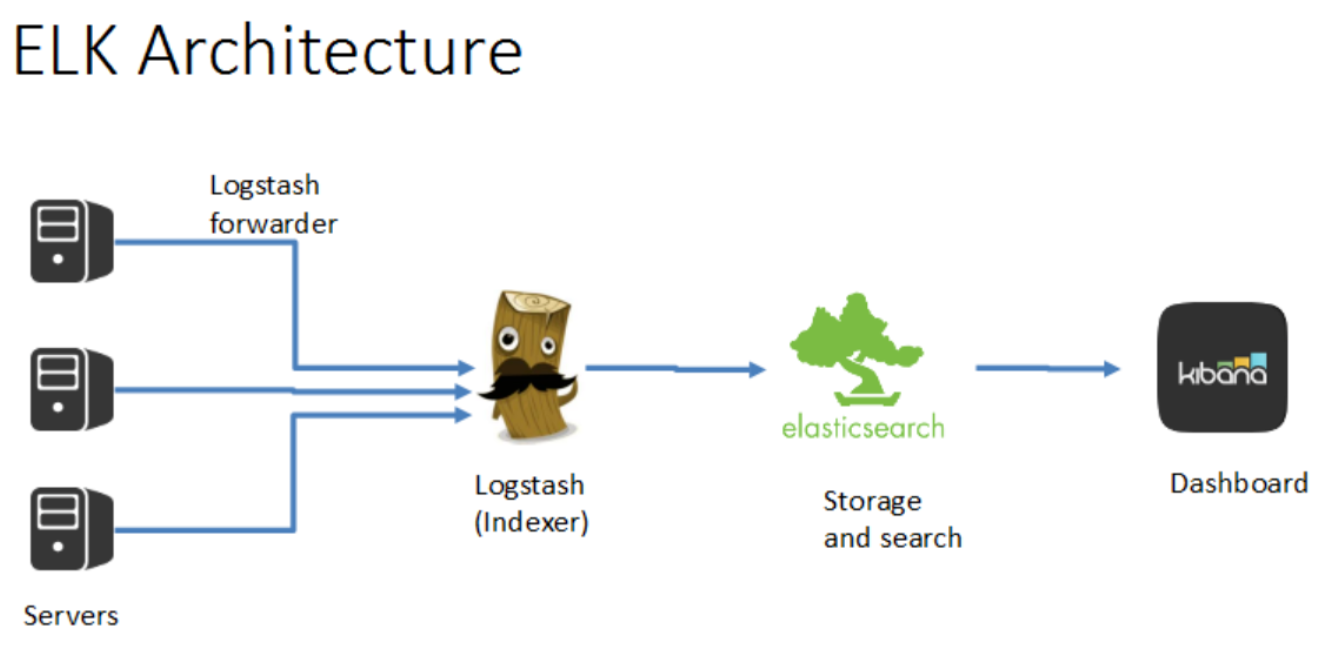 AI Visual Insight: The image shows the full pipeline of log collection, parsing, storage, search, visualization, and alerting, typically corresponding to the role split of Logstash, Elasticsearch, and Kibana.
Retrospectives provide the mechanism for team evolution: review goals, evaluate outcomes, analyze causes, and define improvement actions. Without retrospectives, experience does not accumulate. Without accumulation, teams only repeat the same mistakes.
What developers really need to master is the ability to move from writing code to building systems
The most valuable takeaway from these reading notes is that the growth path of an excellent engineer is not about learning more syntax. It is about gradually building engineering delivery capability. That includes requirement abstraction, process selection, project balancing, quality assurance, risk awareness, operations feedback loops, and retrospective practice.
When you begin to view technical problems through the lens of lifecycle, cost, feedback, quality, and risk, you have truly entered software engineering.
FAQ
1. How should you choose between Waterfall and Agile?
If requirements are stable, regulation is strict, and scope is fixed, prefer Waterfall or one of its derived models. If requirements change frequently and you need rapid experimentation and continuous delivery, choose Agile first. The decision criterion is not team preference, but change frequency and delivery constraints.
2. Why do many teams understand Agile but still implement it poorly?
The core reason is usually not flawed principles, but the lack of supporting execution mechanisms such as tickets, code review, automated testing, CI/CD, and retrospectives. Without engineering infrastructure, Agile degrades into disorderly development.
3. What is the single most important capability for raising a software engineer’s ceiling?
It is not a single tech stack, but the ability to solve problems systematically: understanding requirements, breaking down tasks, balancing constraints, designing architecture, ensuring quality, and driving team collaboration. That determines whether you are simply a code executor or an engineering delivery owner.
AI Readability Summary
Reconstructed from reading notes on The Beauty of Software Engineering, this article systematically explains the software lifecycle, Waterfall vs. Agile, the project management triangle, requirements management, testing, security, operations, and retrospectives. Its goal is to help developers build a complete mindset for moving from coding to engineering delivery.