This hands-on comparison reconstructs and tests four mobile remote control tools—ToDesk, Sunlogin, TeamViewer, and UU Remote—with a focus on control precision, multi-device coordination, security and encryption, and free-tier policies. The core pain points are simple: controlling a PC from a phone is often inaccurate, hard to manage, and not secure enough. Keywords: mobile remote control, mobile productivity, remote desktop.
The technical snapshot highlights the core differences
| Parameter | ToDesk | Sunlogin | TeamViewer | UU Remote |
|---|---|---|---|---|
| Primary Platforms | Windows/macOS/Linux/Android/iOS/HarmonyOS | Windows/macOS/Linux/Android/iOS | Windows/macOS/Linux/Android/iOS | Windows/Android/iOS |
| Core Protocols / Security | AES-256, TLS 1.3, two-factor verification | AES, two-factor authentication | RSA 2048, AES 256 | Basic transport encryption |
| Typical Positioning | Remote work and desktop control | Remote control across software and hardware ecosystem | Enterprise remote collaboration | Game streaming and remote control |
| Free Version Limits | Relatively few restrictions | Experience may fluctuate during peak hours | Clear device limits and aggressive commercial-use detection | Weak office-oriented capabilities |
| Stars | N/A (commercial product) | N/A (commercial product) | N/A (commercial product) | N/A (commercial product) |
| Core Dependencies | Mobile touch mapping, remote desktop encoding/decoding | Account system, device networking | Enterprise policies and session management | Low-latency streaming and key mapping |
This comparison focuses on four decision-making dimensions
The real challenge of mobile remote control is not whether you can connect. It is whether you can operate a desktop-class interface accurately from a phone. If you cannot click an Excel cell precisely, switching devices is cumbersome, or the free plan throttles usage too often, even a strong brand will struggle to fit into a high-frequency workflow.
This reconstructed review preserves the original conclusions and compresses the analysis into four dimensions: control feel, device management, security and privacy, and free-tier value. That framing is better suited for developers, operations engineers, and heavy mobile productivity users who need to make quick decisions.
Control feel determines whether remote access is sustainable
ToDesk stands out for its virtual mouse design. Instead of forcing users to tap directly on the desktop with a finger, it introduces a floating pointer. That makes single-click, double-click, and right-click interactions feel closer to the PC mental model, which reduces accidental taps in fine-grained scenarios such as spreadsheets, buttons, and window switching.
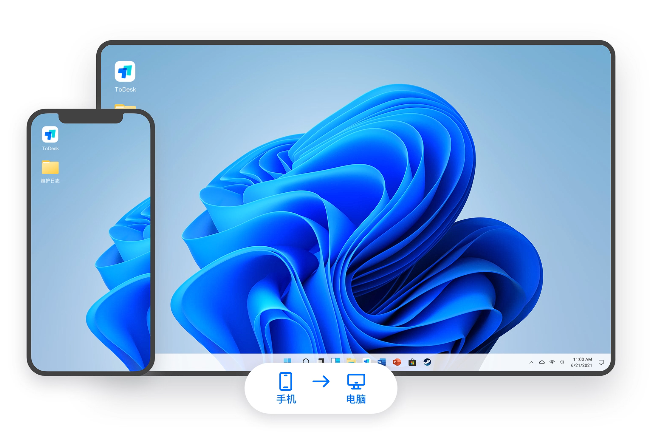 AI Visual Insight: The image shows a mobile remote desktop control interface. Its core elements typically include a floating toolbar, a screen-mapped interaction area, and a pointer-based input entry point. This type of interface emphasizes desktop-grade precision within a limited touch surface, which suggests that the product design prioritizes touch accuracy, quick-access controls, and visible session state.
Sunlogin follows a more traditional touchscreen gesture model. It is easy to learn, but it lacks strong assistance for precision clicking. TeamViewer offers the broadest feature set, but it also inherits a desktop-oriented information architecture that feels crowded on a small phone screen. UU Remote performs well in game control feedback, but office interaction is clearly not its primary focus.
// Example configuration for remote image quality and frame rate
RemoteConfig config = new RemoteConfig.Builder()
    .setMaxFPS(30)              // Control the maximum frame rate to balance smoothness and bandwidth
    .setBitrate(5000)           // Set bitrate in kbps
    .setResolution(1920, 1080)  // Specify the remote desktop resolution
    .build();

SecurityOptions security = new SecurityOptions()
    .enableTLS(true)            // Enable the TLS-encrypted channel
    .setEncryptionLevel(EncryptionLevel.HIGH); // Increase the transport security level
This code demonstrates the two most important parameter categories in mobile remote control: video transport quality and secure channel configuration.
Multi-device coordination determines switching cost
ToDesk delivers a device sync experience after login that feels closer to a consumer-grade, frictionless connection model. The device list appears automatically, which reduces the need to repeatedly enter device codes. That makes it a strong fit for one-user-multiple-device setups, home offices, and mixed cross-platform environments.
Sunlogin also has a mature account and device-networking system, which works well for users who have already invested in its hardware ecosystem. However, its Linux-side iteration cadence is relatively slower, which may result in weaker feature consistency across heterogeneous environments. TeamViewer follows a more enterprise IT management mindset. It is powerful, but personal users will quickly run into free-tier device count limits.
Security is not an encryption slogan but a complete policy chain
The security of remote control software includes at least four layers: transport encryption, identity verification, session privacy, and auditing and compliance. ToDesk’s privacy screen design is practical in high-observation-risk scenarios such as offices and shared desks. The AES-256, TLS 1.3, two-factor verification, whitelist controls, and abnormal login detection mentioned in the original analysis form a relatively complete protection loop.
TeamViewer still has a strong international certification and cryptography stack, which makes it suitable for compliance-heavy scenarios. However, its personal free tier can misclassify sessions as commercial use and terminate connections unexpectedly. Sunlogin provides basic black-screen privacy mode and two-factor authentication. That is sufficient for many use cases, but it exposes less public information about advanced certifications. UU Remote follows a more basic security model and is not a strong choice for handling sensitive office data.
// Simplified protocol structure for mouse events
struct MouseEvent {
    int32_t x;          // Screen X coordinate
    int32_t y;          // Screen Y coordinate
    uint8_t buttons;    // Button state bitmask
    int16_t wheel;      // Mouse wheel delta
    uint32_t timestamp; // Event timestamp
};
This struct shows how a remote control system encodes phone-side interactions into standard input events that can be transmitted across the network.
Free-tier policy defines the real usability boundary
ToDesk’s free plan includes 1080p, file transfer, clipboard sync, and privacy screen support—high-frequency capabilities that let personal users complete most mobile productivity tasks without paying immediately. Sunlogin’s free plan is friendly in session duration, but peak-hour performance fluctuation can interrupt continuous work.
TeamViewer’s free-tier problem is not just missing features. The bigger issue is interruption uncertainty, which is fatal for users who rely on remote access frequently. UU Remote is attractive because it is fully free, but its capability center of gravity is high-refresh, low-latency streaming. It does not provide the same depth of support for document handling, system administration, or remote collaboration.
 AI Visual Insight: The image presents a comparison of four remote control tools across functional or experiential dimensions. The visualization typically emphasizes image quality, latency, feature coverage, and overall scoring. Charts like this help identify the positioning split between office-first and gaming-first products, making them useful for converging on a final selection.
The scenario-based conclusion is easy to apply directly
If your primary tasks involve handling spreadsheets, design files, operations dashboards, or ad hoc approvals from a phone, ToDesk offers the most balanced combination of interaction model and free-tier value. If you are already committed to the Sunlogin hardware ecosystem, it remains the lowest-migration-cost option. TeamViewer is better suited to large organizations with sufficient budget and a strong need for global collaboration and compliance.
If your goal is high-frame-rate PC gaming over a local network, UU Remote is the better fit. But you should not mistake it for a full-featured office remote desktop tool. In short: choose ToDesk for office work, UU Remote for gaming, TeamViewer for enterprise compliance, and Sunlogin for ecosystem continuity.
Bandwidth adaptation explains why remote desktop experiences feel different
The subjective smoothness of remote desktop software is usually affected by bitrate, RTT, packet loss, and the input return path. The bandwidth adaptation and latency compensation formula from the original article shows that mature products do not compete on resolution alone. They also need to dynamically coordinate network conditions and interaction feedback.
# Estimate the target bandwidth
def target_bandwidth(b_max, rtt, alpha, packet_loss, eps=1e-6):
    # Dynamically estimate target bandwidth based on RTT and packet loss
    return min(b_max, (rtt * alpha) / (packet_loss + eps))

# Example call
bw = target_bandwidth(8000, 40, 0.8, 0.02)
print(bw)
This code expresses how a remote control system can dynamically converge on an acceptable transmission bandwidth based on network jitter.
FAQ structured answers
1. What affects the remote desktop experience on a phone the most?
The most important factor is touch mapping design, not resolution alone. Without a virtual mouse or precision-click assistance, a small screen cannot reliably support desktop-class operations.
2. Which free-tier restrictions matter most in remote control software?
Focus on device count, connection stability, whether commercial-use detection gets triggered, and whether file transfer, privacy screen, and clipboard synchronization are available. These matter more than whether the product is technically free.
3. Which security indicators matter most when handling sensitive data?
Prioritize support for end-to-end or high-strength transport encryption, two-factor verification, device whitelisting, and privacy screen functionality. Also check whether the vendor publishes certifications such as Multi-Level Protection Scheme compliance, ISO 27001, or SOC 2.
Core Summary: Based on four dimensions—control feel, device management, security mechanisms, and free-tier value—this article provides a structured comparison of ToDesk, Sunlogin, TeamViewer, and UU Remote. The conclusion is straightforward: choose ToDesk for office-first use, UU Remote for game streaming, and TeamViewer when enterprise compliance is the priority.