For HarmonyOS game projects, this article distills the minimum viable path to CI/CD adoption: replace manual packaging with automated builds, automated testing, and automated releases to eliminate version confusion, unreproducible builds, and uncontrolled multi-device delivery. Keywords: HarmonyOS, CI/CD, Hvigor.
Technical Specifications Snapshot
| Parameter | Details |
|---|---|
| Target Platform | HarmonyOS / OpenHarmony game projects |
| Build Languages | Bash, YAML, TypeScript/ArkTS |
| Build Tool | Hvigor |
| Collaboration Protocols | Git commit triggers, Webhooks, HTTP uploads |
| Popularity Reference | 667 views, 28 likes, 11 bookmarks |
| Core Dependencies | Git, CI platform, Hvigor, notification service |
Manual packaging in HarmonyOS game projects is not just inefficient, but uncontrolled
Many teams treat “click Build manually” as a temporary workaround, but in HarmonyOS game development, it quickly turns into a systemic risk. A single release involves code, assets, signing, environments, and target devices. If any step depends on manual execution, the result can drift.
The most serious issue is not speed, but the inability to prove where a package actually came from. When testers report a production defect, teams often cannot clearly identify the corresponding commit, build parameters, or ownership boundary. Rollbacks then become guesswork driven by repackaging.
The risks of manual releases can be clearly quantified
- Builds are not reproducible: the same code can produce different outputs on different machines.
- The process is not traceable: it is difficult to map a specific HAP to a Git commit.
- Releases are not rollback-friendly: there is no standard versioning or artifact archive.
- Multi-device delivery is not controllable: phones, TVs, and tablets multiply delivery complexity.
#!/bin/bash
set -e

echo "Starting HarmonyOS game build..."  # Log the build start for traceability
hvigor assembleHap --mode module -p product=default --mode release  # Invoke Hvigor to generate the release package

echo "Build complete"  # Mark that the artifact has been generated
This script turns “click Build” into a reusable, auditable standard command.
The core value of CI/CD is shifting releases from experience-driven to system-driven workflows
CI addresses continuous integration by validating every code change in a standardized environment as soon as it is committed. CD addresses continuous delivery or continuous deployment by automatically moving validated artifacts into testing or release workflows. For HarmonyOS games, this is not a nice-to-have. It is a baseline engineering capability.
A standard pipeline usually looks like this: code commit, dependency installation, static checks, automated tests, HAP packaging, artifact archiving, tester notification, and policy-based release. Each step should leave behind logs, version identifiers, and artifact records.
A minimum viable pipeline is enough for most teams
stages:
  - build

build_hap:
  stage: build
  script:
    - chmod +x ./build.sh  # Ensure the script has execute permission
    - ./build.sh           # Run the unified build entry point
  artifacts:
    paths:
      - build/default/outputs/  # Archive build artifacts for download and rollback
This configuration demonstrates the simplest CI integration approach: automatically build and preserve artifacts after each commit.
A minimum viable solution should first solve versioning, environments, and notifications
First, the version number must be generated automatically, or testers will never be able to identify where a package came from. Second, development, testing, and production environments must be isolated, or configuration contamination will make issues hard to reproduce. Third, build results must trigger notifications automatically, or the automation effort is only half complete.
For many small and mid-sized teams, achieving “commit triggers build, build creates archive, completion triggers notification” already surpasses many projects that still rely on manual exports from a local IDE.
Versioning and environment isolation should be built into the script
#!/bin/bash
set -e

VERSION=$(date +%Y%m%d%H%M)  # Generate a unique version number to avoid test package confusion
ENV=${1:-test}               # Use the test environment by default

echo "Version: $VERSION"    # Output the version number to the log
echo "Build environment: $ENV"  # Output the current environment

if [ "$ENV" = "prod" ]; then
  hvigor assembleHap --mode release  # Use release build settings for production
else
  hvigor assembleHap --mode debug    # Use debug build settings for non-production
fi
This script solves both version uniqueness and environment routing, which are critical foundations for pipeline usability.
Multi-device HarmonyOS games must converge differences into the pipeline instead of relying on developer memory
Common HarmonyOS game targets include phones, tablets, and TVs. Manual packaging means repeated configuration, repeated validation, and repeated delivery for each target. The more targets you support, the more errors you introduce, and collaboration costs rise exponentially.
The correct approach is to split target-specific build differences into independent jobs, let CI run them in parallel, and archive the outputs uniformly. This way, a single commit can produce artifacts for multiple targets, and each artifact retains the same commit fingerprint and build record.
Multi-device jobs should be split into explicit pipeline stages
build_mobile:
  stage: build
  script:
    - ./build_mobile.sh  # Build the mobile HAP

build_tv:
  stage: build
  script:
    - ./build_tv.sh      # Build the TV HAP

build_pad:
  stage: build
  script:
    - ./build_pad.sh     # Build the tablet HAP
The value of this configuration is that it converts multi-device complexity from “manual operations” into “pipeline orchestration.”
AI can enhance CI/CD, but only after the baseline pipeline is stable
In HarmonyOS game CI/CD, AI works best as a quality enhancement layer rather than a replacement for build infrastructure. Common use cases include commit risk assessment, test case generation, log attribution, pre-release checks, and rollback recommendations.
If you do not even have version numbers, build scripts, and artifact archives, AI will only amplify chaos. Once the baseline workflow is stable, AI can meaningfully improve release decision quality.
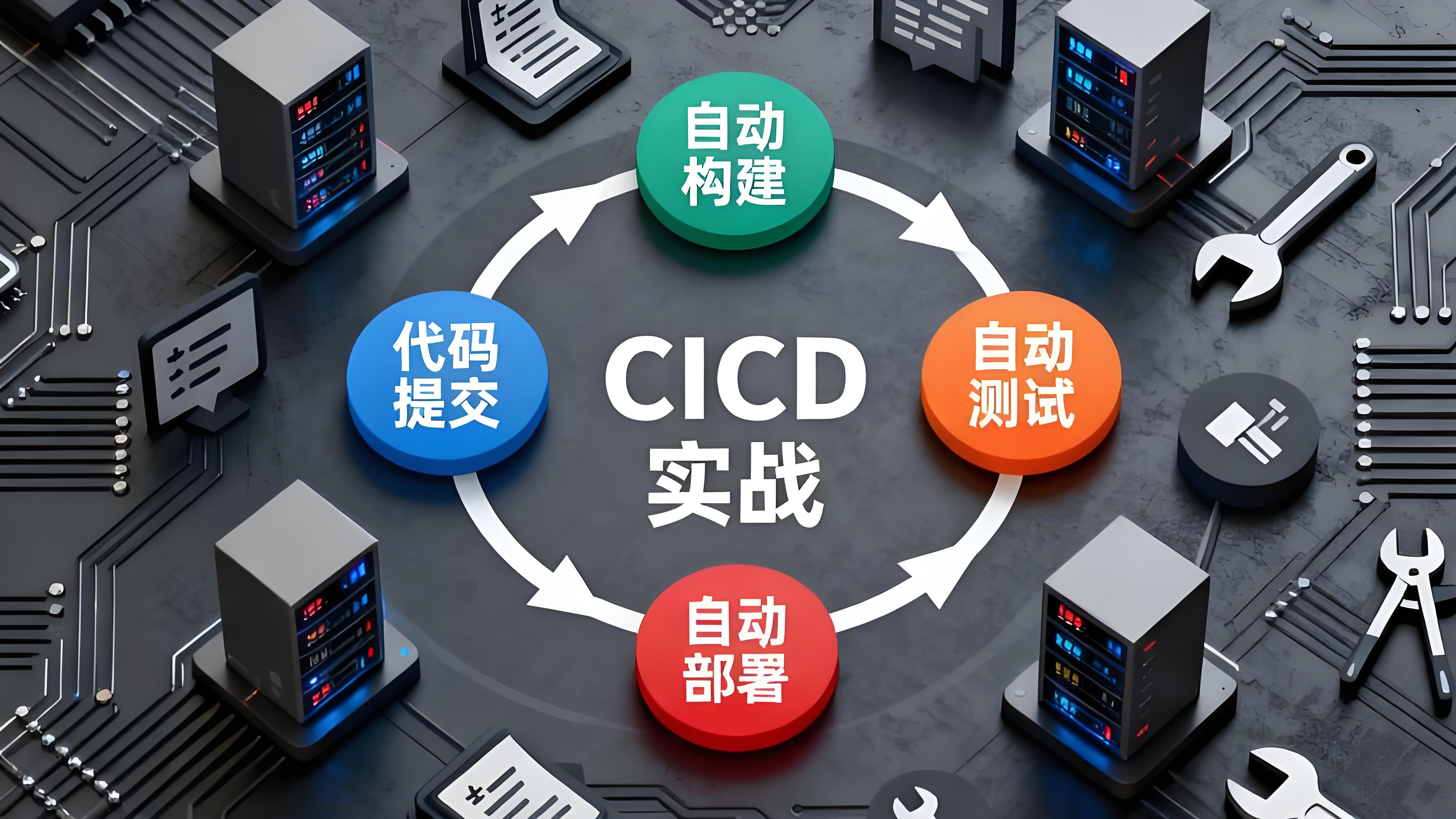 AI Visual Insight: This image serves as the article’s thematic cover. Its main purpose is to emphasize the engineering shift in HarmonyOS game releases from local manual packaging to automated pipelines, helping establish CI/CD context rather than illustrating specific architectural details.
 AI Visual Insight: This animated image functions more like a process demonstration asset. It highlights repeated builds, frequent package delivery, and the inefficiency of back-and-forth manual operations, using visual rhythm to reinforce how manual releases create repetitive overhead.
AI-based review is better suited as a pre-release safety gate
function canDeploy(aiReview: { isSafe: (commitId: string) => boolean }, commitId: string) {
  if (aiReview.isSafe(commitId)) {
    return true // AI determines that the change risk is acceptable and allows release
  }
  return false  // Risk check failed, block the release
}
This code shows that AI is most practical as a deployment gate, not as a replacement for the entire pipeline.
HarmonyOS game teams should aim to land a minimum viable pipeline in one day
Do not chase enterprise-grade platformization at the beginning. First standardize the build script, then connect Git triggers, archive HAP artifacts, and add notifications and environment isolation. Once you form a repeatable closed loop, your project moves from a demo mindset to a product mindset.
The final conclusion is straightforward: manual packaging is suitable for one-off validation, not for continuous delivery. For HarmonyOS games with multi-device targets, frequent iteration, and cross-functional testing needs, CI/CD is the only engineering approach that scales.
FAQ
Q1: What should a HarmonyOS game project automate first?
A: Start with build automation and artifact archiving. As long as you can generate HAP files reliably and record the version number, commit ID, and build logs, you can progressively integrate testing, notifications, and releases later.
Q2: Is CI/CD worth it for small teams?
A: Yes. The smaller the team, the less room there is for human error. A minimum pipeline only requires scripts, Git, and a CI platform. The cost is low, but it significantly reduces release confusion.
Q3: Can AI directly replace traditional CI/CD?
A: No. AI is better suited for code review, log analysis, and risk assessment. Standardized scripts, artifact management, and pipeline orchestration are still what guarantee reproducibility, traceability, and rollback capability.
AI Readability Summary: This article reconstructs the practical essentials of CI/CD for HarmonyOS games. It focuses on the core failures of manual packaging, including unreproducible builds, missing traceability, and uncontrolled multi-device delivery, then proposes a minimum viable approach based on Hvigor, version management, environment isolation, multi-target builds, and AI-assisted release gating.