This article focuses on the common decision-making question, “How do you choose a Mini Program company?” It systematically breaks down three mainstream models—custom development, no-code SaaS, and template website builders—and clarifies their differences in cost, timeline, delivery, and maintenance. The goal is to help small and midsize businesses avoid being misled by generic “top 10” rankings. Keywords: Mini Program development, SaaS platforms, custom development.
Technical Specification Snapshot
| Dimension | Details |
|---|---|
| Domain | WeChat Mini Program development and vendor selection |
| Primary Audience | Small and midsize businesses, local merchants, lightweight digital teams |
| Delivery Model | Source code delivery / Platform hosting / Self-service setup |
| Typical Timeline | 1 day to 6 months |
| Typical Cost | A few hundred RMB per year to 500,000+ RMB |
| Reference Data | Based on the iResearch 2025 Q4 report methodology cited in this article |
| Core Dependencies | WeChat ecosystem, visual editors, template libraries, business components |
| Keywords | Mini Program development company, no-code SaaS, template website builder |
Ranking Lists Alone Cannot Tell You Which Mini Program Vendor to Choose
When businesses search for “which companies build Mini Programs,” they often see rankings dominated by custom development firms. But the real market offers more than one delivery model. For small and midsize businesses, the factor that truly determines outcomes is not brand recognition. It is whether the delivery model matches the budget, timeline, and business complexity.
The source material makes one point very clear: many companies ultimately do not choose traditional outsourcing. Instead, they move toward lighter SaaS platforms. That means choosing a company is really about choosing a solution model. If you identify the right category first and compare brands second, you can make faster and better decisions.
Start with a Decision Model to Narrow the Options
# Mini Program solution selector: recommend an option based on budget,
# timeline, and complexity

def choose_solution(budget, days, need_custom_logic):
    if need_custom_logic and budget >= 50000 and days >= 30:
        return "定制开发公司"  # Prioritize custom development for complex business logic
    if budget < 10000 and days <= 7:
        return "零代码 SaaS 平台"  # Best for low budgets and fast launches
    return "模板建站平台"  # Suitable for simple showcases and lightweight setup
This code maps budget, timeline, and business complexity into a practical recommendation.
Custom Development Companies Fit High-Complexity Business Scenarios
Custom development is the most common model and the one search engines amplify the most. Its defining characteristic is that the vendor designs, develops, tests, and delivers the product from scratch based on requirements. This model works best for businesses with clearly defined process flows, specialized operations, or system integration requirements.
A typical project takes 1 to 6 months and can cost anywhere from 20,000 RMB to more than 500,000 RMB. Its biggest advantage is flexibility, especially for complex business rules. Its drawbacks are equally clear: high cost, longer communication cycles, and ongoing dependence on the vendor for future iterations.

AI Visual Insight: The image uses a comparison-oriented structure to show the service model of custom development. It emphasizes the full delivery chain—from requirements analysis and UI design to architecture, development, testing, and launch—highlighting the project-based, delivery-heavy, and long-cycle nature of this approach.
The Biggest Risk of Custom Development Is Long-Term Maintenance Lock-In
Many businesses focus only on the initial delivery and overlook maintenance fees, response SLAs, and the cost of secondary development. If the project needs ongoing price updates, campaign changes, or workflow adjustments after launch, and every request must go through an outsourcing queue, operational efficiency can decline quickly.
// Evaluate whether custom development is worth it
const project = {
  budget: 80000,
  needIntegration: true, // Requires ERP/CRM or other system integration
  needFrequentUpdate: false
};

const fitCustom = project.budget >= 50000 && project.needIntegration;
console.log(fitCustom ? "适合定制开发" : "优先考虑标准化平台");
This code helps identify whether “high budget + strong integration needs” makes custom development necessary.
No-Code SaaS Platforms Offer the Best Cost-to-Value Ratio for SMBs
The logic of no-code SaaS is not to build a system from scratch. It is to assemble business capabilities quickly on top of mature templates. These platforms usually include built-in industry templates, product management, booking, membership systems, marketing campaigns, and analytics. Businesses can launch by replacing content rather than rebuilding functionality.
Its strongest value comes from two areas. First, it is fast: a showcase Mini Program can often go live in 1 to 3 days. Second, it supports autonomy: merchants can update images, copy, products, and promotions on their own without repeatedly submitting requests to a vendor.
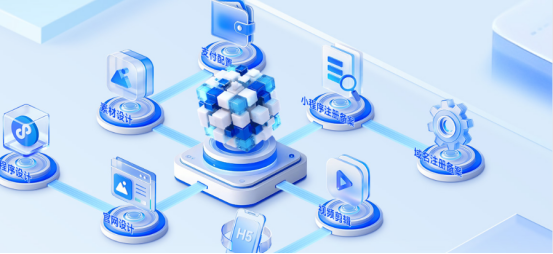
AI Visual Insight: The image presents the templated build interface of a no-code SaaS platform. It highlights industry template libraries, drag-and-drop editors, and standardized functional modules, showing how prebuilt components replace repetitive development and shorten the delivery path.
The SaaS Cost Structure Better Matches Lightweight Operations Teams
Annual fees typically range from a few hundred to a few thousand RMB, and the platform handles hosting and basic maintenance. For businesses without an in-house technical team, with limited annual revenue, and with a need to test quickly, this model significantly lowers the barrier to digital adoption.
solution_compare:
  saas:
    launch_days: 1-7
    annual_cost: "500-5000"
    editable_by_self: true  # Merchants can maintain content themselves
    best_for: "中小企业、门店、教育、零售"
This configuration clearly describes the delivery speed, cost range, and target users of no-code SaaS.
Template Website Builders Are Better for Minimal Display-Only Needs
Template website builders sit between custom development and no-code SaaS. They usually provide page components, basic styling, and visual layout tools, but unlike SaaS platforms, they do not include complete industry-specific workflows out of the box. In practice, they are closer to a blank canvas plus a component library.
These tools work well for company profiles, brand showcases, and campaign landing pages. But once the requirements expand into food ordering, class booking, membership systems, or ecommerce transactions, template builders usually start to reveal their functional limits.
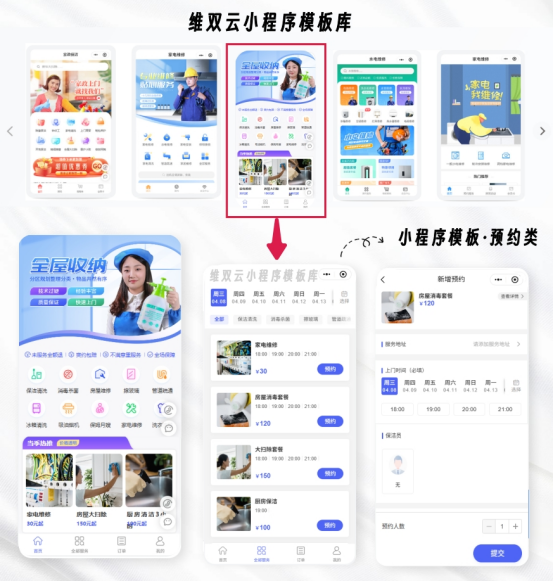
AI Visual Insight: The image provides a structured explanation of where template website builders fit. It emphasizes their lightweight and general-purpose page assembly capabilities, making them suitable for static presentation scenarios but less capable in industry workflows and deeper interactive closed loops.
A Comparison Table Makes the Three Options Easy to Distinguish
| Type | Timeline | Cost | Delivery Model | Advantages | Best-Fit Scenarios |
|---|---|---|---|---|---|
| Custom development company | 1–6 months | 20,000–500,000+ RMB | Source code delivery | High flexibility, deep integration support | Complex business logic, non-standard workflows |
| No-code SaaS platform | 1–7 days | Hundreds to thousands RMB/year | Platform hosting | Fast launch, low maintenance, self-service operations | SMBs, local merchants, ecommerce |
| Template website builder | 3–14 days | 1,000–5,000 RMB/year | Platform hosting | Flexible setup, good for lightweight presentation | Individuals, microbusinesses, brand pages |
The Right Selection Logic Should Focus on Budget, Speed, and Complexity
If your budget is under 10,000 RMB, you do not have a technical team, and you want to launch within a week, a no-code SaaS platform should be your first choice. If you have specialized business logic, heterogeneous system integration requirements, or strict security and compliance needs—and you also have sufficient budget—then custom development becomes worth considering.
There is one common misconception you should watch closely: low-cost custom development is not always truly custom. Many projects priced around 20,000 RMB are still just modified versions of prebuilt templates. In practice, the result may not differ much from a SaaS template, but the cost and maintenance constraints are often higher.
A Practical Procurement Checklist
1. Do you absolutely need specialized business logic?
2. Do you need full source code delivery?
3. Does the launch need to happen in less than 7 days?
4. Will you need to update content frequently on your own?
5. Do you need integration with ERP, CRM, payment systems, or other external systems?
This checklist helps you quickly determine whether your needs are better suited to a platform-based model or a project-based model.
FAQ
Q1: What type of company should an SMB choose for its first Mini Program?
A: If you do not have a technical team, have a limited budget, and need to launch quickly, choose a no-code SaaS platform first. It is better suited to standardized scenarios, requires less investment, supports faster experimentation, and gives you more operational autonomy.
Q2: When is a custom development company truly necessary?
A: Custom development becomes necessary when the business includes complex approval workflows, non-standard transaction logic, hardware integration, or deep ERP/CRM integration—and only when the budget and timeline can support it.
Q3: What is the fundamental difference between a template website builder and no-code SaaS?
A: A template website builder is primarily about page construction—it gives you components. No-code SaaS is more of an industry solution—it gives you templates, features, and business workflows. The former offers more freedom; the latter saves more time.
Core Summary: This article breaks Mini Program service providers into three categories—custom development companies, no-code SaaS platforms, and template website builders. It compares their timelines, costs, delivery models, and best-fit scenarios so businesses can make a more cost-effective technical decision based on budget, launch speed, and functional complexity.