For university quadcopter competitions, this guide focuses on systematic hardware selection across the flight controller, frame, propulsion, battery, communication links, and onboard computer. It addresses the common mistake of stacking high-end parts without considering system matching, which often leads to poor weight distribution, shorter endurance, and difficult tuning. The recommended baseline is Pixhawk 6C + a 500–650 class frame + 3508 propulsion + a 6S battery. Keywords: drone competition, Pixhawk, onboard computer.
Technical Specifications at a Glance
| Parameter | Recommended Value / Information |
|---|---|
| Target Platform | Main competition quadcopter for university teams |
| Flight Controller Language Ecosystem | Primarily C/C++, with Python/ROS2 toolchains |
| Communication Protocols | MAVLink, ELRS, SiK Telemetry |
| Recommended Flight Controller | Pixhawk 6C |
| Recommended Software Stack | PX4 / ArduPilot |
| Recommended Battery | 6S 5200mAh |
| Recommended Propulsion | 3508 low-KV motor + 40A ESC + 12-inch propellers |
| Core Dependencies | PX4, ArduPilot, QGroundControl, ROS2 |
| Reference Popularity | The original article was published on CSDN and did not provide a GitHub star count |
This Setup Works Better as a Primary Competition Platform
The core requirement for a university competition platform is not peak performance in one subsystem. It is full-system balance. The flight controller, frame, propulsion, battery, and communication links must all be designed around the same mission goals. Otherwise, you end up with a drone that can fly but is difficult to use effectively.
The recommended baseline can serve directly as the starting point for most comprehensive competition tasks: Pixhawk 6C, PX4 or ArduPilot, a 500–650 class carbon fiber mission frame, 3508 low-KV motors, 40A ESCs, 12-inch propellers, a 6S 5200mAh battery, radio telemetry, and ELRS remote control.
Hardware List for a Stable Baseline Build
Flight controller: Pixhawk 6C
Software: PX4 / ArduPilot
Frame: 500–650 class carbon fiber mission frame
Propulsion: 3508 low-KV motor + 40A ESC + 12-inch propellers
Battery: 6S 5200mAh
Communication: M10 GPS + SiK telemetry + ELRS remote control
Onboard computer: Add only when required by the mission; omit by default
The value of this configuration is that it reduces trial-and-error costs while preserving room for future expansion in visual recognition, autonomous route planning, and final presentation demos.
Many Teams Fail Because the System Is Unbalanced from the Start
The four most common mistakes are easy to spot: blindly chasing top-tier parts, evaluating only individual module specs, mixing training and competition airframes, and installing a NUC by default on a 500-class platform. These all lead to the same outcome: more weight, crowded wiring, worse thermal behavior, and a sharp increase in tuning complexity.
For a competition platform, the worst problem is not using lower-end hardware. It is mismatched hardware. A large battery on a small frame, a high-performance compute board with weak power delivery, or a professional flight controller paired with poor vibration isolation and uncontrolled center-of-gravity layout will all eventually show up as unstable flight behavior.
Break Down the Mission Before You Select Hardware
# Choose the onboard computer class based on mission complexity
mission = {
    "vision": True,      # Whether the mission requires vision
    "heavy_ai": False,   # Whether heavy model inference is required
    "long_endurance": False
}

if not mission["vision"]:
    onboard_computer = "None"  # No vision task, so no onboard computer by default
elif mission["heavy_ai"]:
    onboard_computer = "Jetson Orin Nano"  # For detection and recognition, prioritize Jetson
else:
    onboard_computer = "Raspberry Pi 5"  # For lightweight vision tasks, Raspberry Pi is more balanced

print(onboard_computer)
This example shows that the onboard computer should be driven by mission requirements, not by configuration anxiety.
The Flight Controller Path Should Be Evaluated by Ecosystem and Expandability
Pixhawk is a hardware platform, while PX4 is a software ecosystem. They are not the same thing. For a primary competition drone, Pixhawk 6C paired with PX4 or ArduPilot is the safer choice because it offers a more complete stack for logging, mission management, route control, and peripheral expansion.
The ANO series is better suited to control algorithm validation and teaching-oriented development because Chinese-language documentation is widely available. F4/F7/H7 all-in-one flight controllers fit training platforms better because they are inexpensive and easy to maintain, but they are not ideal as the main controller for complex competition missions.
Flight Controller Selection Rules
# Main competition drone: prioritize a professional ecosystem
Pixhawk 6C + PX4/ArduPilot

# Control algorithm validation: prioritize documentation and development efficiency
ANO-FlyControl-F4

# Training drone: prioritize low cost and easy maintenance
F4/F7 all-in-one flight controller
The core principle is simple: choose your primary drone based on ecosystem ceiling, and choose your training drone based on maintenance cost.
The Frame Determines Wiring, Center of Gravity, and Maintenance Efficiency
A 450–500 class frame works well for training and coursework. It is inexpensive and uses common parts. But once you add GPS, telemetry, a camera, and an onboard computer, space runs out quickly. A 500–650 class carbon fiber mission frame is better suited to a main competition platform because it offers noticeably better structural rigidity and layout margin.
Place the flight controller as close to the center of gravity as possible. Mount the battery in the middle. Raise the GPS to avoid electromagnetic interference. Route power lines separately from communication lines. Leave space under the airframe for the camera and landing gear. In practice, these layout details affect stability more than the frame size alone.
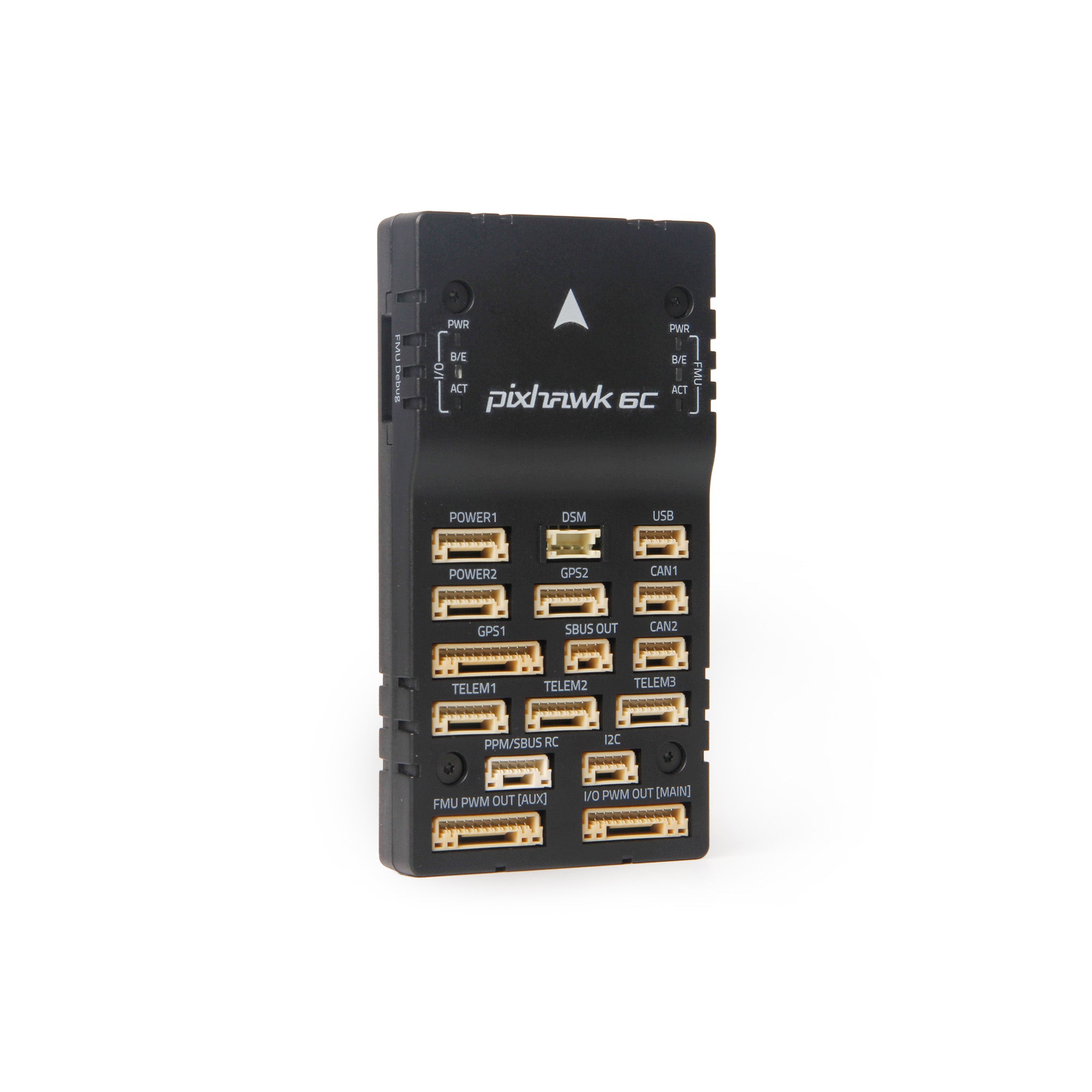 AI Visual Insight: The image shows the Pixhawk 6C flight controller itself. It has a clean enclosure and dense connector layout. Its defining characteristics include multiple I/O channels and a modular connection design, making it suitable for integrating GPS, telemetry, power management, and peripheral expansion. This reflects the professional flight control platform’s emphasis on disciplined wiring and complete interface coverage.
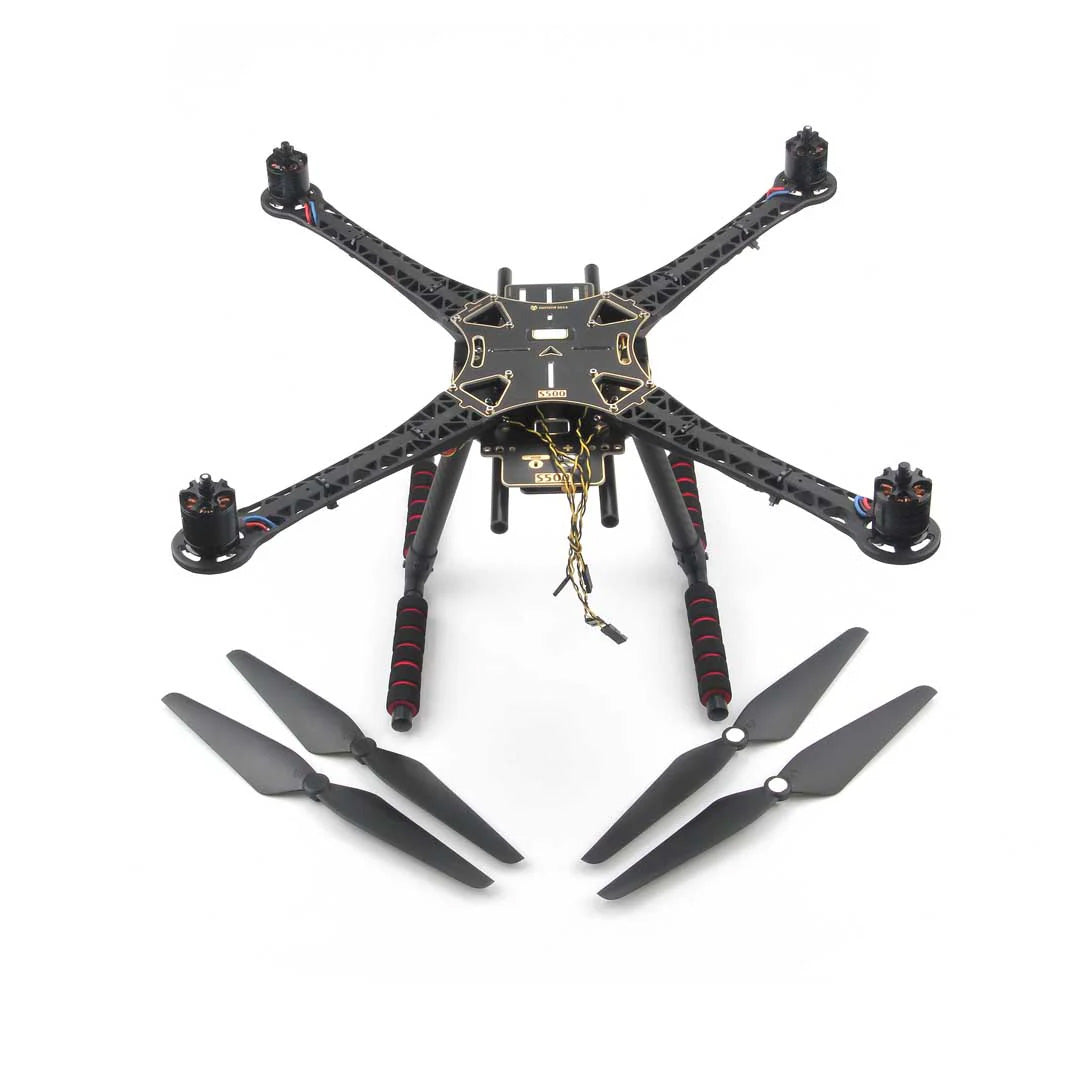 AI Visual Insight: The image shows the structural layout of an S500-class quadcopter frame kit. You can clearly see the center plates, four arms, and landing support regions. It demonstrates the basic installation space, center-of-gravity flexibility, and vibration-isolation potential of this frame class, making it suitable as a training drone or a lightweight mission platform.
Frame Layout Checklist
1. Is the flight controller close to the center of gravity?
2. Can the battery be secured in the middle?
3. Is there a raised mount for the GPS?
4. Are power lines and signal lines routed separately?
5. Is there enough room for the camera and onboard computer?
This checklist works well before assembly and can significantly reduce later rework.
Propulsion and Battery Must Be Evaluated Together for Thrust-to-Weight Ratio and Power Efficiency
Training platforms often use 2212/2216-class small to mid-size propulsion systems. Their advantages are low cost, crash tolerance, and fast replacement, but they are not ideal for medium-payload missions. For a main competition drone, 3508-class low-KV motors paired with 40A ESCs and 12-inch propellers are the better option because they make it easier to achieve a reasonable hover range and sufficient thrust margin.
For batteries, the 6S 5200mAh pack is the most balanced mainstream choice. Instead of blindly increasing capacity, this battery strikes a better balance among endurance, weight, current draw, and supply stability. The key factor is not battery capacity alone. The flight controller, video link, and onboard computer should also use separate power branches.
Typical Power Distribution Example
power_bus = {
    "flight_controller": "independent voltage regulation",   # Power the flight controller separately to avoid reboots
    "telemetry_video": "independent branch",    # Separate video and telemetry to reduce interference
    "onboard_computer": "DC-DC power supply"   # Use a dedicated step-down module for the onboard computer
}

for module, supply in power_bus.items():
    print(f"{module}: {supply}")
This example emphasizes power isolation. In many cases, that improves stability more than simply using more expensive components.
Communication Links Are the Most Frequently Underestimated Weak Point in Competition Platforms
For outdoor missions, you should have at least three links: GPS/compass for positioning and return-to-home, SiK telemetry for ground-station tuning and status feedback, and ELRS remote control for manual takeover. If you rely only on remote control and have no status link, debugging and fault localization become much more expensive.
The recommended combination is Holybro M10 GPS, Holybro SiK Telemetry Radio V3, and RadioMaster Boxer ELRS. This stack is mature, well documented, and generally compatible with the Pixhawk/PX4 ecosystem.
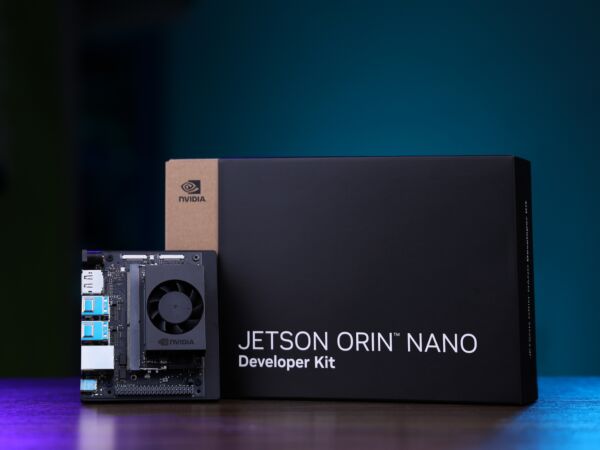 AI Visual Insight: The image shows a Jetson Orin Nano development board. Visible elements include the cooling module, main compute unit, and rich I/O interfaces. This indicates its role as an edge AI inference platform suitable for object detection, YOLO inference, and visual recognition, but it also implies higher demands on power delivery and thermal design.
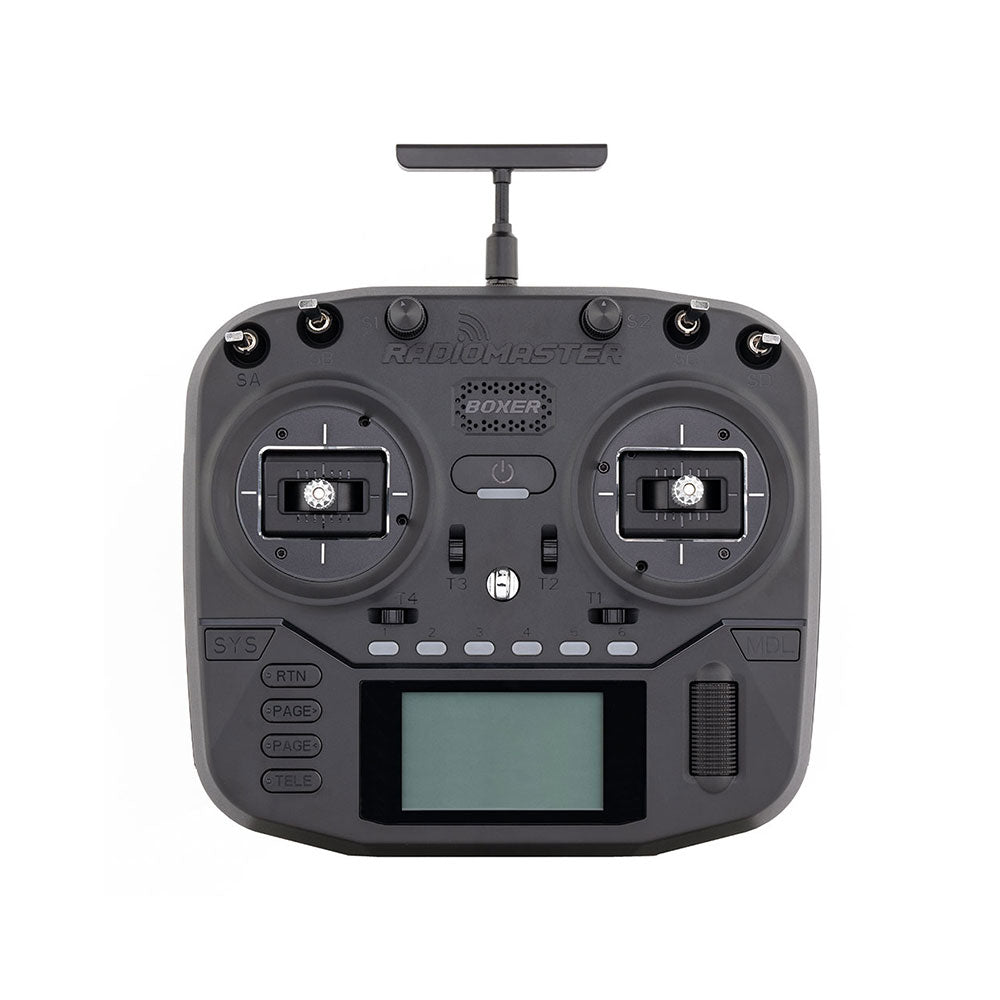 AI Visual Insight: The image shows the physical form of the RadioMaster Boxer transmitter, including dual sticks, a top antenna, and multifunction switches. This illustrates its suitability for manual takeover, mode switching, and debug control during competitions, making it a critical input device in the flight safety loop.
The Onboard Computer Should Not Be a Default Component
If the mission does not involve computer vision, the best option is usually to skip the onboard computer entirely. That gives you the lightest, lowest-power, and most stable platform. For lightweight vision tasks, Raspberry Pi 5 is the preferred option. It works well for serial bridging, ROS2 entry-level development, QR code detection, and color block recognition.
If the mission requires formal object detection and deep learning inference, Jetson Orin Nano is the safer choice. Orange Pi 5 Plus offers better price-to-performance, but its ecosystem is less mature. A NUC is not unusable, but it should not be the default choice for a 500-class competition quadcopter because its weight, power consumption, and thermal load are relatively high.
Onboard Computer Decision Matrix
No vision task              -> Do not install one
Lightweight vision task     -> Raspberry Pi 5
Formal recognition/detection -> Jetson Orin Nano
Large-frame experimental platform -> NUC can be considered
This helps teams align compute investment with mission difficulty and avoid overengineering.
This Defense Conclusion Can Be Reused Directly
The final recommended baseline is: Pixhawk 6C + PX4/ArduPilot + 500–650 class carbon fiber frame + 3508 low-KV propulsion + 40A ESC + 12-inch propellers + 6S 5200mAh + M10 GPS + SiK telemetry + ELRS remote control. Add an onboard computer only when the mission requires it; omit it by default.
The strengths of this setup are stability, easy maintenance, clear expansion paths, and a complete presentation-ready logic chain. It does not chase peak performance in a single metric. Instead, it keeps endurance, payload, wiring, thermal behavior, and development complexity in a practical balance.
FAQ
FAQ 1: Why should university competition quadcopters prioritize Pixhawk 6C?
Because the PX4/ArduPilot ecosystem around Pixhawk 6C is mature. It supports log analysis, mission planning, ground-station tuning, and peripheral expansion, making it a better fit for a primary competition platform rather than a one-off demonstration device.
FAQ 2: Can a 500-class quadcopter use a NUC directly?
Yes, but it is not recommended as the default choice. A NUC adds weight, power consumption, and thermal pressure, which reduces endurance and payload headroom. Unless the mission explicitly depends on an x86 software stack, Jetson or Raspberry Pi is usually the better choice.
FAQ 3: Is a larger battery always better?
No. A higher-capacity battery significantly increases takeoff weight, which can offset endurance gains. In competition scenarios, the more important factor is matching the battery with the motor, propeller, and total airframe weight. In many cases, 6S 5200mAh is the more balanced option.
AI Readability Summary
For university drone competitions, teams should choose hardware as a balanced system rather than chasing the highest specifications for every part. This guide breaks down how to select the flight controller, frame, propulsion, battery, communication links, and onboard computer for a quadcopter competition platform. It recommends a stable baseline setup, highlights common pitfalls, and explains how to match modules based on mission needs so teams can balance budget, endurance, payload, and expandability.